

Jennifer Laviolette
TPAAS offers low income Spay and Neuter Program

Taking care of pets is a huge responsibility and judging by the number of stray and unfixed animals, more has to be done. The Pas and Area Animal Shelter (TPAAS) is now offering a Low Income Spay and Neuter Program to assist with the issue of pets not being spay or neutered in the tri-community.
“People apply to the Low Income Spay and Neuter Program that we offer here at The Pas and Area Animal Shelter,” said TPAAS Secretary Lynda Geswin. “Forms are available online through our Facebook page, at the vet clinic and at the shelter. This is a program that is subsidized both by the shelter and the local vet clinic. We are trying to support pet owners who want what is best for their pet but can't financially do it. There are only a handful of spaces per month. “The cost is $100 per cat neuter. $125 per cat spay and $170 per dog spay or neuter. Those costs include vaccinations. Animals must have their vaccinations before their spay or neuter, so people should start the application process early. “This program was pets have a longer life expectancy. only launched a couple of months ago,” said Geswin. “We have spayed two dogs, and have a few others going through the process.” Getting your pet spay or neutered alleviates a lot of problems that TPAAS is seeing with the overpopulation of stray animals. The benefits to getting your pet spay or neutered, far outweigh any negatives aspects, if there are any. “There are so many reasons to have your pet spay or neutered,” said Geswin. “In Manitoba, we are facing a cat and dog overpopulation crisis. There are so many dogs, and not enough homes for them all. There was a time when we were fairly successful finding placement for dogs with Winnipeg based rescues, but that time is over. Rescue placements are hard to come by, and the amount of animals in need seems to be in creasing instead of de creasing. “On a more personal level, spaying your pet can reduce difficult behavior such as aggression, marking territory, running away, and fighting are all common in unaltered pets. Spaying and neutering reduce the risks of some cancers, and as a result, “Some of the other challenges in pets who are not spay or neutered that we see are unneutered dogs packing up when there is a female in heat,” said Geswin. “Not only is it a challenge to keep un fixed animals at home, but they can also become aggressive in these situations. Female cats yowl and are very annoying when they are in heat. Male cats mark their territory by spraying on things. “Also, we get a lot of messages where people tell us they are over whelmed caring for a litter of puppies. Puppies are a lot of work.” TPAAS is fundraising to keep shelter operations going as well as looking for sponsors for the new Low Income Spay and Neuter Program. “We are currently looking for people who are interested in sponsoring a spay or a neuter in the month of February,” said Geswin. “Sponsor ship amounts range from $50 for a partial spay or neuter, to $485 to sponsor the full cost of a dog spay. “We are always looking for volunteers and foster homes. Specifically related to spay and neuter month, we are looking for volunteers who are willing to drive people to vet appointments. Many of our applicants do not have vehicles, and getting to appointments is difficult.” There are still lots of pets looking for their for ever home at the TPAAS. All adoption fees help cover costs of the first rounds of vaccinations and help offset some expenses the shelter has in keeping animals. “In the shelter, and in foster homes combined, we have 26 dogs, and 36 cats up for adoption,” said Geswin. “Adoption fees are as $230 male cat; $275 female cat; $325 male dog and $400 female dog. Costs include first vaccination series, which includes rabies for dogs, deworming and spay or neuter. “Adoption fees only partially cover the costs incurred by the shelter to do the basic vetting of an animal- vaccinations, de worming and spay or neuter. Almost all of our animals come needing all of those procedures done, and it is not unusual for us to have additional health related costs for an animal as well. “The shelter is open most Wednesdays from 6 p.m. to 7:30 p.m.,” said Geswin. “People are welcome to come by and see the animals. We are hosting an open house during NMTF, on Saturday from 1 p.m. to 3 p.m."
Bears’ Lair makes first Manitoba stop at OCN

An incredible opportunity came to Opaskwayak Cree Nation (OCN) last week that gave youth a chance to come up with a way to do business and pitch it in front of an audience. Bears’ Lair Youth Camp made its first stop in Manitoba to offer a free youth entrepreneurship camp for Indigenous youth ages 11 to 18. The concept of Bears’ Lair started out with a vision to encourage entrepreneurs.
“I was the Economic Development Officer for the Squamish Nation in British Columbia, for 13 years and provided grants for entrepreneurs of the nation through a trust grant,” said Bears’ Lair Creator and Executive Producer Geena Jackson. “I started teaching classes on how to be an entrepreneur at night and provided a catered dinner and daycare for youth from toddlers to young teens, so the parents could learn, while the youth played in the gym, played video games and were entertained outside the classroom. After two out of six classes, the youth started sitting beside their parents, participating in the class and answering questions faster than their parents. A light bulb went off in my head. “These youth are absorbing the information faster than the adults, they are more technical savvy, and they do not have the barriers or triggers of being an entrepreneur like adults. They don’t know the hard work it takes yet; they are a sponge of positivity and possibility for the future. It is amazing. “I held the first Entrepreneur Youth camp in 2015, for the Squamish Nation and it was a huge success,” Jackson. “Now that TV show Bears' Lair is a huge success and up lifts Indigenous Entrepreneurs, it was a natural progression to educate, elevate and inspire Indigenous youth all over Canada. They are the future leaders and decision makers.” Bears’ Lair facilitated their camp at Oscar Lathlin Collegiate (OLC) and had several activities to enhance the students’ knowledge and experience in entrepreneurship. “There were 22 OCN youth that participated, all 11-19 years of age,” said Jackson. “We created five teams and they gathered at the high school, OLC, from February 2 to 5, to learn about business. The youth learned about team building, social confidence, financial literacy, public speaking, media training, constructive comments, feedback and stepping out of their com fort zone. We also played icebreaker and team building games, and the youth developed strong relation ships with each other and new friends. “Goals for the youth are set throughout the camp using our curriculum of five team challenges. Those consist of building a brand, which involves choosing a busi 24023gm0 ness type, creating a name, motto, design a logo and determine core values. Then there is the target market component where youth create products and services to solve a problem and determine who their audience and market is. “With the marketing strategy, youth decide how to advertise and reach customers, and from that create a marketing plan,” said Jackson. “Then they work on a budget and financial plan and youth have to determine their start up and operational costs, and how they will use their budget and any revenue for the future. Finally, the youth pitch their business by using the business model created. The youth film and deliver a five-minute business pitch that is premiered at the graduation and community celebration event. They work together in their teams with the guidance of a coach to create their business, and learn each factor of entrepreneurship.” The youth were mentored by local mentors in the community, each one had diverse background that brought forward different learning perspectives. “The mentors and coaches for the camp were Bears’ Lair team members, as well as OCN leadership and local business owners,” said Jackson. “This included Holly Chartrand, who is a local entrepreneur and award winning author; Savanna Sayese, who is a teacher with OCN; Dean Montgomery, the executive Producer of Bears’ Lair TV and president of Indigenous Initiatives; Jay Falkus, the director of operations for Bears’ Lair Dream Camps and head videographer and myself. “The judges for the graduation and celebration event were also an inspiration for the youth, as they were community and business leaders themselves. The judges were OCN Chief Maureen Brown; Darryl Bauer, OCN Eco nomic Development Officer; Courtney Hester, OCN Councillor and Dan Quesnel, who is the Scotiabank Manager. They were all excellent judges.” Several incredible entrepreneurial ideas were born as a result of the Bears’ Lair camp. Al though all presentations were solid, only one winner was chosen. “There were five groups who came up with amazing ideas,” said Jack son. “Bannock to go was the concept of a bannock cafe. Spirit Outdoors was a facility for youth that has programming for after school to encourage kids to do something active and away from video games and spending more time with each other. Maskwa Café was a proposal to set up a cafe that serves coffee, bannock, treats and a bookstore. OCN Attracts was an outdoor play ground for summer, fall and winter with activities for families and youth to be entertained. Dancing Raven Event Planning was a party event planning business for weddings, graduations, etc. “The team that created Dancing Raven Event Planning won. The judges were so impressed by all of the youth, but Dancing Raven had a small team of two people and the judges liked that they took on all of the roles of the business. The two-team members, Layne Nabess and Alzena Lajambe, persevered. They had a really good business idea and presented it very well. The winning team won $250 each and all other participants received $100 for at tending. All of the students also received matching hoodies and backpacks. “The kids came out of their shell, developed new friendships, all improved with public speaking and social confidence and most importantly everyone showed up and supported their team members,” said Jackson. “ It’s been said that 95 per cent of success in anything is showing up and the 22 youth did. They were in credible and our team can not wait to come back again.
MB U18 AAA league considers restructuring

There’s some unsettling talk about the possibility of Manitoba U18 AAA Hockey League restructuring and eliminating some teams that they feel aren’t meeting the competitive standard of the league. A competition committee was formed to determine the viability of league and made some recommendations for improvements.
“The hockey community is large, but at the same time small and extremely close-knit,” said The Pas Minor Hockey Association President Kevin Pettit. “Officially, the MB U18 AAA League has commissioned a committee in regards to competitiveness and equity in team formation. Last week, some insiders contacted numerous northern members of the hockey community to let them know that there was a very real potential for negative impact on rural and northern teams. At this time, the league has made no official decisions. Further, any recommendations by the league would have to also pass through Hockey Manitoba. “All hockey leagues flux and make changes. It’s normal for leagues to evaluate how they operate, and know the feasibility of the teams, and overall health of league. We currently have no female AAA U15 or U18 pro grams in the north, and just recently the Central Plains Capitals folded their U18 program. The threat of losing teams in rural areas is very real. “For us in the North especially, we often feel on the fringe,” said Pettit. “We can think of how we nearly lost the Blizzard, and just within the last few years a number of south ern Junior B teams decided to start their own league, leaving the Key “This would definitely have a negative impact to future hockey for northern Manitoba,” said Pettit. “The U18 program allows northerners to play for their home region, so they do not have to go to ex pensive programs in the south. For many in our region, the cost of attending these programs is quite frankly unreachable. This program maximizes the potential of all players that are accepted. It’s one of the biggest feeders to the Junior B program, and quite a number of players who developed through the U15 and U18 pro grams have went on to also play Junior A, College / University Hockey, and even the WHL and NHL. “Many of the impacts would be directly hurtful to our communities. For many youth, especially from our smaller communities and First Nations, the AAA players are huge role models in their com munities. They show the youth that hard work can get you to great places. Socially, physically, men tally, and overall community health - these would all be affected.” Based on data from Hockey Manitoba’s most current registration numbers, Parkland has a total of 698 total registered players, which is the lowest number per region. The committee then analysed data of the last 20 years for Manitoba U18 AAA playoffs by region and over that time span, Parkland had made it to the playoffs four times, which was also the lowest number out of all the teams in the region. Currently the focus has been on Norman and their competitiveness within the league. It has sparked a lot of outrage and concern that recommendations may be made to remove those teams in an attempt to make the league more competitive. Norman’s total number of registered players with Hockey Manitoba is 1,222 and based on the U18 AAA playoffs by region for the last 20 years, the team has made it to the playoffs five times in that span. “I’ve been president for Manitoba U18 AAA for five years now, since 2022,” said Manitoba U18 AAA President Don McIntosh. “I’m not aware of any other reviews, but things have changed quite a bit over the last few years. We started looking into this and doing re search, it’s kind of interesting how things popped out on paper. “We’re the highest league of hockey in Manitoba and the highest level, the next level is Junior hockey. Many of the players in our league aspire to play Junior hockey or in the Western Hockey League. Then those in Junior aspire to get a scholarship to play in the U.S. If a player is successful enough to make the Western Hockey League, the next step to that would be the NHL. Most of the kids playing in our U18 AAA league are aspiring to that. If you’re not participating in a competitive league to improve your competitiveness as a player, then we’re defeating the purpose of what we are in business for.” McIntosh denies any rumour about this being an attempt to remove rural and northern teams, but rather a move to make a stronger competitive No decisions have been made and the committee is not authorized to make decisions, but rather find solutions to remedy the inequity of the current structure. “We have other teams who aren’t competitive either and there are varying reasons for that. The non competitiveness of some teams brings down the competitiveness of other teams. That is simply what this is about. We’re not trying to eliminate all hockey in northern and rural Manitoba; that’s ridiculous.” “This would definitely have a negative impact to future hockey for northern Manitoba” - The Pas Minor Hockey President Kevin Pettit McIntosh says there are other options for teams like Norman and those that are struggling to be competitive in the league. “There is a U17 AAA and a U15 league in Manitoba,” said McIntosh. “Norman has a team in the U15 league, but there isn’t a U17 AAA team, so com bine that with the fact that the team in Thompson historically has not been competitive, the logic to us is that it would make more sense they form a U17 AAA team for the league, the players and everyone. “When the teams aren’t competitive, the argument is that players shouldn’t be expected to leave Norman, but the re “One option for Nor man is that they could join another region and bring their numbers up,” said McIntosh. “That would give them the opportunity to form a stronger team, which would bring up the competitiveness of the league. The other option could be that it would be an open zone and the players could go to wherever another team would take them in the province, so a high-level player would still have an opportunity to play at that level. Then there’s the U17 AAA option. “When we first got into this, we had 13 teams in the league, 12 in Manitoba and one in Kenora. The last three years, Central Plains has not been able to field a team, so now we’re down to 12 teams. The question is should we go down to ten teams and there has been some discussion about going down to nine team, but none of that has been decided; it’s all still being discussed.” No official or final decisions have been made as to the future of restructuring U18 AAA Hockey in Manitoba, as the Competition Committee must present some recommendations and a vote would then take place before going up to Hockey Manitoba. “It’s very important to note that our committee can’t make decisions, we can only make recommendations,” said McIntosh. “Things have to be brought forward at the league level, then if motions are approved, it would have to go to Hockey Manitoba and motions would have to then be passed at that level.” Based on Hockey Manitoba’s registration numbers by region and a 20-year summary of the U18 AAA playoffs by region, the committee feels the data speaks for itself and shows the current structure is not fair or equitable; therefore, players are not being provided the same opportunity to play competitive hockey with and against players of similar ability. The committee denies any rumour suggesting that they are abandoning Norman players or that this is based on travel. The committee feels their discussion is focused on a wholesale solution that would not only increase the number of Norman players who could play AAA hockey in the u18 age category, but also would provide an improved development path way from U15 AAA to Junior. No decisions have been made and the committee has not finalized its recommendations, but when they do, those recommendations will be to be approved by the League’s Board of Directors and Hockey Manitoba. The Opasquia Times reached out to representation from the U18 AAA Parkland Rangers and Norman Northstars and they failed to provide any comment for the story.
RCMP ICE investigations regarding youth on social media

We’ve somehow made it normal to allow kids to use smart devices and have access to social media, and now it’s catching up to us. The Manitoba RCMP Internet Child Exploitation (ICE) Unit has seen a drastic increase in the number of investigations involving youth and social media. The apps youth are using remain the same, but they are starting to use them at alarmingly younger ages.
“For the main part, youth are still using the same old kind of stand-by apps, such Snapchat, TikTok and Instagram, so that part hasn’t really changed,” said Manitoba RCMP ICE Unit’s Constable Gord Olson. “What we are really trying to do now is convince the parents that 13 years and older should be the age youth are when they use social media, and that’s by the social media platform standards as well. We’re seeing a ton of kids that are on those platforms for the older teens that are much younger than that. We’re seeing younger and younger kids using social media devices. “Their brain capacity at that age, especially on that younger scale which is 8 to 10 years old, they just don’t have the ability to deal with the situations they are facing on social media or their devices. Even that middle teen age of 12 to 14, they still have difficulties dealing with that just based on how their brains are operating at that time in their lives. We see a lot dealing with these ages right now.” Sending intimate images remains a large part of these investigations as youth still gravitate to sending these out. Now it’s elementary school kids who are taking part in sharing nude images of themselves, resulting in more ICE investigations. “We’re still seeing a lot of investigations around youth taking nude images and videos of themselves and sending it to a boyfriend or girlfriend they just have,” said Con stable Olson. “There’s a perception now that it’s al most the norm to send a nude out, because they feel they have to. There are obviously illegalities to that from having it in your possession to sending it out, and all of those things because it is child pornography. I just don’t think they understand the gravity of what they are doing when they are taking those pictures and videos, and sending them out. They are sending them out to peer age-ap propriate people and relationships they’re in, but they are also talking to strangers right out of the gate and sharing those images right then and there as well. “We’re seeing so many things with the younger crowd as well, between 5 and 10 years old, taking their parents phone, taking naked photos or videos of them selves and uploading it to YouTube or TikTok. These kids are not doing it to be malicious, but think its comical. We are seeing a huge uptake on investigations around this as well. I’m not sure where the thought process of this is coming from other than kids thinking they are being silly.” Many parents think that the RCMP ICE Unit can get that nude photo or video of their children off the internet without any is sues, but that is rarely the case. The more a nude photo or video has been shared and uploaded, it’s virtually impossible to ensure that file will never show up again somewhere at some point in time. “It really is almost impossible for us to delete those kinds of images and videos once they are being circulated through social media,” said Corporal Olson. “If it’s gone from them to that one person, like the boyfriend or girl friend in their lives, we can deal with that by going and meeting with the person or few people it got sent to, talk to their parents, educate them and make sure they deleted the image or video. “But what we are seeing happening now is these pictures and videos are being uploaded to a story and being sent out to multiple people. It may not just be their school mates, but rather people in another country it’s being sent to. It’s impossible to get those deleted or dealt with, because they may pop up again at another time in their lives.” There is a significant rise of young boys being sextorted online through either video game chat rooms or social media. “We’re seeing a major uptake involving kids, young males between 11 and 15 specifically, talking to people online on the video gaming side or their social media apps,” said Constable Olson. “They are sending nude imagery out and being sextorted, then being blackmailed for money. If they don’t pay a certain amount of money to these people, then that specific image or video that was sent to them is being sent out or threatened to be sent out to their friends list on whatever platform they’ve been communicating with the person on. That’s not just in Manitoba, but there has been a major increase and rise in this across North America in these types of investigations.” If you have a youth who has shared an inti mate image or is being sextorted, it’s imperative to get in contact with the RCMP. “If a parent has a youth come forward to say something like this has happened, parents need to contact their local detachment,” said Olson. “An other option is to go through Cybertip.ca. When you use Cybertip, it will generate a police re port to the appropriate jurisdiction. I tell parents to do both of these things so we can get working on that. Cybertip also offers that wrap around care and resources for parents and youth to get help with this type of scenario.
UCN Linkages in Thompson for the first time

University College of the North (UCN) is hosting its annual Linkages Conference this month, but this time in a new location. This will be the first time UCN’s Linkages Conference will be held in Thompson.
“Linkages Thompson is going to be held this year on February 13 and 14,” said UCN Communications and Events Coordinator Jackie Rechenmacher. “This is the first year for Thompson to have Linkages, and we look forward to hosting the event in both communities in the future.
“The theme of the conference is around skill and development of the trades in the north. UCN and the Mining Association of Manitoba have partnered for the Linkages Thompson conference as there is a strong emphasis in the northern mining economy and the skilled workers that we will need to sustain it.” This year’s line-up of keynote speakers is im pressive and ranges from television celebrities, former sports stars and Indigenous leadership. “Mike Holmes, the television personality and professional contractor, will be presenting on engaging youth in the trades and the importance of trades in any economy,” said Rechenmacher. “We also have Ken Coates, who is a historian focused on Canadian north and Aboriginal rights and Indigenous claims, as well as a leading thinker on the Canadian future. “Our third keynote is JR LaRose, who is CFL Grey Cup Champion and is a member of the One Arrow First Nation. He shares his experiences of facing adversity, resilience, and how he has persevered through the struggles both he and his family has faced. “The Linkages Conferences focus on how reconciliation and reconcili-action are worked into many different industries and sectors across the board,” said Rechenmacher. “The pro gram will have sessions from sector leaders who are Indigenous and will be speaking about how Indigenous communities deal with industry, specifically the mining industry. Additionally, a presentation from Dr. Ramona Neckoway, Vice President of Indigenous Initiatives and Reconciliation at UCN will be providing a presentation on Northern Manitoba Reconciliation, what is in the process and what is coming up next.” Although Linkages will be held in Thompson this year, the overall for mat will be similar to the conferences held in the past. “Conference attendees can expect a similar for mat as the Linkages conferences in The Pas,” said Rechenmacher. “There will be many opportunities to network, learn, and ask questions from leaders in various fields.
Heape had a once-in-a-lifetime experience
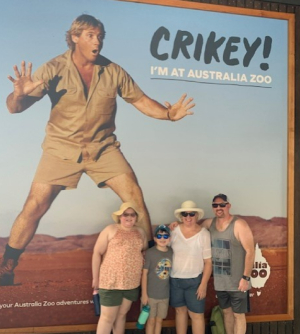
Sixteen-year-old Emily Heape has overcome incredible odds and was granted a dream come true through the Dream Factory. Just before Christmas, Heape went on her dream trip to Australia to experience all kinds of adventures with her family.
“We started our journey to Australia on Dec 17, flying to Vancouver after spending the weekend in Winnipeg,” said Heape. “What felt like a billion hours later, we arrived at my aunt and uncle’s house in Noosa, Australia. We extended our stay as a family holiday and in total, we were in Australia for 17 days.
“My thoughts and first impressions of Australia when we first arrived were darn it’s hot here! If I’m not dead by the time we leave, I’ll be a raisin. It was really warm, but beautiful and so different from Canada.” Heape did a lot of sightseeing while in Australia and witnesses some breathtaking views. She also made sure to check out all the animals and sea creatures she could. “While we were in Australia, we did lots of fun things,” said Heape. “We went up this huge 230 metre tower called Q1 at the Gold Coast. From there, we got to see a 360 degree view of the beach, ocean and the city of Bris bane all at once. Then we went to the Australia Zoo, which was my favourite, and we got to see all of the different amazing animals. We visited some markets and mom loved all the different vendors. “We also went to Rainbow Beach, went swimming in the ocean and to the Great Barrier Reef, which was amazing. All of the different fish and creatures you could see, it was incredible. To get out to the reef, we had to take this huge boat that kind of reminded me of a ferry. “While we were at the Great Barrier Reef, we tried snorkelling, but I did n’t like it very much,” said Heape. “There was this glass-bottom boat that my dad and I went on, and you could see everything. It was so cool. Later, while my mom and brother were still snorkeling, my dad and I went in the submersible. That was even better than the glass bottom boat. You could see a lot more in the submersible than in the glass bottom boat. I think that was one of my favourite things we did the whole trip. There was this one fish that they named Wally, since he was al ways around. “Also, we took a glass-bottomed sky rail ride up a mountain at the world's oldest tropical rainforest while in Cairns and visited a 100-year-old town called Kuranda.” Each adventure Heape went on was left a lasting impression and she was really engaged at the zoo, where she saw lots of different animals for the very first time, up close and personal. “My favourite activity in Australia was the submersible,” said Heape. “This was my favourite activity because it was like a whole different world under the water that I had never seen before. It was a whole experience in itself. I enjoyed seeing all of the cool and different sea creatures. “All of the different animals that we got to see were one of my favourite parts of the trip. My aunt and uncle had quite a few different animals in their yard. They have wild turkeys they named Walter and Winne, as well as kookaburras, and wild cockatoos among others. They have lots of different kinds of bugs and spiders. My mom and brother got to see a praying mantis. There was this huge beetle at the B&B that was the size of a palm. “There were lots of different kinds of birds when we went to the zoo,” said Heape. “We went to a bird show and we got to see so many types of birds there. At the zoo, we saw a Komodo dragon, tortoises, and lots of different types of lizards and snakes. We went to a crocodile show, which was pretty cool to see, we saw a cassowary, which sort of looks like a fancy ostrich native to Australia. “We went and saw the koalas, which to be honest were sort of boring, but very cute. One day we went to a koala sanctuary, which I enjoyed much more as we got to pet a koala and see it up close. We got to see some sleep ing dingoes and a binturong, which looks like a bear and a cat combined. We got to see lots of wallabies and lazy kangaroos, as well we got to see some elephants, which made me very happy. We also went and saw a tiger and a giraffe.” This trip to Australia will always be one Heape and her family will cherish forever. Not everything went as smoothly as planned, but the memories made will last a lifetime. “I went swimming in the ocean for the first time when we went to Rainbow Beach,” said Heape. “Unfortunately, one of the medications that I take causes my face to react to the sun and it gets sore and itchy, so swimming in the salt water didn’t make my face feel very good. “I think I’ll remember everything since this trip was my dream trip and a once-in-a-lifetime experience. Finally visiting my aunt and uncle and having them show us where they live, with all the different places and things that are unique to Australia is something we’ll always remember.
Skippy L ownership under question by Town

The state of the Skippy L rests in the hands of who officially owns it, which has now come into question. With the derelict state of the designated heritage site being beyond repair, the Town of The Pas and Heritage Society must first find the owner before the de-designation process can begin.
“Right now, the town is stilling trying to determine ownership of the Skippy L,” said Town of The Pas Assistant CAO Jenn Early. “I’m working with the Heritage Society, but they don’t seem to have any information either. We have no proof that the Town of The Pas owns the Skippy L or anything proving that it was the town that designated it a heritage item.” A relative of Tom Lamb expressed some interest early on, but that has since been abandoned. “In October of 2023, The Heritage Society ad vised that the great-grand son of Tom Lamb, Fraser Fisher, reached out to them and he was inquiring about restoring the boat,” said Early. “The Heritage society put him in touch with me. I received one e mail from him and pro vided him with the status of the boat and the Condition Assessment report the town had done on the Skippy L. I never heard back from him. I have sent him three more e mails since then with no reply. “It is necessary to find relatives of the original owner as the Heritage Society is requesting this be fore they will de-designate the heritage status. With out the de-designation the town cannot legally demolish the boat, as we cannot prove we are the owners of it. “The Skippy L is be yond repair,” said Early. “If the owner would have used the designation status before it got in this state, there would have been funding through the heritage society to fix it up. Unfortunately, we don’t know who the owner is and can’t get this process going”. The current condition of the Skippy L poses some concerns in terms of safety for the community. It has been boarded up to prevent people from entering in. “With the state the Skippy L is in right now, it is a huge liability,” said Early. “I’m still working with the Heritage Society, and they are now looking at what the next step will be in order for the town to de-designate it and demolish it.” If anyone knows who may be associated or has knowledge of who has ownership of the Skippy L, please contact the town office.
Hiring process begins for Town’s CSO program
The Town of The Pas, like many rural and northern Manitoba communities, is struggling with having adequate numbers of police officers stationed in the community. The cost of policing is rising, as is the cost of everything else, but there are just not enough police officers on hand to deal with the various issues around community safety and crime.
The Town of The Pas has budgeted for the creation of a Community Safety Officer Program. Currently, there is an ad out to hire a Community Safety Manager to spearhead the project.
“The Community Safety Officer (CSO) Program is still in the works, but the hope is to have a Community Safety Manager in place by the end of February 2024, to help role this program out,” said Town of The Pas Assistant CAO Jenn Early. “The plan is that the safety officers will be out and about the community, getting to know people and businesses. They will have a Peace Officer Status. “There will be two CSOs and a manager hired. They will do patrols in vehicles, bikes and walking. The CSOs and Community Safety Man ager will be working closely with the RCMP. We are hoping to have them work shift work and on weekends. The Com munity Safety Manager will be in constant contact with the local RCMP and our CSOs will work closely with the RCMP. If the RCMP need assistance they will contact the CSO’s and the vice versa. “We are working on a LOU with the local detachment to ensure we are on the same page,” said Early. “The CSO program is to help the RCMP so they can deal with more pressing matters; it’s not so the RCMP have less to do. The CSO’s will deal with individuals intoxicated in the downtown area, provide them rides home or to the homeless shelter or the RCMP detachment, if they do not have any other place to go and are a danger to them selves or others. They will also issue parking tickets; assist the RCMP with traffic control for parades; stay with individuals who are at the hospital under the MHA; provide basic community safety such as patrols and presence around town and eventually issue fines for by-law infractions. “Before they deal with enforcing our by-laws, we want them to get the com munity safety side of things started first.” Applicant for the CSO positions will have to meet certain qualifying criteria before they apply and then there is mandatory training to complete before they can act in the capacity they are hired for. “Since the CSOs will have access to cells at the RCMP detachment, they will also have to success fully pass and maintain Criminal Records Check and Vulnerable Sector Checks, enhanced security clearance required by MB Justice and Child Abuse Registry Check,” said Early. “There is a four-week training program through Brandon City Police that the CSO candidates will have to complete. This Level 1 Training is a requirement in accordance with the Manitoba’s Police Services Act (PSA). The Manitoba Safety Officer Induction Training is the minimum training requirement for issuance of a peace officer appointment for safety officers. “The officer course will provide training including, arrests and detention; understanding the system flow of laid charges; Indigenous awareness and community diversity; the Charter of Rights and Freedoms; court testimony; the Criminal Code; criminal investigation; Duty to Act and Duty of Care; elements of a crime; exhibit handling; interviewing; an introduction to law; Manitoba’s Intoxicated Persons Detention Act; legislation around governing peace officers; Manitoba’s Mental Health Act including authorities, forms, etc; Child and Family Services including missing persons matters; note taking and report writing; provincial acts, statutes, and municipal bylaws; radio procedures; restorative justice; search and seizure, along with the authority to search vehicles, persons and dwellings; tactical communications; traffic enforcement training; use of force and officer safety; and Victims’ Services and Social Services Level II Training,” said Early. “They will also have to meet the following requirements that are in accordance with Manitoba’s Police Services Act, such as the minimum physical requirements, vision and hearing requirements.” The cost of policing is beyond any municipality’s control, but the Town of The Pas realizes they need more supports to keep the community safe. The Town of the Pas’ 2024 budget is $308,000 for the CSO program and $3,714,000 for the RCMP policing. There is still more funding needed for this particular project. “We have an agreement already signed be tween the Province, the Town of the Pas and the RCMP,” said Early. “We have a committee of council formed with three members of Council, the CAO, myself, along with the local RCMP Staff Sergeant and Sergeant. We have started advertising for the Community Safety Manager and will be re viewing resumes the second week of February. There is a job description completed for the CSOs, but won’t start advertising until the manager is hired. “There are a few com ponents we are still working on such as the LOU with the local detachment, a vehicle for the CSOs and we’re still looking for funding, as this program is not funding by the Province. We’re working with the communities of Thompson and Ste. Anne, as they are the only two municipalities in Manitoba that currently have the CSO program up and running. We’re in the process of developing policies and procedures for this pro gram, and hoping that once the manager is hired, this person can take this on. “We are hoping to have tow CSOs in place by the end of March be ginning of April, and then hopefully there will be Level 1 Training avail able,” said Early. “We would like to see the pro gram in operation by May. It won’t be fully operational for some time as there will be lots of training and learning curves. We want the community safety aspect side of things figured out before we have them start by-law enforcement.”
Teaching the Treaties to Teachers

Teachers in the Swan Valley School Division participated in training delivered by the Treaty Relations Commission of Manitoba (TRCM) this past Friday. Teachers from Grades 9 to 12 attended the morning session, while teachers from kindergarten to Grade 8 attended the afternoon.
TRCM’s Treaty Education Lead Connie Wyatt Anderson was the facilitator and is a former resident of the Swan Valley. Her passion for storytelling led to her calling to teach history.
“I grew up in Mafeking and went to high school in Swan River,” said Wyatt Anderson. “It felt like I was related to everyone and my parents still live there. My dad was a real seasoned storyteller, so I think early on I got a love of local stories and history. I attended the University of Winnipeg and when I finished, I ended up teaching in Opaskwayak Cree Nation (OCN).
“OCN had just built a new school and I was offered a job teaching history. That was just the perfect fit for me.”
Wyatt Anderson taught at OCN for 22 years and then in 2014, left to focus her time on pedagogical writing.
This led her to become part of TRCM developing curriculum and teaching about the treaties and their role in Canada.
“While teaching history back then, I was following the history curriculum and textbook and it was a reflection of its time, and even back then I noticed there were massive gaps in it,” said Wyatt Anderson. “The nice thing about history is that parts of it may be in textbooks, but it’s also in the people, the land, the language and is all around you. The coolest thing about being a history teacher is using the framework from the provincial government and then making it meaningful for the students.
“In 2009, Jamie Wilson became the second treaty commissioner in Manitoba and I knew him personally because he is from OCN. We taught together. When he came in, one of his goals was to begin an education initiative, where students in schools could learn about the treaties. He reached out to me because he knew I had been involved in curriculum development with the Province, so over the years I had been on five different curriculum teams.
I was asked if I was interested in doing it and that is how I got set on this path.
“When I first got started, I’ll admit, I knew just the bare bones of what a treaty was,” said Wyatt Anderson. “I had an understanding as a history teacher, but it was Jamie who really taught me to see it from the perspective of a partnership. It wasn’t just about Indigenous people; it was about factors such as how one’s non-Indigenous great-grandfather accessed land back then and relating that piece to how things unfolded.
“I came in and framed the curriculum. After being a long-time teacher, I knew the project would be successful if it was there to support teachers, not give them extra work. No teacher needs another special project; they have so much already to do. I will refer again to the recipe analogy, but this was like a meal kit, giving teachers the information, they needed to put it together. This was meant to support what they were doing.
“One of the first things I thought in my head, was this cannot be a special project, because those tend to be fleeting and die out,” said Wyatt Anderson. “Our friends in Saskatchewan had done the same thing and they predated Manitoba’s treaty education by a decade. They were excellent supporters to us.
“From there we started off offering workshops on treaty education. I’ve been all around Manitoba and sharing this with teachers.”
Wyatt Anderson encourages educators to use the information they learn about treaty relations and personalize it to suit the area, relevance and audience they are teaching it to.
“I always tell teachers to use the curriculum like a recipe,” said Wyatt Anderson. “There is a reason why allrecipes.com is so popular. The first thing everyone does with a recipe is make it their own, and you can do that in the way you teach history.
Two people can take the same recipe and adjust it for the people they are cooking for, much like teachers can do that with the way they teach history.
“I kind of like the idea of contested history, but when an event happens, not everyone sees it the same way. There are things where two people could witness the same thing and have different takes on it. Everybody tends to think that history is about a regurgitation of facts, it is to some extent, but it’s also about skills too; the ability to weigh evidence and develop critical thinking.
“Nothing in history is random; you have to look at the patterns. Every single thing is connected, except when a tornado hits.
Students are really good if you give them the leeway to find the connections. Dates don’t fall out of the sky and nothing is random.
“Teachers were doing great work already and I knew that,” said Wyatt Anderson. “I think that teachers sometimes aren’t supportive enough and I think by providing something like this, it gives them a little more courage to learn and teach more on something that may be outside their normal scope. This initiative started as a voluntary one and was for an entire decade. A lot of people embraced taking this opportunity to learn about the treaties on their own, while some school divisions totally embraced it. All this stuff predates the calls to action.
“We’re in a different place now, it’s 2024, and when we first started a lot of people were gobsmacked, because they didn’t know any of this. Many said they never took it to school or didn’t understand any of it.
Some people were empowered and felt they could do this and incorporate it into their teaching plans, while others could see themselves in this narrative about treaties as well.”
From paper to the big screen
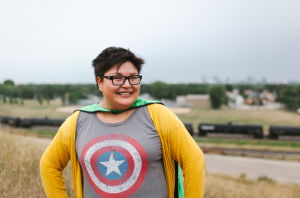
Growing up with a love of reading and making up stories is a sure path to a career in writing of some sort. That is exactly what fueled the fire for Sonya Ballantyne to become a writer, director and filmmaker.
“When I was a little girl, I loved making up stories,” said Creative Native Writer, Director and Public Speaker Sonya Ballantyne. “When I was in nursery school, I saw this huge book on my teacher's desk and she told me that people got paid to write books, and I knew it was what I wanted to do when I grew up. I became a film director, because in film school there were people who wanted to change my work, so it wasn't about Indigenous people or about the reserve as so to maintain my writing that I decided to pursue directing. I prefer writing though. “I always wanted to leave the reserve. I grew up mostly on the Misipawistik Cree Nation, but spent a lot of time in Opaskwayak Cree Nation and Chemawawin growing up. I always wanted to travel. The best route to get me away from home was to attend university, so I went to the University of Manitoba when I was 17. It was a hard few months, because I hadn't ever been away from home. I was on my own mostly, because my family still lived back home. “I really wanted to at tend this history of film class I signed up for, so I kept making excuses to stay in Winnipeg,” said Ballantyne. “By the time Christmas rolled around, I loved Winnipeg and the university, and decided to stay.” Ballantyne’s first experience with film making happened to be on her own first film. She had a story to tell and audiences were listening, which led her to do more. “The first real project I worked on was my first film,” said Ballantyne. “It was a short film called Crash Site and it was about two Cree sisters who reconcile after the death of their parents with the help of a superhero. “The highlights of making it were how everyone responded to it. It is still shown in university classes and festivals to this day, even though it is almost 10 years old. The challenges were mostly related to how many things had to change. I ran out of time when we were making it so some scenes were changed or left out entirely.” Ballantyne’s list of films and writing projects has been extensive over the last nine years. Every year she has worked on some kind of project. Crash Site was her first short film she did as a director and writer in 2015, and it was the winner of the Gimli Film Festival pitch competition. Nosisim is a short documentary that Ballantyne both wrote and directed 2017, which recently placed in the Indigenous Art Centre of Indigenous and Northern Affairs Canada. Then in 2018, Ballantyne was co-director for My Boy, a short documentary. Eagle Girl was another short film that Ballantyne both wrote and directed in 2019, and it was the winner of the ImagineNative pitch com petition. Ballantyne was also named a Barbie Role Model in 2019, and worked as a sensitivity consultant on the video game God of War Ragnarok. Then Ballantyne wrote The Walking Dead: LAST MILE: video game in 2022. For television, Ballantyne was a writer and story editor for the series Acting Mel and her Kookum. “I love showing the world as I see it,” said Ballantyne. “With my newest film, Death Tour, I wanted to portray northern Manitoba as I saw it. Good, in 2022 to 2023, and was nominated for the Writer's Guild of Canada Award. Another television series that Ballantyne wrote for was Builder Brothers Dream Factory last year. Ballantyne’s more recent film project is The Death Tour, which she was a co-director and wrestling consultant. The film has been screened at Cannes Film Festival 2022 and Slamdance Film Festival 2023. “I enjoyed working on Builder Brothers Dream Factory the most, because it was my first real writing job out of working full time at a government job,” said Ballantyne. “I was so prepared to come in and fight for everything that I wanted to say, and I ended up being embraced by the writer's room. I didn't have to put up a fight for anything or justify why I wanted to tell the story I wanted to tell. “I wrote a story about this little girl Mel finding out her Kookum was a residential school survivor. I remember being asked how we were going to portray residential school in an age appropriate way for a pre school audience, and I think we succeeded. I never thought I would write for a Cree girl that wasn't my own creation and not only did I get to that with Dream Fac tory, but I also had two Cree actresses play Yeah, it can be harsh but it is one of the most beautiful places on earth. Our people are dealing with terrible things, but there is so much joy despite the hardship. “I also like that I am contributing to more representation for Cree women and girls. I never had a TV show or movie that showed Cree women or Indigenous women in general, in film genres I enjoyed while I was growing up. When I became an adult and still didn't see the content I wanted, I decided I would have to create it. “I promised myself I would never write some thing about residential school, but my creative juices had other plans,” said Ballantyne. “A lot of my work has autobiographical elements, so sometimes it can be hard to watch or create to the north. Each night, even if we didn't announce a show, word got out quickly that there was one and every kid on the rez would be there. They were so excited for the show and for this one wrestler, The Matriarch, that when she won a match, the kids almost broke the ring in their happiness. things that are about harder aspects of my life. It took me a long time to be able to sit in on screenings of Nosisim, because it felt like relieving the death of my grandma every time, but I find the more open I am about sharing the hard things about my upbringing, the more audiences connect with it.” With the film The Death Tour, it allowed Ballantyne to dive into her love of wrestling and what wrestling matches in northern communities can bring to the people as well as the wrestlers. At one point in Ballantyne’s life, she wanted to become a wrestler. “My family were huge fans of wrestling so WWF was always on,” said Ballantyne. “I really loved how accessible it was. Anyone could be a wrestler. “I seriously looked at becoming a professional wrestler when I was 13, but I came up during the time of WWF's Attitude Era, where the most popular match for women was a bra and panties match. The winner was the woman who could strip the other down to her underwear. “I wanted to be Bret Hart or Shawn Michaels, my favourite wrestlers, but I saw the glass ceiling for myself before I even started,” said Ballantyne. “I was disheartened and gave up on that dream. “Wrestling events brings a lot of joy “I think a lot of people would see something like a wrestling match as not too important in the grand scheme of things, but I saw for myself how happy it made the audience whenever we had a show,” said Ballantyne. “I think anything that makes a person happy is important. “Many of the wrestlers had never been to a reserve, including my fellow director, Stephan. It really opened their eyes to what Indigenous people endure in their own back yards. There were a rash of deaths while we were on the trips and so many shows were cancelled while the community mourned. Despite their grief, one community made sure our group was ok by bringing moose meat stew and pizzas to us. The wrestlers were overwhelmed by how they were welcomed to and embraced by the communities we visited.” Ballantyne is already working on her next film project and for 70s rock music lovers, it’s sure to be one to watch. “I'm working on a film called Six, which follows the friendship of two young girls and how they survive residential school through the music of Creedence Clearwater Revival."