The Star and Times held a question-and-answer session with the two town mayoral candidates: Ainslie White and Lance Jacobson.
Q1. What qualifications and experience do you feel you have to be mayor of the town?
White: The role of mayor is for an individual who can lead while creating a positive culture both within administration and council, where decisions are made as a group with everyone’s best interest at heart. The last 16 years of my professional life provided me with extensive training and experience through leadership, associated training, leading meetings, presenting to large organizations, opportunities to liaise with governing bodies, and legislation interpretation. My professional experience has prepared me to lead our council and staff as mayor of our town. I would use my experience to encourage council to gather information, consult subject matter experts, and include those directly involved in the outcomes, while making educated decisions for the betterment of our town and Valley.
Jacobson: First, my knowledge of the true responsibilities of the mayor’s office. I have learned policies and regulations, and the procedures required to build and enforce them. I understand municipal finance documents, a key requirement for managing municipal funds and operations. Through my experience in governance from councillor to Mayor, I realize the importance of prioritizing professional representation. I possess the ability to lead the town in defining its strategic vision and acting on long-term development and infrastructure needs. Additionally, remaining professional during times of crisis and relying on my past experiences keeps me well-prepared.
I am accustomed to working closely with the public. A commitment to good communication helps me in negotiations and in bridging gaps between different community organizations and fellow council members.
Q2. What are your top three priorities or focuses in town and why do you consider them priorities?
White: Safety – Safety is at the top of the list. As the General Investigation Section (GIS) unit continues to advance with arrests and enforcement, I feel strongly that we need to keep that momentum. I remember when there were picnic tables out front of businesses where folks could have a cup of coffee or sit on a public bench. Many of these have been removed with the intent to protect worker and public safety. I want to restore the general feeling of safety in our town where residents can leave the grocery store without fear, and store owners don’t feel they need to lock their doors during hours of operation.
Healthcare - Access to healthcare in Swan River affects everyone in the Valley regardless of age or specific location. With continued collaboration with valley communities, this must remain a priority. Our hospital has maternity ward equipment; however, we currently don’t provide maternity services. This is a priority to me as a mother, and it is directly involved in our economic development and the growth of our town. We need our ambulances fully staffed and all care home beds to be available for use. Our precious aging community cannot stay in the valley without consistent access to healthcare.
Senior Support – Approximately half of our valley residents are a part of the senior community, yet we have not prioritized their support services to enable these folks/ourselves to stay and age here at home in the valley. We need to collectively fund Service to Seniors, provide support for operating costs, and regulate costs for transportation within and outside of Swan River for access to services. I want to work with Service to Seniors and the Age Friendly Committee to access available funding, ease the financial burden currently being experienced, and increase time/resource support with volunteers.
Jacobson: Public Safety – To continue the hard work and collaborative efforts that resulted in our local RCMP detachment receiving a General Investigative Section (GIS). I vow to stay on this front by continuing to lobby other levels of government to ensure permanent funding for the GIS in Swan River. Furthermore, I will continue to lobby for bail reform at the provincial and federal levels to stop the proverbial revolving door.
Economic Development and Medical Services – I will focus on retaining and attracting businesses to Swan River by providing further incentives for them to thrive within our limits. A priority is to continue to review and adjust our incentive planning, focusing on a vibrant Main St. to ensure storefronts are revitalized and inviting. Regarding healthcare, the province has proven that Swan River is a regional hub. Having successfully secured a CT scanner, I will now focus my time on ensuring Swan River becomes a regional stroke center.
Partnerships – First, I believe communication among local levels of government is vital in rural Manitoba. No matter how difficult, I will continue striving to ensure our council fosters strong relationships through mutual understanding and agreements on topics like shared services, a rural water agreement, and recreation. Second, regarding partnerships with stakeholders on large capital projects, I know firsthand we cannot do everything alone. I will pursue grant opportunities and collaborate with federal, provincial, and local levels of government, along with First Nations and the Manitoba Metis Federation, to build the consensus and communication needed to achieve our community goals.
Q3. What level of knowledge and experience do you have about governance, budgeting and infrastructure?
White: Governance is defined as “…the system of rules, practices, processes, and structures by which a country, corporation, organization, or project is directed, controlled, and administered”. I have years of experience directly involved in the establishment, implementation and training of processes within large organizations and small businesses of the aforementioned.
Intertwined within the governance is budgeting. Basically, how can we continue to improve and achieve outcomes with the funding available? This is completed in conjunction with professional accountants & making good decisions with the money we have. Regarding infrastructure, we have a large window of opportunity within the town. I have much experience developing and implementing preventative maintenance and management programs for infrastructure in corporate and municipal capacities. Low-hanging fruit for improvement in this area includes establishing a full list of town assets, defining their specific preventative maintenance programs/schedules, and implementing effective systems to ensure the town protects our assets in a proactive manner, rather than reactively.
Jacobson: I have a strong foundation in good governance, having served on council for 16 years—eight as a councillor and eight as mayor—as well as spending the last four years as a board member of the Association of Manitoba Municipalities. The strongest quality I bring to the table is a commitment to transparent communication and public accountability. I promise to maintain professional conduct at council meetings while always respecting the public voice.
Municipal budgets are complex and take time to dissect. I have consistently encouraged councillors to prioritize the short- and long-term financial health of the town. I welcome challenges and debates to ensure taxpayer dollars are spent as efficiently as possible. I also believe in strategic planning, a responsible process where projects are approved based on merit, community input, and financial feasibility. This experience ensures we can maintain existing assets while delivering the new services our taxpayers deserve.
Q4. How would you implement partnerships and demonstrate a good working relationship with RM Swan Valley West and other municipalities in the Valley?
White: I am committed to working in partnership with all municipalities and communities in the valley. I do not have any historical relationship barriers built with communities to tear down, whereas I am in a position only to build relationships. This includes building relationships with the leaders and councils in our valley to increase our reach with provincial and federal leaders. Presenting requests as a united valley will strengthen our lobbying efforts and associated outcomes.
Jacobson: I believe in a strong Swan River Valley; the success of our rural areas only makes the town stronger, and vice versa. While relations have proved difficult in recent years, I will continue leading our council’s efforts to enhance partnerships with all our municipal neighbours. While it takes two to tango, I can promise that I will always be eagerly waiting on the dance floor.
My approach remains consistent with how I have always entered negotiations: willing to listen and meeting colleagues with respect, while fiercely representing the taxpayers of Swan River.
Q5. What ideas would you bring to the council table to look at attracting new business and building economic development in Swan River?
White: I suggest that council review by-laws and procedures that are outdated or misaligned with our current needs. Identify what the barriers are for developers and investors through discussion and direct involvement of developers and investors. Council needs to understand why some investors are looking to build outside of Swan River and how we can bridge those gaps. Our local Chamber of Commerce needs to be reignited with businesses on the board, involved in decision-making for promotion, programs and growth. Council needs to look further than only business expansion and include the expansion of housing complexes for all levels of income. I want to encourage the council to work with developers and streamline applications and approvals so developers want to build and invest here.
Jacobson: I believe in the need for an economic development officer, and not just for the town; I would support this position to be inclusive of the entire Swan River Valley. I would be very open to partnering with other municipalities for the opportunity to sell the Swan River Valley.
To achieve this, the work behind the scenes demands a great deal of time. From grant writing, local incentives to business retention, federal and provincial advertising, and industry-specific marketing.
Maintaining a high standard is essential, as good business attracts good business. To properly sell Swan River, we must be realistic and professional in developing our town, particularly within a competitive rural market.
Q6. How do you propose to help Swan River with the issues surrounding homelessness, addiction and crime? And which local agencies would you like to see council work with to achieve goals?
White: In many cases, a lack of housing is the underlying root cause of crime and addiction. While building relationships with ministers, I want to collaborate with communities in the valley and apply pressure using bylaws to hold Manitoba Housing & Homelessness accountable for the dozens of homes in our community that are in a derelict condition. The province must take responsibility for the condition and livability of the homes they have provided in the town, which are no longer inhabitable and boarded up. I would like to encourage council to work with our already embedded organizations such as Teen Challenge and the Canadian Mental Health Association. Organizations such as those have many connections and resources available, as well as experience with what has worked and what hasn’t. We need to reach out to other municipalities that have successfully made improvements in these areas and gather information to continue moving forward in Swan River.
Jacobson: Regarding homelessness and addiction, this is a complex issue spanning multiple layers. We must acknowledge the difficult reality that some individuals choose this lifestyle, while focusing support services on those willing to accept help. I propose lobbying for supports ranging from housing to addiction and crime intervention to directly assist those ready for change. This is a far-reaching issue; therefore, I believe this initiative should be led and funded by the province and organizations outside of Municipal Government.
On the crime front, we will continue lobbying the provincial and federal governments to secure the GIS program permanently for the Swan Valley RCMP detachment. Regardless of personal situations, everyone has the right to feel safe in our community, period.
Q7. What lessons can be learned from the flooding that took place this summer and how could council be more emergency-prepared for the future?
White: In my experience, from a professional health and safety standpoint, the town should continue with the land survey and professional consultation currently underway, along with the provincial assessment. As the assessment hasn’t yet been completed, my opinion of high-level lessons learned includes, but isn’t limited to;
-Water level forecasting, communication tool assessments and implementation
-Evaluate building a dyke around Swan River and other water routing options for prevention
-Clearly establishing direct contacts provincially and within municipalities to ensure the most efficient use of resources during an emergency
-Public education for property protection and emergency response
-A formal process established for post-emergency timely reviews by council and the province
-Tabletop reviews/discussions of various flood scenarios to find gaps in planning and preparation
-All potential emergencies must be practiced to ensure those with responsibilities understand what those are and how to act on them efficiently
Jacobson: First, we need better funding relief for affected properties. I will encourage our council and utilize my position as an AMM board member to lobby the province to establish a fund that delivers real-time support to affected properties. While federal disaster relief exists, it can take years for people to see assistance when they need help immediately after losing their homes. People needed help immediately!
Second, communication requires improvement. While the Town of Swan River has solid disaster control systems, communication among large governments, external organizations, and private entities can be enhanced. I commend the hard work done during the recent flooding, but optimizing the timing of critical decisions through good communication systems will improve future outcomes.
Q8. Swan River is in need of a new or upgraded arena. What is your personal take on what needs to be done and what methods would you pursue to make it happen?
White: I have recently had the opportunity to review the assessment and recommendations presented in 2018 by WSP out of Winnipeg with respect to the Centennial arena. The report clearly states that this facility can certainly be upgraded and maintained to a level to provide use to the community for many more years based on the upgrades detailed herein. In 2018, it was noted that a new arena would easily cost upwards of 20 million dollars. In 2027, I would imagine that number to be significantly larger. I would encourage council to pursue an updated assessment inclusive of the upgrades recently completed/invested in, for continued use of the arena with the goal of protecting our assets while promoting economic development. The arena is used by all communities in the valley in various capacities. I would propose we move forward with the inclusion of the perspectives and ideas from all involved as part of the data-gathering effort, towards an informed decision. This includes input and involvement from all valley communities and the Swan Valley School Board.
Jacobson: A vibrant and growing town requires recreation facilities that serve the community and promote healthy lifestyles. Swan River and the Valley have always been at their best when our communities could gather in places to meet, play and respect each other.
The Town of Swan River realizes this is a large and complex project that requires the community and its residents to work together so we can be successful.
Replacing a 60-year-old arena with something new takes a tremendous amount of planning, work and caution. It also takes volunteers who are dedicated to making our Valley and town a better place.
The Town of Swan River has partnered with the Swan Valley Legacy Committee (SVLC). It consists of dedicated residents from all over the Valley who have approached this project with a determined pioneer spirit. SVLC has committed to applying for grants, fundraising, and consulting with community groups to ensure we have a successful plan that has the least impact on local taxpayers.
We continue to talk to the federal and provincial governments and understand that this project can only proceed with their involvement.
Print this page
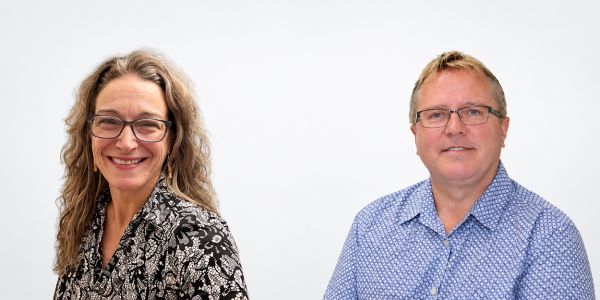
The race is on for Town mayoral candidates
Published in Swan Valley Star and Times Community
Published in
Swan Valley Star and Times Community
Tagged under
