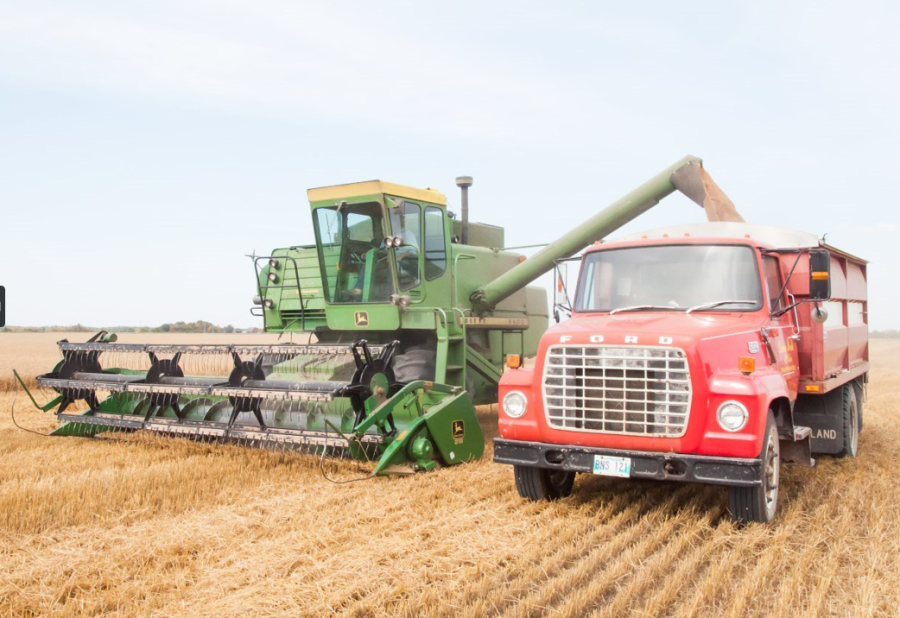
Good weather, for the most part, has producers in the northwest region over the hump when it comes to getting the 2023 crop in the bin.
Although most of the region has received frost - with some damage evident in corn and soybean crops, depending on the stage of crops and degree of frost - daytime temperatures regularly rose to mid-to-high 20Cs meaning continued good harvest conditions.
The spring wheat harvest in most areas is approximately 95 per cent to 97 per cent done, with the northern part of the region slightly behind that at approximately 70 per cent complete.
Yields have been ranging from 50 bushels per acre to 90 bushels per acre, varying widely dependent on early season rains.
Initial reports of quality have been good, however, there are some reports of lower protein.
The canola harvest is in full swing and is approximately 40 per cent to 45 per cent complete with desiccation and swathing taking place as crops reach appropriate stages.
Yield reports have averaged from 40 bushels per acre to 55 bushels per acre, while some fields have yielded below 40 bushels per acre and some above 55 bushels per acre.
The field pea harvest is complete in the region and yields were variable due mostly to precipitation received through the growing season.
Fields with little precipitation ranged from 40 bushels per acre to 45 bushels per acre, while better fields came off at 60 bushels per acre to 70 bushels per acre.
Baling of pea straw is occurring and some post-harvest field work has been done.
Soybeans throughout the region are now mostly in the R8 stage and are moving towards maturity.
There has been a small start to the harvest in the Dauphin area and, while some crops may have been touched by frost, it is unknown at this time if any damage has occurred.
Seeding of fall crops started last week across the region.
Provincial picture
Harvest progress sits at about 64 per cent complete across the province, which is ahead of the five-year average of 54 per cent. Harvest continues in spring cereal crops, with barley at 95 per cent complete, oats at 95 per cent complete and spring wheat at 93 per cent complete. Overall, cereal crops remain in fair to mostly good condition. Many corn fields have achieved growth stage R6 and are drying down. The canola harvest continues with approximately 55 per cent of acres harvested. Soybean fields are mostly in the R7 to R8 growth stages with harvest progress at 21 per cent provincially.
Cereals
Spring wheat yields range from 35 bushels per acre to 70 bushels per acre, with highs of 90 bushels and a low of 16 bushels per acre in the driest regions. Across the province, the spring wheat quality is rated mostly fair to good. Protein levels range from 13.5 per cent and higher and grading No. 1 or No. 2 Canada. Oats have been yielding 90 bushels per acre to 130 bushels per acre with highs of 170 bushels per acre and some in the driest areas as low as 60 bushels per acre. Barley yields are between 70 bushels per acre and 100 bushels per acre.
Oilseeds
While the canola harvest sits at 55 per cent complete provincially, approximately 75 per cent of the crop has been taken off in the Central region. Overall crop condition reports have ranged from fair to mostly good. Sunflower fields are transitioning from the R9 growth stage with bracts becoming yellow and brown. The crop remains in good to excellent condition. The flax crop growth stages range from late stage 11 to stage 12 with lots of variability across individual fields being reported. The flax harvest in the Central region continues with approximately 40 per cent of acres in the bin. Reports put the crop in fair to mostly good condition.
Pulses and beans
Soybean fields continue to be harvested in most areas of the province with variable yields dependent upon summer rainfall. Yield ranges from 20 bushels per acre to 30 bushels per acre on the earliest harvested fields to 30 bushels per acre to 40 bushels per acre plus in recently harvested crops. Overall crop condition remains good. The dry bean harvest is approximately 72 per cent complete with yield ranging from 1,200 pounds per acre to 2,500 pounds per acre.
Forages and livestock
Corn silage harvest is well underway. There is a big push to get dryer fields chopped and into piles before rain hits. Beef producers continue to chip away at a second cut from fields that are predominantly grass and are baling straw for bedding and feed as it becomes available. Some producers are considering taking second cut on alfalfa fields that are in full bloom as the alfalfa’s root reserves should be well charged, and minimal regrowth is expected. Forage growth on hay and pasture land is mostly finished due to dry conditions. Light frost in parts of the Northwest region have producers concerned over nitrates in their annual crop silage and greenfeed still standing, and are advised to feed test prior to feeding. Some producers are supplementing hay on pasture to ensure nutrient requirements of cattle are being met and to take pressure off the grass. A handful of producers are beginning to move cattle onto fenced hayfields or harvested cropland to graze available regrowth and stubble. Water levels in dugouts are low, particularly in areas that have consistently missed out on rain. Some producers are hauling cows home and taking calves to auction marts.
