


Dauphin Herald
MLA honours Lytwyn in the House
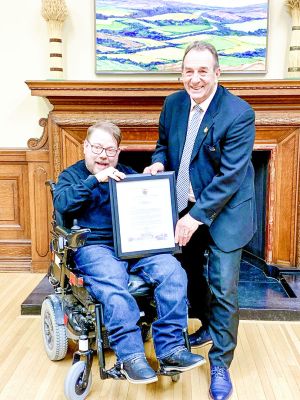
Dauphin MLA and MAnitoba Agriculture Minister Ron Kostyshyn, recently delivered a Member’s Statement in the Legislature recognizing the achievements of Winnipegosis resident Alex Lytwyn.
Lytwyn lives with cerebral palsy and, using a powerchair, he has built a life shaped not by limitations, but by determination, creativity, and a strong commitment to advocacy.
Lytwyn was joined in the Legislature by his supporters, including his mother Sherry Lytwyn, Karen Huhtala, a dedicated health care professional, Lindsey Cooke, CEO of Manitoba Possible, and Mark Gabrielle a close friend and relative, making the recognition especially meaningful.
Kostyshyn’s Member Statement read:
“Honourable Speaker, I rise to recognize Alex Lytwyn of Winnipegosis, Manitoba, an inspiring rural disability advocate, writer, and entrepreneur who continues to break barriers and challenge assumptions about what is possible.
Alex lives with cerebral palsy and uses a powerchair, but he has never allowed that to define his limits. He has built a life grounded in determination, creativity, and advocacy.
Alex is an accomplished writer who has completed two books awaiting publication and works as a freelance contributor.
His first-person perspective pieces have appeared on CBC Manitoba.
He has earned certificates in Business Administration and Applied Counselling, reflecting his commitment to personal growth and life-long learning.
Through his love of hockey, Alex served for three seasons as video coach for the Parkland Rangers U18 AAA team.
His involvement sends a powerful message that people of all abilities can contribute to the game and be an important part of the team.
Alex has proudly served as an ambassador for Manitoba Possible and now sits on its board.
With their support, he has taken part in remarkable experiences, such as rappelling 272 feet down the Manitoba Hydro building in support of Manitoba Possible and Easter Seals Canada.
Alex is the founder of Willpower Media, a platform dedicated to sharing stories and encouraging people to push beyond perceived limits.
Through his advocacy, media work, and social media show “Can I Come In”, Alex inspires others to believe in their own possibilities.
I would like to recognize Karen, a valued friend and health care professional who has supported Alex and his initiatives for many years, as well as Alex’s family, for their ongoing support.
Alex reminds us that with determination and support, barriers can be broken and new paths created for others to follow.
Please join me in recognizing an inspiring young Manitoban who demonstrates that determination, independence, and opportunity can create new possibilities.”
Following the reading, Kostyshyn presented Lytwyn with a framed copy of the Member’s Statement.
Police investigation into woman’s death awaits autopsy results
The body of a woman reported missing last week has been located.
On Mar. 18, at 10:15 p.m., Ste. Rose du Lac RCMP received a report of a missing 21-year-old woman from O-Chi-Chak-Ko-Sipi First Nation.
She had been last seen on Mar. 16 at a residence in the community.
Officers from the Ste. Rose du Lac Detachment, along with a First Nation Safety Officer and community members, conducted numerous checks in the community, including a search of nearby trails, for any information that may lead to her wherabouts.
Early the next morning police were informed her body had been found near Provincial Road 481.
The cause of death remains under investigation awaiting the results of an autopsy.
Ste. Rose du Lac RCMP, along with the Office of the Chief Medical Examiner, continue to investigate.
- • •
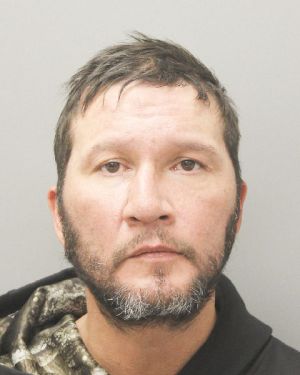
Dauphin RCMP are asking for the public’s assistance in locating Kelly Klyne, 47, who is wanted on a number of charges dating back to December 2025, including aggravated assault, forcible confinement and robbery.
Klyne is known to frequent the Dauphin and Grandview areas and is considered dangerous.
If seen, do not approach, call 911 or the Dauphin RCMP detachment at 204-622-5020.
- • •
On Mar. 17, at approximately 11 a.m., Dauphin RCMP responded to a firearms complaint on Minto Avenue East in Gilbert Plains.
Out of an abundance of caution, police advised the nearby school to lock down, while they dealt with the situation.
Nearby offices were also temporarily closed.
A 46-year-old man was taken into custody at approximately 12:35 p.m., and the lock down was declared over shortly thereafter.
Police continue to investigate.
Police continue search for missing woman

Swan River RCMP are continuing to investigate the disappearance of Lorlene Bone, a Sapoteweyak Cree Nation woman who was reported missing 10 years ago this week.
Bone, who would now be 41 years old, last spoke to her mother on Feb. 29, 2016. She was reported missing to Swan River RCMP on Mar. 9, 2016.
Police continue to receive tips about Bone’s disappearance, with investigators following up on each new piece of information they receive in the hope of resolving his decade-long mystery for her family and the community.
“Numerous searches have taken place over the past 10 years and we’ve followed up on many tips, but we continue to look for the one piece of information that get us the answers we’re looking for, and find Lorlene,” said RCMP Sgt. Marnie Carvelli.
“We continue to urge anyone with information, no matter how small the detail, to contact our detachment.”
Anyone with information regarding Bone’s disappearance, or who may have details regarding the days leading up to her disappearance, is encouraged to contact Swan River RCMP at 204-734-4686, Crime Stoppers anonymously at 1-800-222-8477 (TIPS) or to submit a secure tip online at www.manitobacrimestoppers.com.
Hydro files full resource plan with PUB

Manitoba Hydro has filed its full 2025 Integrated Resource Plan (IRP) Report with the Public Utilities Board (PUB).
Late last year, the utility released its 2025 IRP Road Map that included an early look at the recommended 10-year development plan designed to meet Manitoba’s energy needs and align with net-zero targets.
Representing a complete picture of the integrated resource planning process and its results, the 2025 IRP Report is also now available for public viewing on Manitoba Hydro’s website at hydro.mb.ca.
The 2025 IRP Report provides additional context and information surrounding the previously released road map including the 10-year recommended development plan, an alternative development plan, key learnings from the planning process, near-term actions Manitoba Hydro needs to take, and signposts that will be monitored going forward. The report is accompanied by documentation of the comprehensive analysis and engagement conducted to arrive at the road map.
The provincial government requested Manitoba Hydro file the IRP with the PUB as part of the overall approval process.
“We’re excited to build on our Road Map and present a more complete picture of Manitoba’s energy future with the filing of our 2025 IRP,” said Manitoba Hydro president and CEO Allan Danroth.
“This IRP is the outcome of a thorough, industry-best-practice planning process, informed throughout by engagement with thousands of Manitobans. It presents solid data and analysis in support of our development plan and our alignment with Manitoba’s Affordable Energy Plan and net-zero targets set by government.
“This filing represents the beginning of the final phase of IRP approval. I’m pleased to be able to share this information more broadly now about Manitoba Hydro’s future, and by extension the future of energy in our province.”
The 2025 IRP Report provides more detailed information including a comprehensive risk assessment and deep analysis of resource options, greenhouse gas impacts, financial implications and the trade-offs between different decisions made in planning for the province’s energy future.
Swan River RCMP issue arrest warrant in connection with a fatal accident

Swan River RCMP have issued an arrest warrant in connection with a fatal collision which occured last summer.
Police searching for Matthew Govereau, a 37-year-old man from Winnipeg, in connection with a head-on collision that killed three people on July 1, 2025, on Hwy. 10, near Road 224 North.
Govereau was driving when his vehicle veered over the center line of the highway and struck a parked vehicle on the opposite shoulder. A 42-year-old man and a 31-year-old woman, who were in the parked vehicle, were both transported to hospital where they succumbed to their injuries.
A 29-year-old man, who was a passenger in Govereau’s vehicle, was also transported to hospital where he was later pronounced dead.
Following approval from Manitoba Prosecution Service, 18 charges were sworn against Govereau on January 20, 2026, relating to the collision, as well as the weapons and drugs recovered from the vehicle following the collision.
The charges include three counts of impaired driving causing death, three counts of dangerous operation of a vehicle causing death, three ounts of careless driving, possession of a weapon for a dangerous purpose, possessing a prohibited weapon, two counts of weapon possession contrary to order, possession of property obtained by crime, three counts of possession of drugs for the purpose of trafficking, and possession of a controlled substance.
Efforts to locate Govereau have been unsuccessful. His last known address is in Birch River, but he is known to regularly travel throughout the province, including the City of Winnipeg.
If seen, do not to approach him.
Anyone with information on his whereabouts is encouraged to contact Swan River RCMP at 204-734-4686 or 204-734-3454, Crime Stoppers anonymously at 1-800-222-8477, or leave a secure tip online at www.manitobacrimestoppers.com.
AC Alumni Association set to honour award winners

Assiniboine College’s Alumni Association has selected three of its number from the Parkland to be recognized for their contributions to the community and Assiniboine students.
This year’s recipients include Twyla Gilroy, who is receiving the Distinguished Alumni Award for Parkland, along with Lance Maxwell and Jonathan Nadolny, who will be honoured with the Excellence in Education award.
“This year’s award recipients have not only excelled in their fields, but they’ve also inspired future graduates by demonstrating the impact an Assiniboine education can have on your future.” said Jayden Lamb, chair of Assiniboine College’s Alumni Association.
“We’re incredibly proud to celebrate their achievements and to have them as part of our alumni family.”
The Distinguished Alumni Award is presented annually to a graduate of the college who has distinguished themselves in both their chosen profession and their community.
A 2003 Applied Counselling Skills graduate, Gilroy lives in Dauphin with her husband Bob, who is a graduate of AC in Business Administration. Their three adult sons Nathan, Jacob and Garret also attended the college.
When she first enrolled at Assiniboine, Gilroy was an at‑home mother seeking something that was just for her.
Her time at Assiniboine provided a meaningful outlet and gave her confidence to pursue her Bachelor of Social Work at the University of Manitoba.
Today, Gilroy is a dedicated member of a pediatric FASD diagnostic team and notes that she is honoured to walk alongside families as they navigate assessments.
She is passionate about sharing knowledge, reducing stigma, and supporting women.
A committed community volunteer, she serves with Canadian Mental Health Association Swan Valley, the Parkland Crisis Centre, the Harm Reduction Network, and the Manitoba FASD Coalition Inc.
Gilroy values the lasting relationships built through her studies at Assiniboine and encourages graduates to stay open to learning, opportunities, and community involvement.
For the full story, read this week’s edition of the Dauphin Herald.
Two arrested after police execute search warrant

Two men are facing several charges after RCMP seized drugs and cash from a Camperville residence
On Jan. 20, at approximately 11 a.m., police executed a search warrant at the home seizing over 50 grams of cocaine and $22,000 in cash.
The warrant was executed by Winnipegosis RCMP, with assistance from the Manitoba West District’s Crime Reduction Enforcement Support Team (CREST) and Dauphin Police Dog Services. In addition to the drugs and money, a weapon was also seized.
Two people were arrested at the scene.
A 33-year-old man and 27-year-old woman face charges of possession for the purpose of trafficking, possession of a weapon for a dangerous purpose and possession of property obtained by crime over $5,000.
The names of the accused can not be released at this time, as the charges have not yet been sworn.
Both were released on an appearance notice.
Audit of dialysis services uncovers deficiencies in the provincial system

The Manitoba government is using a new report from the Office of the Auditor General (OAG) to highlight its work in improving dialysis services in the province.
The report, examing the period between April 2022 and March 2024 , found the Province wass not managing dialysis services in a manner that promotes efficiency.
“Even though dialysis is a life-sustaining service, the Province does not know if it is achieving the best results for patients and providing the best value for taxpayers,” Auditor General Tyson Shtykalo said in the report.
Shtykalo’s critique highlights the need for co-ordinated, provincewide oversight of dialysis services in Manitoba, and make several recommendations which would help achieve that.
It is work which is already under way, says Health, Seniors and Long-Term Care Minister Uzoma Asagwara.
“Dialysis is life-sustaining care, and it requires strong provincial co-ordination to ensure patients receive safe, timely treatment no matter where they live,” Asagwara said.
“The OAG’s report examines a period marked by system strain and years of fragmented planning under the previous government. That was the reality we inherited. Since forming government, we have moved quickly to put proper structures in place, expand access to dialysis closer to home and build a system that is safer, more co-ordinated and focused on patient outcomes.”
Since 2024, the Manitoba government has established a provincial kidney health planning subcommittee, implemented standardized policy and procedure review processes, expanded education and training for kidney health staff, and strengthened supports for home-based dialysis.
These efforts are focused on improving patient outcomes, clarifying accountability, and ensuring dialysis services are delivered as efficiently and equitably as possible, the minister said.
Recent investments, including expanding dialysis services in Norway House Cree Nation, Asagwara said, reflect the Province’s commitment to addressing long-standing gaps in access to care, particularly in northern and Indigenous communities, while reducing the need for patients to travel far from home for treatment.
Shtykalo’s full report can be found online at www.oag.mb.ca/audit-reports.
Program delivers $350,000 in grants to the community

Development in Dauphin got a $350,000 boost over the weekend, thanks to the Province’s From the Ground Up - Safe Healthy Communities for All program.
The four community projects supported included Dauphin Recreation Services arena upgrades with $100,000, enhancement to the Ukrainian Folk Arts Centre and Museum to the tune of $100,000, youth programming through Anishinaabe Agowidiiwinan Secretariat valued at $100,000, and career education programming for youth through Career, which received $50,000.
“These investments are a meaningful boost for our community and reflect the strength of our local partnerships,” Mayor David Bosiak said.
“From supporting seniors and enhancing recreation facilities to creating positive opportunities for youth, these projects directly contribute to a healthier, more inclusive Dauphin. We are grateful to the Manitoba government for recognizing the value of investing in community-driven initiatives that make a real difference in people’s lives.”
Municipal and Northern Relations Minister Glen Simard announced the grants, Saturday.
“Our government is proud to partner with communities like Dauphin to strengthen the places where people come together, stay active and feel supported,” Simard said.
“These investments reflect what we hear from local leaders every day, that when we create safe, welcoming spaces for seniors, youth and families, the whole community thrives. From recreation upgrades to cultural spaces and youth programming, these projects will make a real difference for Dauphin residents for years to come.”
In 2025-26, From the Ground Up - Safe Healthy Communities is investing more than $12 million to support more than 200 community development projects across Manitoba.
The program’s approved grants will fund renovations at local legions and community spaces, as well as programs that help keep young people away from gangs and crime, improve public parks and support seniors looking to stay active.
“I’m proud to see these investments supporting the people and organizations that make our community vibrant and resilient,” Agriculture Minister Ron Kostyshyn, member of the legislative assembly for Dauphin, said.
“Whether it’s creating opportunities for young people, strengthening cultural spaces or improving recreational facilities, these projects reflect the priorities we hear from residents every day. Our government is committed to building safe, healthy communities across Manitoba, and I’m pleased to see Dauphin benefiting from this important program.”
Removal of agency nurses not putting emergency departments at risk: PMH

Recent claims that emergency departments in Dauphin and Swan River are at risk of closing due to a lack of available nurses are unfounded, says a Prairie Mountian Health spokesperson.
Concerns have been raised in the wake of efforts undertaken recently to reduce Manitoba’s reliance on private for-profit nursing agencies in the public system.
Manitoba announced earlier this month it will only work with four private agencies to fill vacant shifts at public health care facilities starting, Jan. 15, a sharp decline from the nearly 80 companies the system drew from previously.
The four companies - Elite Intellicare Staffing, Integra Health, Bayshore HealthCare and Augury Healthcare - won the right to work in Manitoba through a competitive bidding process.
Nurses and Manitoba’s official opposition sounded the alarm that shrunken pools of nursing professionals spells disaster for emergency and other departments at the Parkland’s two regional hospitals.
In a written statement, PMH indicated it has not reduced operating room or chemotherapy services at Swan River to support emergency department staffing. Additionally, PMH has not reduced the number of in-patient beds to increase nursing support in emergency departments.
“While PMH has current vacancies, the region regularly reviews and monitors its operations and continues to support safe and reliable service delivery. Recruitment efforts to fill permanent positions continue, which will reduce the need for agency staffing over time,” the statement reads.
“As part of its recruitment strategy, PMH actively engages with agency nurses working in its facilities, educating them on the benefits of working within the public system and encouraging them to consider permanent roles within the region.
“PMH also works closely with Shared Health’s Provincial Travel Nurse Team to support service delivery where needed.”
In the case of Dauphin, the DRHC’s Special Care Unit has been closed temporarily. The four bed unit, which provides a higher level of care to patients who require closer monitoring, requires two specialized nurses per 12 hour shift.
Any patient transfers that are required as a result will be done in consultation with through the Provincial VECTRS system. The Virtual Emergency Care and Transfer Resource Service (VECTRS) is Manitoba’s centralized and co-ordinated source for clinical guidance and patient transport support.
“Prairie Mountain Health continues to work to secure the necessary staffing resources to support safe and reliable service delivery for the Dauphin SCU so operations resume as quickly as possible,” the statement continued.
“In addition, PMH has three nurses who are currently taking required specialized training to work in the Dauphin SCU. They are anticipated to have their training completed in February.”