


Shawn Bailey
City’s mill rate rises slightly in 2024 budget
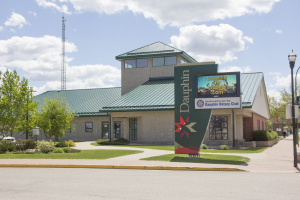
Dauphin residents will once again see a slight increase in their municipal taxes this year according to budget documents presented at a public hearing, May 5.
The mill rate has been set at 19.513 for 2024, up from last year’s 18.937. The tax levy will net the City $7,276,549 this year, roughly 3.5 per cent over the 2023 take.
What that means for homeowners is an extra $71 on their tax bills
With costs increasing due to inflation, several large infrastructure underway on Main Street South, at the Buckwold Bridge and out at the sewage lagoon, council decided to act before falling behind as they have seen other municipalities do, mayor David Bosiak said.
“All of those things combined with inflation, combined with two new union contracts that were signed last year with our staff, we felt that a modest tax increase that was consistent with the rate of inflation would be manageable,” Bosiak said. “We’ve gone through a period of fairly steady, not spectacular, but steady assessment growth. For several years during that period we used just the growth in assessment to continue to do business. But council didn’t want to get into a position that other municipalities are in right now. We talked to several at AMM that are having double digit tax increases in an effort to catch up after years of no tax increases.”
Bosiak added discussions, which he described as thoughtful, were held around possibly raising the mill rate more in anticipation of capital expenditures which might surface in the future
“Council decided that we would go to our taxpayers when we know exactly what the costs of things will be and not before,” Bosiak said, adding as an example a project which might begin two years down the road, but asking for the money now and collecting interest on it until it was spent. “We thought that it was much better that the people hold on to their own money until there’s an actual need and the project is occurring, at the present time or the very near future.”
In looking to the future, Bosiak said council is philosophically committed to a tax system that is consistent with inflation
“So that we don’t get behind, just on the basic cost of things,” he said.
To that end, $1.6 million will be drawn from reserves to finance operations this year. Bosiak said it seems incongruous to ask taxpayers for more while stockpiling in reserve funds.
“We need to take money out of our piggy banks before we can ask people to take it out of theirs,” he said, adding there is, however, a balance the city should maintain in reserve. “And so last year we reduced our reserves by a couple of million dollars and we’re doing the same again this year.
“We are still maintaining our reserves slightly above the benchmark that (Finance director Scott Carr) outlined, which is equivalent to about one years’s worth of taxation. So we have about a $7.5 million line that we don’t want to get under.”
Revenue from other sources will also see a significant increase, climbing to $13,679,515 from just under $6 million last year, driven mainly by conditional provincial transfers expected to hit $7.9 million this year. Grants of $3.8 million for the Main Street South rehabilitation and $3 million for the upcoming daycare project account for the majority of the increase.
Overall, General Fund revenue for 2024 has been budgetted at $21,746,898.
On the expenditure side, all areas have seen slight increases.
The General Government Services budget is set at $1,556,173 up from $1,446,878 last year. The 8.6 per cent increase will, among other things, include regular staff wage increases and community grants and appropriations, which have risen to $74,600, up by $16,600 over last year.
The Protective Services budget has been set at $3,991,353 compared to $3,584,908 in 2023. At $3,034,015, the RCMP contract accounts for the majority of spending and the increase of 6.3 per cent.
Transportation Services will see expenditure totalling $2,049,481, up from the $1,905,366 budgetted last year, an increase of 5.34 per cent. Spending supports operating costs for public works, such as maintenance of curbs and gutters, lanes and roads.
A total of $1,058,926 has been set aside for Environmental Health Services, up slightly by 2.78 per cent from the $1,043,884 budgetted last year.
Public Health and Welfare Services also increased slightly, by 4.4 per cent from the $33,749 budgetted last year to $35,249 this year. The money spent covers the one-tier social assistance payment to Province of Manitoba and will support the Community Safety and Wellbeing Plan currently in development.
Environmental Development Services has been allotted $288,427 for 2024 compared to $179,605 last year, an increase of 29.68 per cent, which will support a Zoning Bylaw review starting soon. Expenditures also include the Dutch Elm Disease tree removal, Communities in Bloom and weed control.
The budget for Economic Development Services, at $635,977 has been set considerably higher than the actual $394,333 spent last year. It is an increase of 20.97 per cent to the budget, which fluctuates depending on development.
When it comes to Recreation and Cultural Services, the $2,254,441 budgetted this year is an increase of 4.13 per cent from the 2023 budget of $2,170,892.
While 87 per cent of expenditures make up the appropriation to Dauphin Recreation Services, the budget also supports facilities such as the Watson Arts Centre, Fort Dauphin Museum, Dauphin Rail Museum, and the Dauphin Public Library.
Finally, Fiscal Services saw a big jump to $8,186,721 this year from $148,902 because of conditional provincial grants.
Utilities
In the Utility Fund, income is projected at $3,396,096.
The bulk of that income will come through residential water sales budgeted at just over $2.3 million and sewer service charges totalling $669,029.
On the expenditure side, operation and maintenance of the water supply system accounts for the majority of expenses at just over $2.1 million, while sewage collection and disposal accounts for another $328,625.
The Utility has $623,300 in capital work planned, along with transfers to reserves in the amount of $250,000 and $83,517 in debenture debt charges.
Light the lights

Theatre Amisk had the community rolling in the aisles as they presented three sold out performances of Co-op The Musical at the Watson Arts Centre over the weekend.
Written and directed by WAC co-ordinator Peter Nadolny, the locally-focused play centred on a regular day at a Co-op store.
On top of the regular performances, staff from Dauphin Consumer’s Co-op were invited to the dress rehearsal, May 2, as a thank-you for all their support in making the performance a reality.
City wins tourism marketing award

Dauphin and the Parkland figured prominently in the second annual Tourism Awards Winnipeg/Manitoba, last week.
Tourism Dauphin won a Marketing Campaign of the Year Award for rural Manitoba for it’s Adventure From Here On Out initiative, while Assessippi Ski Hill and Resort was named the rural winner of the Business of the Year - Large.
Finally, former Dauphin resident Doug Stephen of WOW Hospitality Concepts received an Award of Distinction for his outstanding contributions to some of Winnipeg’s best culinary institutions and the community at large.
“It feels very rewarding to get recognition for all the work we have done. We’re a small team and we have a small committee with some volunteers and we’re a small community,” said Dauphin Economic Development manager Martijn van Luijn, who accepted the award on behalf of the community.
Get a full rundown of all the awards and more in this week's Dauphin Herald!
Smile Zones coming to Dauphin Regional Health Centre
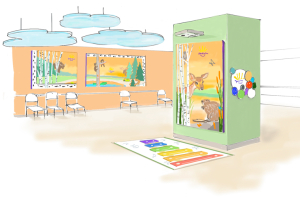
Dauphin Regonal Health Centre (DRHC) is set to get a bit of a facelift thanks to Tim Hortons Westman and the Smilezone Foundation.
Through their Smile Cookie campaign, Tim Hortons Westman franchisees Rhonda Pardy and Greg Crisanti are looking forward to helping provide a more welcoming atmosphere at the region’s largest health facility. The initiative aims to enhance the healing environment and the comfort of patients and their families within the health centre.
“I was introduced to Smilezone and their team after seeing the completion of a Smilezone project at the Brandon Regional Hospital,” Crisanti said.
“Witnessing the transformation to the hospital as well as the impact on both patients and staff, we knew we wanted to bring this opportunity to Dauphin.”
Smilezone Foundation is a registered children’s charity founded by Scott Bachly and Adam Graves in 2012.
The foundation’s mission is to “make tough days a little brighter” for children receiving medical treatment in hospitals and health centres across Canada.
That is accomplished by renovating existing health care spaces (such as waiting rooms, playrooms and patient rooms), over a single weekend into fun and engaging “Smilezones” to harness the uplifting power of a smile and creating a safe space where children and their families can find comfort and distraction during challenging times.
“On behalf of our foundation’s board of directors, we extend our heartfelt thanks to Tim Hortons Westman for generously sponsoring the 2024 Smilezone project at Dauphin Regional Health Centre, a partnership made possible through their Smile Cookie campaign,” Bachly said, adding medical professionals have been consulted to uniquely design Smilezones for each facility.
Find the full in depth story in this week's Dauphin Herald!
Workshop reimagines Second Avenue Northwest

An informal workshop was held last week as a preliminary step to reimagining the first block of Second Avenue as a “creative corridor.”
Dauphin Economic Development manager Martijn van Luijn has been tasked with creating a new vision for area.
“Council has desire to assist with reviving downtown and this would be considered sort of a pilot program, how can we reimagine this street by introducing some enhancements,” van Luijn said.
A consultant from Urban Systems has been contracted to help develop a plan and used the workshop as an opportunity to present examples from other communities as a means of stimulating conversation about what might be possible in Dauphin.
Check this week's Dauphin Herald for the full story!
Countryfest drawing on its past for 35th edition

Summer is the time of reunions. It provides an opportunity for families and friends to get together, reconnect, revel in shared memories and dream collectively about the future. And Dauphin’s Countryfest is making the most of that opportunity this summer.
A celebration of “35 years of musical heritage and community spirit”, Countryfest Homecoming 2024 is a trip back in time to the festival’s roots.
“The lineup is a very throwback lineup and the idea of homecoming was throwing it back to the ‘90s,” Countryfest general manager Kamryn Winters said, adding the festival board and staff undertook some strategic planning last summer which led to the focus.
The full story can be found in this week's Herald.
NDP government maintains its election focus in first budget
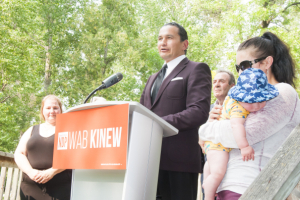
Staying consistent with its election focus of fixing health care and making life more affordable for Manitobans, Wab Kinew’s NDP government released its first full budget last week.
“Six months ago, Manitobans put their trust in our government to rebuild health care and lower costs for families,” Kinew said.
“Our first budget delivers on those commitments by hiring 1,000 new health-care workers and delivering cost savings for Manitoba families with a $1,500 Homeowners Affordability Tax Credit. We’re strengthening our province’s economy, with help for you and help for those who need it most.”
As it was through the election campaign, health care dominated the province’s budget with $1 billion in new spending going directly to the front lines.
According to Kinew, the record investments in health care support a plan to hire 100 doctors, 210 nurses, 90 paramedics and 600 health care aides over the next year, along with investments to retain and train even more.
It also adds hospital and ICU beds, and opens new minor injury and illness clinics and primary care clinics, so more Manitobans can see a doctor when they need one.
“The challenge that we face in health care isn’t going to be fixed overnight,” Kinew said, adding capital funding in health care is more than doubled this year.
“But based on this document, you are going to start seeing improvements in health care this year.”
The premier noted the budget helps to take better care of seniors, invests in better health care for rural and northern communities takes action to improve cancer care in Manitoba, and will help modernize health records and bring in plastic health cards.
When it comes to affordability, an extension of the gas tax holiday through the summer leads the way in addition to providing renters and seniors with increased tax credits, expanding $10-a-day child care, providing free birth control, increasing funding for fertility treatment and providing rebates for electric vehicles.
“What we heard resoundingly is the reality and the impacts of rising costs, the difficult conversations Manitobans have been having at their kitchen tables in every part of Manitoba,” Finance Minister Adrien Sala said, commenting on the process which resulted in the budget.
“We heard about the difference the gas tax is having for people in this province, of the freedom that lower costs create for your family and we know it has meant a bit more left to put into savings at the end of the month.”
The budget also makes significant investments in community safety, agriculture, the economy and education.
“I want Manitoba to be a have province in the next decade and in order to do that you have to grow GDP per capita by about 10,000 to 12,000 dollars,” Kinew said.
“And the way we do that, the best economic plan, is an education plan.”
The work is hard, Sala added, considering the situation left by the previous government when it was removed from power by voters.
“The previous government left us with a huge mess to clean up - a historic deficit, a health-care system that’s been badly hurt by seven years of cuts, and a failure to strengthen our economy or support families who were struggling with years of rising costs,” said Sala, adding the budget charts a path to balance by the end of the NDP’s first term.
“We’re different. We’re making smart, targeted investments. We can take steps to fix health care and lower costs, and we can do it while being responsible with public money and charting a path back to balance. That’s what Manitobans can expect from our first budget.”
Budget 2024: One Future, One People, One Manitoba, is a document borne of extensive consultations and conversations, Kinew said, and is a plan which should excite every Manitoban and bring them pride.
“A huge amount of work has gone into identiying the needs, to listening to the challenges, but also hearing the opportunities that Manitobans are excited about for our future. We don’t have to agree on everything to do the big things together like fixing health care and lowering costs in this present economy,” he said, adding that in addition to unity, the theme of this budget, is about delivering more help for those who need it most.
“It’s a path forward that is built on compassion. It is built on listening to the evidence and most importantly it is built on listening to you. We are very proud to bring forward this document, so that we can continue to work together making this province such a great place. A great place to grow up and a great place to grow old.”
More budget details are available by visiting www.manitoba.ca/budget2024
Province commits fund to Main Street project

Dauphin city councillors chose to add several outstanding accounts and unpaid water invoices to the tax rolls as part of their regular meeting, Mar. 25.
A total of $27,358.57 in outstanding accounts was comprised of an unpaid demolition permit valued at $70 associated with 24 3rd Ave. SW, while $53.20 was owing at 36 King Street for a water connection fee, $53.86 was outstanding at 4 Kirby Ave. W for a property standards fine and $27,181.51 in demolition costs was unpaid at 301 3rd Ave. NE.
A total of $379.24 in water accounts was made up of $27.89 owing at 209 6th Ave. NE, $162.87 at 107 10th Ave. SW, $162.87 at 213 4th Ave. NE and $16.61 at 306 Wellington Cres. In all cases, the previous or current owner or tenant did not pay the final utility bill.
Main Street funding
Council received correspondence from Ian Bushie, Minister of Municipal and Northern Relations indicating his department will provide funding contributions of up to $3.8 million for the Main Street South Reconstruction and Drainage Improvements Project, under the Municipal Economic Development
IMWD levy
Councillors approved the payment of a $19,300 invoice from Inter-Mountain Watershed District for the 2024 levy as per Schedule 4 of the Watershed Districts Act.
Emergency plan
Council received word from Manitoba Transportation and Infrastructure that the City’s emergency plan submission was received and approved by the Manitoba Emergency Management Organization under provisions of The Emergency Measures Act. Senior regional emergency manager, Bob Schkawritka informed council he is available for a discussion of the plan and would be pleased to provide informal feedback.
Accounts approved
Councillors approved the issuance of 51 cheques totalling $2,656,021.33 to cover accounts.
Recycling
Council received a copy of a Multi-Material Stewardship Manitoba (MMSM) Residential Waste Composition Study completed in 2023, which provides data on waste generation and composition, as well as a snapshot of material recovery rates of eligible MMSM and residential recyclable material.
Infrastructure Program.
Council also authorized the signing of a contribution agreement and, as a sign of the partnership, the province requires that the financial contribution be acknowledged on any signage or promotional materials and that all project announcements be undertaken jointly.
Lots more in this week's Herald!
MMSM study provides snapshot of City’s waste collection system

The City of Dauphin got a glimpse into the effectiveness of its waste programs through a recent study completed by Multi-Material Stewardship Manitoba (MMSM).
Results of a Residential Waste Composition Study completed in 2023 were forwarded to the City recently, providing data on waste generation and composition, as well as a snapshot of material recovery rates of eligible recyclable material.
At a recent meeting of city council, Director of Public Works and Operations Mike VanAlstyne said the study results did not contain any surprises.
“Every five years or so Multi-Material Stewardship Manitoba conducts audits in all the communities across the province. There’s a rotating audit schedule. Contractors come and investigate the contents of the community’s waste and figure out the amount of recycling and cross-contamination and different things like that,” VanAlstyne said. “So nothing really big came out of the study or the audit, that they provided.”
The study spanned two consecutive weeks in October 2023 with waste collected and sorted from 10 single family dwelling areas consisting of 10 households in each area, as well as from two multi-family dwellings consisting of 30 and 32 units.
Check this week's Herald for the full story!
Chamber celebrates its members

The Parkland Chamber of Commerce took some time to recognize the efforts of local business and community leaders during a Celebration Night, Mar. 20, at Countryfest Community Cinema.
Local car dealer Dean Cooley received the Business Person of the Year Award, a testament to a passion for excellence and leadership in the business community and his commitment to economic development, innovation, business ethics and community involvement.
Ian Leighton of ICL General Construction was on hand to accepted the Outstanding Business Award recognizing success in company growth, growth prospects, and employment creation, while demonstrating a clear strategic vision and engaging in innovative practices which have a continuing positive impact on the community.
Tanner Bennet of Grow Media in Dauphin was recognized as the Young Entrepreneur of the Year. The award is presented to an individual between the ages of 18 and 35 who has been in business no longer than two years and exemplifies the qualities of effective leadership, innovatively applied know-how, and excellent potential for growth.
The Community Appreciation Group award was presented to The Bridge Ochre River, a safe place for children and teens in the community.
The Community Appreciation Individual Award went to Marge Beyette. The Community Appreciation Awards recognize those who have contributed through their personal efforts to the wellbeing of the community as a whole.
Hot Shot Entertainment owner Cory Gulenchin was honoured as the winner of the Side Hustle Business Award. The award recognizes an entrepeneur who demonstrates success within a venture they operate outside their regular job.
For the second year in a row, alcohol played a role in the presentation of the Start-up Business Award as the ownership group from Obsolete Brewing Co. accepted the award from last year’s winner Pierce Cairns of Grand Vieux Liquor Co.
The evening wrapped up with a special presentation of the Legacy Award to Dauphin Music and Electronics recognizing the extraordinary things the business accomplished which benefited the region in unique and meaningful ways and served as an inspiration .
Dauphin Music and Electronics closed its doors last fall after 77 years in business.