

Jennifer Laviolette
Think of a senior this christmas holiday season

With the Christmas season vastly approaching, now is a good time to think of those who may not have someone to spend the holidays with. The Pas Community Renewal Corporation’s (TPCRC) Be a Santa to a Senior Program is now collecting donations for the program.
“Be a Santa to a Senior is a program that works with community partners to provide a holiday gift to Seniors in our community who are isolated, often homebound, and possibly alone during the holiday season,” said TPCRC Community Engagement Coordinator Holly LaJambe. “Our hope is to let them know someone is thinking of them and cares.
“This program has been a holiday tradition for TPCRC since 2016, so this is our eighth year hosting it, and we look forward to it each and every year.”
Operation Red Nose ready to go this year

Christmas parties and outings will be happening over the next few weekends and Operation Red Nose is ready to go make sure people get home safe and sound, after enjoying a night out. Operation Red Nose is run by a group of volunteer drivers and the proceeds go towards a local organization, so it’s a local service, provided by local people and gives back to the community
“Operation Red Nose is a community fundraising program that has a goal of making sure everyone arrives home safely during the holiday season,” said Jen Mathews. “This year Operation Red Nose The Pas started on November 24, and it will be in operation on December 8, 9, 15, 16, 30, and 31. The phone number to call is 204-623-3003, and everyone who uses Operation Red Nose, can enter to win two tickets from Calm Air.”
The Pas Culture Days acknowledged again in top ten
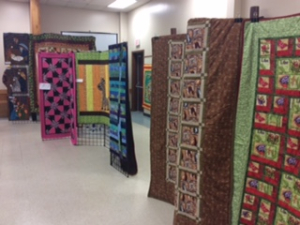
The Pas Culture Days is nationally acknowledged once again for their efforts and has been ranked seventh in the Top Participating Communities in Canada for 2023, in the Towns and Rural Areas category. This year’s The Pas Culture Days saw a boost in participation, with new events that many enjoyed and appreciated.
“The feedback this year was overwhelmingly positive and the event turnout was significantly increased,” said The Pas Culture Days Organizer Gabrielle Swan. “I heard a lot of people buzzing with excitement after the opening night event with Young Voices of The North Podcast; people were blown away by how much young local talent we have in The Pas.”
Family resource centre engages in 16 days of activism
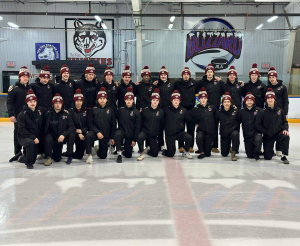
The 16 Days of Activism against Gender-Based Violence (GBV) is a call to action to raise awareness and is also an international movement to call for an end to violence against women, girls and 2SLGBTQIA+ individuals. The Pas Family Resource Centre (TPFRC) has been taking part in the 16 Days of Activism and engaging with other community partners as well about the issues on hand.
“The 16 Days of Activism is an annual international campaign to eliminate violence against women,” said TPFRC Executive Director Renee Kastrukoff. “The campaign started on November 25, 2023, which is the International Day for the Elimination of Violence Against Women and concludes on December 10, 2023, which is Human Rights Day. The campaign started in 1991, to speak up and call out GBV and to request commitment to end violence against women, girls and individuals who are 2SLGBTQQIA+.
TPFRC looking to make Christmas brighter

Christmas can be a financially stressful time of year as many people struggle to just to provide the basic necessities, never mind the added expenses of the holiday season. The Pas Family Resource Centre (TPFRC) is raising funds for their annual Christmas Hamper Drive, which helps those in need to have a magical Christmas too.
“Christmas is a joyous occasion for many and also a very difficult time for others, particularly those who find themselves struggling to make financial ends meet, which can contribute to holistic unwellness,” said TPFRC Executive Director Renee Kastrukoff. “The cost of groceries, rents, gasoline, utilities and many other basic essentials in life are at an all-time high. The rising costs of living are not being matched by rising incomes and this creates financial hardship for many, including families whose income earners work at lower paying jobs.
UCN instructor nominated for apprenticeship award
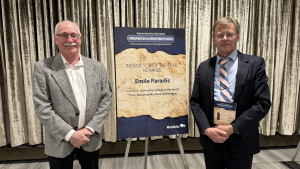
The field of trades is being more recognized than ever before, as more students enroll in trade related fields. University College of the North (UCN) has been a leader when it comes to providing education and training in the field of trades, and recently one of their instructors was nominated for an Apprenticeship Manitoba Awards of Distinction Instructor the Year.
Emile Paradis has spent many years working in trades from an early age and holds a few different tickets in various sectors of the trades.
“I started working in trades at a really early age,” said UCN Instructor Emile Paradis. “I worked at a welding fabricating shop close to my home community in Ste. Rose, where I grew up. I left home at 18 years old and went north, where I began working in the mining industry. I ended up going into the apprenticeship program when I was 19 years old, and then four years later I became a Red Seal Journeyman Millwright.
Soprovich builds a career as a civil engineer
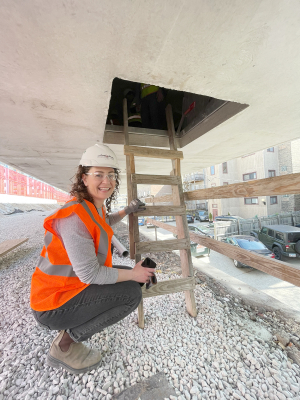
In the world of building and engineering, it still seems to be a male-dominated industry, but a former Valley resident has been breaking ground in this field, as she is building infrastructure for the future. Sarah Soprovich has completed her Masters in Engineering and has worked on projects in Canada and the United States.
Her interest in engineering came from her love of math and science in school.
“We moved to Swan River from Winnipeg in 1991 when I was one year old,” said Sarah Soprovich. “As a kid, I was mostly interested in sports, playing volleyball, basketball, and fastball, as well as snowboarding at Thunder Hill. I graduated from the Swan Valley Regional Secondary School in 2008 and moved to Winnipeg to do my Bachelor of Science in Civil Engineering at the University of Manitoba, followed by my Master of Engineering in Civil Engineering at the University of Calgary. I’ve always wanted to do my Masters and my employer was willing to help financially for a Masters in Engineering. It was a course-based program and I mainly took courses in Project Management.
“I was always really strong in math and science in school. I initially thought that I wanted to be an architect, but my high school physics teacher told me that the engineers were the ones who applied the science and that I should look into that instead.”
There are several different fields in engineering, and if one is not in that industry, it’s quite easy to assume it’s all the same thing when it’s not.
“Engineering is effectively the practice of using science, math, and technology to solve problems,” said Soprovich. “Civil engineering is very broad but usually refers to the design of infrastructure that the public regularly uses. Civil engineering can include structural transportation, water treatment, hydrology, hydraulics, and geotechnicals.
“I’m a structural engineer and am mainly focused on bridge design, so the majority of my projects have included bridge and structure design. I have worked for Stantec Consulting Ltd. for my entire career. I started with them as a summer student between my fourth and fifth years of university.”
Soprovich started her career in civil engineering in Manitoba but has worked on several keynote projects in Calgary and in Chicago as well.
“I actually started in Winnipeg, and it included a lot of construction inspection on rural and urban bridge replacement projects, along with some design and eventually project management,” said Soprovich.
“When I moved to Calgary, I was involved in a few projects, including the Green Line, which is the design of Calgary’s future LRT line running north-south through the city; the design of the Airport Trail Overpass, which is a two-span concrete bridge on 19th Street over Airport Trail; and two pedestrian tunnels at 90th Avenue and Southland Drive.
“Chicago was amazing,” said Soprovich. “I moved to Chicago in 2019, to work on the Chicago Transit Authority’s Red and Purple Modernization project, which is the largest and most high-profile project I have ever worked on. I was leading a segment of the project that included 2 km of new structure and track, as well as four new stations and two temporary stations on the Red and Purple lines of the El Train, Chicago’s transit.
“I joined the project about six months in, which was pretty wild, and ended up having to come back to Canada in March 2020, while continuing to work on the project remotely for about three more years. The project is still under construction and we won an award in May 2023, due to the number of women we had leading the project, which is rare in engineering.
“As a result, I was able to travel back down to Chicago for the awards ceremony and see how construction has progressed,” said Soprovich. “The project was very high-stress, but I met some of my best friends at Stantec due to it.”
Soprovich is back residing in Winnipeg and working on a lot of municipal projects. These projects are smaller in scale than some of the projects she was a part of in Calgary and in Chicago.
“Since I have started working in Winnipeg again, the projects are a bit smaller scale than what I have worked on elsewhere, but it is still rewarding to complete projects in rural communities,” said Soprovich. “In 2022, there was significant flooding in Manitoba and I spent much of the summer inspecting damaged bridges and culverts. We have now moved on to replacing this infrastructure and I have completed or am working on projects in the Town of Neepawa and the Municipalities of Souris-Glenwood, Ethelbert, and Lorne.”
Out of all the projects Soprovich has been a part of during her career, the one that stands out the most was the one in Chicago.
“The Chicago project is absolutely the largest and most high-profile project I have worked on,” said Soprovich. “It is a $2 billion design-build project and we worked hand in hand with both the contractor and the owner.”
Working in civil engineering is still a male-dominated field, but Soprovich has been working hard at training and mentoring women to become engineers. Slowly the field of engineering is becoming more diverse as more women are entering studies in university.
“Civil engineering is one of the more diverse engineering fields, but it is still primarily male,” said Soprovich. “I’m on a few committees that are trying to address this, and the goal overall is for 30 percent of the engineering field to be female by 2030; however, progress has been slow moving. On my current team, I have two female Engineers In Training (EIT) and a female student. I’m very passionate about providing them mentorship for their careers.”
Soprovich is part of a couple of initiatives that are geared toward getting more women into the field of engineering and consulting.
“The Association of Consulting Engineering Companies Canada - Technical Women in Consulting Engineering (ACEC-TWICE) is actually more focused around retention and growth of women in the consulting field,” said Soprovich. “A lot of what we do is promote awareness, often through hosting events with speakers, networking, and a yearly reception in March.
“I’m also involved with two committees with Engineers Geoscientists Manitoba (EGM)- Engineering Changes Lives and the 2030 Coalition, which are both focused on increasing diversity in the industry and meeting that 30 percent goal by 2030.”
Soprovich recently won the 2023 Early Achievement Award for her work in the industry. She was recognized by her peers working in the industry and so far, it’s the start of more big things to come for her career.
“This was through our professional association, EGM,” said Soprovich. “It was really an honour to be acknowledged for my hard work, and I am truly grateful for the team and mentors I have at Stantec who have supported the development of my career thus far.
“I would like to continue to work on large, multi-disciplinary projects both locally and across the country, and continue to see the work that I do come to life to make other’s lives easier.”
Community renewal corporation plans Santa parade

Nothing says Christmastime like a Santa Claus Parade and The Pas Community Renewal Corporation (TPCRC) is about to bring some Christmas Cheer to the tri-community. This year’s theme for the parade promises to be a fun one that can be enjoyed by people of all ages.
“The theme this year is ChristmaZoo,” said TPCRC Community Engagement Coordinator Holly LaJambe. “TPCRC has been collecting and brainstorming themes for all the years we’ve been organizing the Santa Parade into a big secret list and it continues to grow.
“We choose themes that are inclusive, open to interpretation so everyone can be creative with them, and fun for all ages. Every year, we select a few choices from this list that are different from the past few years and then our staff have fun debating these until we settle on one.”
‘Tis the season for holiday fraud- please be careful

With many people about to start holiday shopping, along with searching for that perfect gift comes find deals or bargains on those top-demand items on peoples’ wish lists. Stores started the whole Black Friday bonanza of deals, by copying our American counterparts, but now retailers have taken it to another level with the Pre-Boxing Day sales strategy, which is get a deal before the big sale hits.
There are good portion of rural Manitobans who do shop local when it comes to buying gifts for the holidays, but for those who are looking to buy gifts that are not carried locally, they tend to rely on shopping online.
Shopping online can provide the convenience of doing so from home and not having to worry about travelling treacherous highway conditions only to stand in long loud lineups at the mall.
The majority of holiday online shoppers tend to scour the Internet looking for advertised deals or sales. With Meta (Facebook) being so ad-driven, a lot of these retail giants are using this platform to advertise specials or sales online. This may seem like a great way to keep informed about sales, but it’s now becoming a great way to become a victim of fraud.
Town of The Pas prepares to attend AMM Fall Convention
Town of The Pas held a regular council meeting on November 13 in council chambers and due to some technical difficulties, the meeting could not be streamed online.
Destination Marketing Committee followed up and provided council with some Terms of Reference for their organization.
“It gives us a better idea of the Destination Marketing Committee’s structure and how it operates,” said Town of The Pas Mayor Andre Murphy. “It also ensures there is a fair process in terms of intakes, as well it helps them to plan out their budget to grant funds throughout the year. It helps us, as well as those applying for grants, to see the entire picture and what is required.”