

We live in an age where most of us have access to a cell phone. Along with providing a link to endless information we also utilize it to take photographs and videos and instantly post them on the Internet.
Many years ago, one had to load a camera with a roll of film, shoot the roll of film and then send it via mail to be developed. If everything went according to schedule the prints arrived several weeks later.
In 1888, George Eastman started the Kodak company and launched the first roll-film, hand-held camera. The camera had a small single lens with no focusing adjustment. It came preloaded with a roll of paper film with a capacity to shoot 100 photographs. Once finished, the camera was sent back to Eastman, who developed the used roll of film. This method revolutionized the market and turned photography into something many could enjoy.
In 1900, Eastman released the Brownie and introduced the snapshot to the masses. Constructed by using a basic cardboard box with a simple convex-concave lens it was cheap and easy to use. Over 150,000 cameras were sold in the first year of production. The introduction of this $1 camera and 15 cents for a roll of film allowed most anyone to capture photographic moments. Kodak’s goal included promoting the sales of its brand name film.
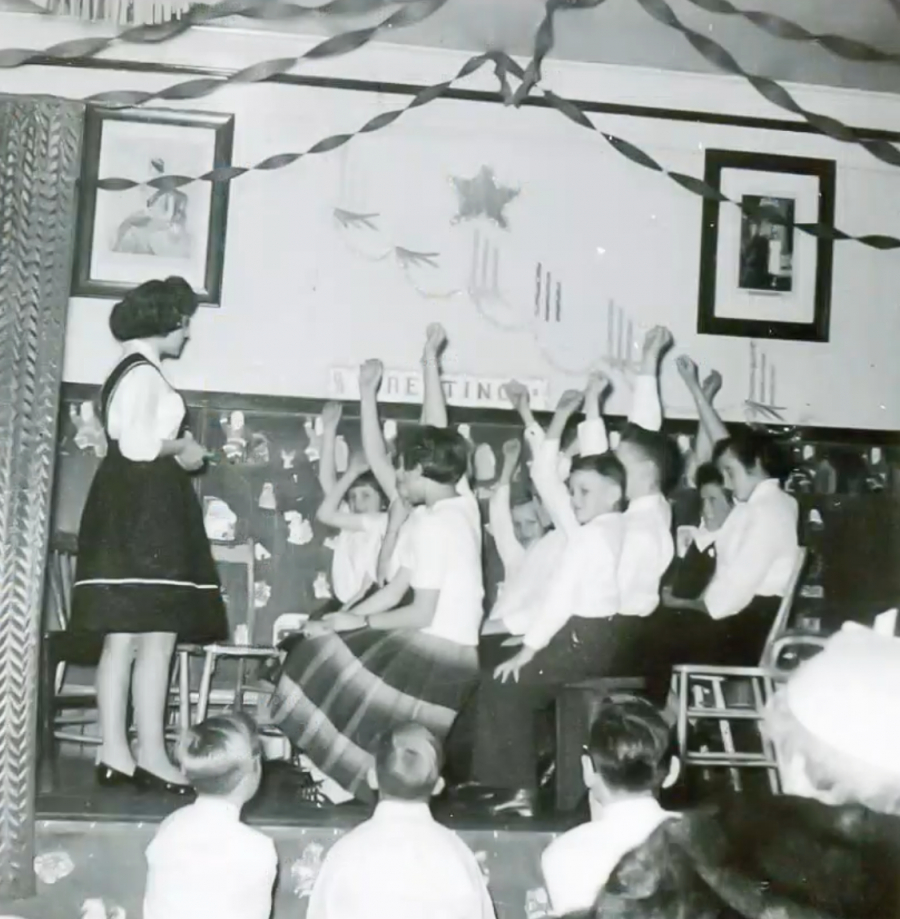
My parents had a Kodak Brownie camera and on special occasions they took some photographs. There is an old saying that a picture is worth a thousand words. The memories may have faded, but the photo images are still as clear as ever. Each photo tells a story associated with the past. Along with the usual family poses on the farm, my favourite photographs also include several taken at the annual Christmas concert at the Grade 1 to 8 one-room country school that I attended.
While on vacation in 1975, I accidentally dropped a Kodak Instamatic camera onto a cement sidewalk. Janice’s cousin suggested that we stop at Henry’s, Canada’s largest camera store in Toronto, where I acquired my first 35 mm camera. It sparked an interest in photography.
Several years later, a more advanced Nikon camera was purchased and along with a tripod and several different telephoto lenses the love of photography continued, encompassing family events, landscapes, close-ups of Manitoba’s wild flowers and wildlife. On one photographic venture exploring the shore of Edward’s Lake, three female elk and their calves walked in the shallow water near the shore towards me. After taking several photos it was time to leave the elk families behind. It was a priceless encounter.
Most of the photo collection of family and Manitoba’s nature was stored in albums or in slide carousels. When we had visitors we often brought out those albums or the slide projector and reminisced of past experiences.
Photographs make for great topics of conversation.
Whenever I interview someone for an article, it is always an honour and a privilege to hear the person’s story and see photos associated with their lives. While researching information for the sawmill industry and the Whitewater Lake Prisoner of War camp, it was always exciting to find photographs related to those topics. One highlight included locating approximately one hundred photos associated with Kippan’s Mill. All of them were taken with a Brownie camera. Since photographs were officially forbidden to be taken at the prisoner of war camp, it was always interesting to uncover “new” photographs from a variety of sources including a friend of a former guard at Whitewater Lake. Those photographs sure do help one visualize the history from the past.
This past winter, Janice and I came across a group of photographers armed with 35 mm cameras and telephoto lenses intent on photographing a Great Grey owl perched on a tree branch in the Riding Mountain National Park. Even though my Samsung phone serves as my primary photo and video camera, I missed not having a trusty Nikon and a telephoto lens. My photographic efforts resulted in a very distant image of the Great Grey owl.
Luckily, I didn’t have to wait several weeks to have the image developed.
