

By Ed Stozek
For the Herald
Kindergarten is a German word translated as a “children’s garden’ and refers to a place where children are nurtured and allowed to grow at their own pace.
In the 19th century the original goal of early kindergarten was to promote the assimilation of newcomer children to life in Canada with provisions including clothing, meals and even shelter.
Throughout the years programs in our education system have evolved. For example, kindergarten programs were offered by organizations or private individuals at a variety of venues. My nephew attended kindergarten classes taught by the minister’s wife at the Plumas United Church.
The Manitoba government first provided grants for kindergarten in 1967 encouraging all school divisions to establish such programing. In 1968 Manitoba Education issued the first kindergarten curriculum guide. Every school division across Manitoba now offers a kindergarten program. Some operate for a full-day everyday while in rural Manitoba some operate on a full day on alternate days. At Cartwright, our grandson Syd attended half-days every day.
Getting ready for school in the morning, learning the alphabet, counting, and playing with other classmates were all part of the of the daily routine for Syd who started kindergarten this past September.
Shortly after he began his scholastic journey I asked him what he liked best about school. He promptly answered, “recess and snacks.” Syd ended up enjoying his year and along with recess and snacks progressed from learning the ABCs to reading age-related books. At his kindergarten graduation he received a certificate indicating that he was a “rocking reader.” In a recent conversation with Syd, he proudly noted some of the books that he had read.
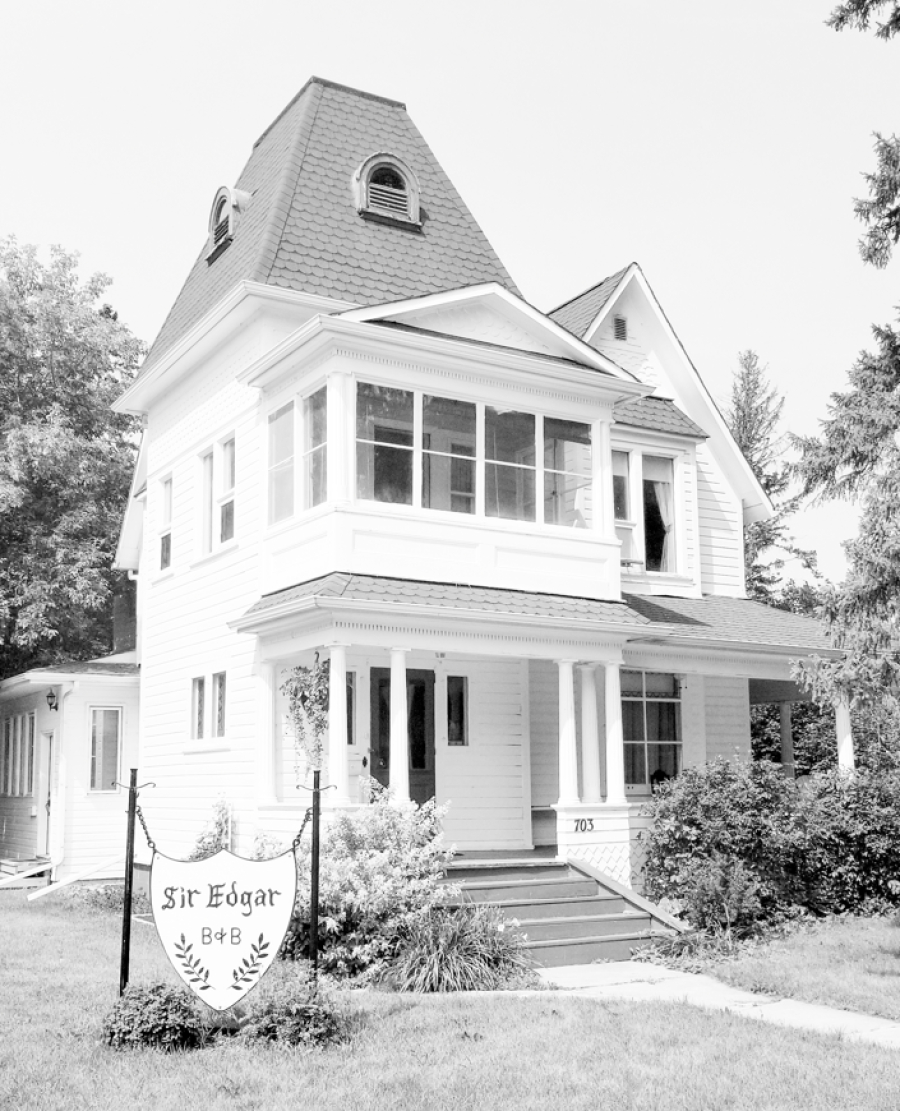
In Dauphin, the Edgar House had an interesting history regarding kindergarten. An advertisement in the Aug. 31, 1939 edition of the Dauphin Herald, announced that Mr. and Mrs. Dahlgren were opening their studio at 703 Gartmore (Main) St. North. Along with piano and singing lessons, daily classes in “general kindergarten work for pre-school age” were offered.
The couple had just returned from Toronto having spent the summer at the Royal Conservatory of Music. That September, six five-year-old students were enrolled with Mrs. Dalhgren for piano lessons held twice a week. From that original class, Mrs. Dahlgren soon developed a daily kindergarten program with classes in the morning and afternoon.
It became a very successful venture. “The big white Dalhgren house on Dauphin’s Main Street has been ringing with the sounds and noises of children every school day for thirty years. It wouldn’t have gone for thirty years were it not for the enthusiasm of every new class. It was exciting for children to learn to play and get along with other children so that they would be prepared socially for formal schooling.” (April 2, 1969, Dauphin Herald)
Daily routine included the children sitting in desks for part of the time, doing informal reading and learning to recognize words. They also learned songs, listened to stories, honed their co-ordination skills by using scissors for cut-outs and colouring with crayons. They also played games, exercised, had rest periods, snacks and were sometimes allowed to go upstairs to watch Mr. Dress-Up on television. Occasionally Mr. Dalhgren told them stories.
Mrs. Dalhgren’s kindergarten program changed and developed over the years but one thing that remained constant since the early years was the annual production presented at Christmas and in June.
Music was a very important component of the kindergarten program. Mrs. Dalhgren felt that music helped the children develop their sense of rhythm and time. The productions included performing Sleeping Beauty, Little Red Riding Hood, Cinderella, or Snow White.
My wife Janice recalled that her mother enrolled her midway through the school year. She ended up practicing for the Snow White production and noted that the students wore elaborate costumes when the operetta was presented to the public.
Today we can reflect upon some of the differences between the past and present programs and especially at some of the similarities that have stood the test of time.
After attending daily kindergarten classes Syd was looking forward to summer holidays. He was also excited at the prospect of starting Grade 1 in September.
