

Fire protection is one of the most important services a municipality can provide to its residents. It is also one of the most expensive.
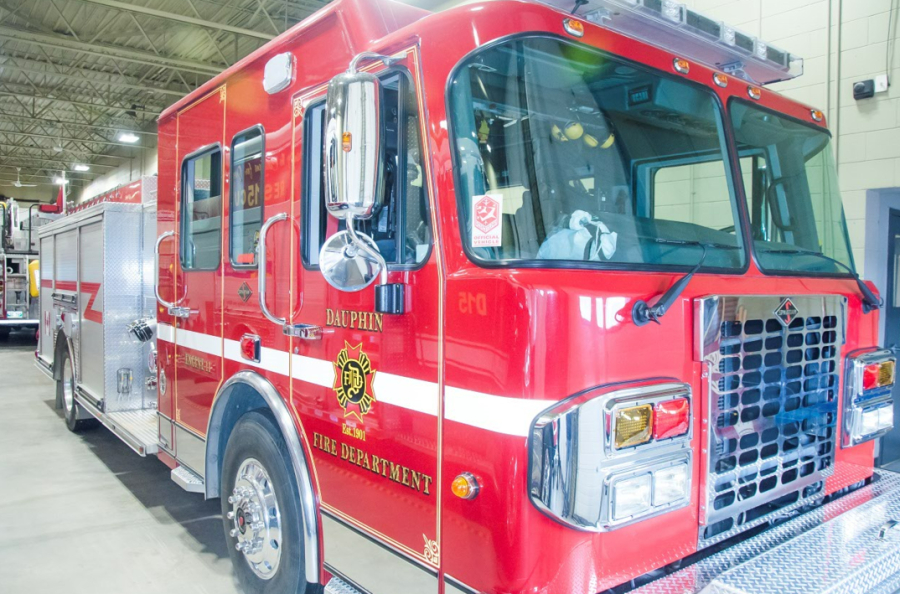
The City and RM of Dauphin recently approved the purchase of a new pumper truck for the Dauphin Fire Department, but the $828,447.90 price tag might not be as big a hit as it initially appears, said fire chief Cam Abrey.
“This is part of our capital replacement plan. We have a 10-year capital replacement plan so there’s no surprises to the taxpayers. The city and the RM make annual contributions towards the plan through their budgeting process and then we take a look at the age of our apparatus and the maintenance that’s been going into it as of late,” Abrey said. “One of the things that we did in order to lower the cost for the ratepayers is we’ve moved from a custom cabin chassis, which was the last pumper purchased in 2011, to a commercial cab and chassis, which lowers a price by $150,000 to $200,000.”
Three bids were received for supplying the truck with The Fort Garry Fire Trucks plan for a 2025 Freightliner cab and chassis top mount enclosed pumper being selected.
The truck will carry 1,000 imperial gallons of water which will be managed through a Darley 1,250 imperial gallon pump. The truck will also provide seating for six firefighters and has a delivery time of 24 to 32 months, Abrey said, adding the new truck is being built to address the department’s specific needs.
“We looked at maximizing the crew efficiency, so the 2002 pumper only carries two firefighters, which means that we’ve got to send multiple trucks to any call outside of the City of Dauphin into the RM because we need more than two firefighters for these fires,” he said. “The new (truck) will be carrying six firefighters and a higher volume of water. The 2011 only carries 500 gallons of water and the new one is designed to carry 1,000 gallons of water. So it’s multipurpose in that it could respond within city limits and the RM of Dauphin.”
The additional water capacity, Abrey said, makes the truck ideal when crews are smaller than desired, providing additional resources for the initial knockdown while hydrants are tapped and provides enough water for fighting vehicle fires, which usually require around 500 gallons.
Those are the kind of benefits that can come with planning 10 years in advance, Abrey said, stressing the department will not spend the maximum amount of money available, simply because it is available.
“Every member on this fire department is also a ratepayer of the community and we’re not out to hose our community and increase taxes. We want to do it as efficiently as possible,” he said, adding even emergency situations like when the department’s water tanker caught fire in 2012 or the ladder truck had an electrical fire in 2015. “It would be easy to say, ‘we need a new truck’ and go get one rather than putting in the work to get it done. But we fought with insurance to get the best proceeds we could.”
Once the new truck is delivered the department will make a decision as to how to dispose of the old apparatus.
“We’ll ask the manufacturer when we get closer to delivery date if they’ll assist us in selling it or if they’d consider it as a trade in,” he said. “We always look for the best efficiencies we can with that, too. Obviously that money is returned back into the capital replacement plan.”
Abrey said the new pumper has a life expectancy of 20 years according to the Fire Underwriters Survey, the organization which sets insurance rates across Canada.
