


Jennifer Laviolette
Berscheid receives Citizen of the Year Award
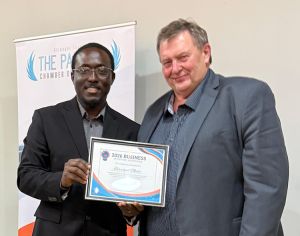
The Pas OCN Chamber of Commerce presented its Citizen of the Year Award at its Annual General Meeting on October 22, 2026. Val Berscheid was presented with the 2026 Citizen of the Year Award. Berscheid has been a very active member of the community and sits on many boards.
“I’ve been fortunate to serve on several boards, committees, and organizations over the years, both locally and provincially,” said Berscheid. “Each has provided opportunities to meet wonderful people, develop friendships, and work toward making our communities stronger.
Berscheid sworn in as new reeve for R.M. of Kelsey
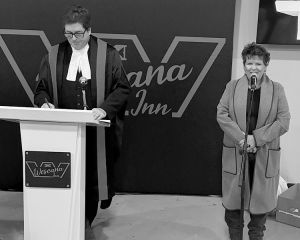
The Manitoba Municipal Elections are over and both the R.M. of Kelsey and the Town of The Pas have new leadership. The R.M. of Kelsey Reeve is Val Berscheid and she was sworn into office at a special ceremony that took place on November 4, 2026, at the Wescana Inn’s Rendezvous Room. Berscheid enjoyed the election process and campaign, and is now focused on moving forward.
“I would like to sincerely thank everyone who took the time to vote in this year's municipal election,” said R.M. of Kelsey Reeve Val Berscheid. “I’m grateful for the confidence residents have placed in me and honoured to have the opportunity to serve as reeve of the R.M. of Kelsey. I would also like to acknowledge Michael de Tremauden for putting his name forward as a candidate. Running for public office takes courage and commitment, and I believe anyone willing to step forward and serve their community deserves recognition.
SVRSS unveils Re-Right mural done by students
Earlier this year, the Swan Valley Regional Secondary School entered into a partnership with the Manitoba Advocate for Children and Youth (MACY) to collaborate on a Re-Right Project. A Re-Right Project is a community art initiative that promotes the United Nations Convention on the Rights of the Child through public art and murals. As of March 2026, six murals have been completed through the Re-Right Project, five of which are in Winnipeg and one in Nelson House.
Winnipeg artist Charlie Johnston was chosen to work with students at the SVRSS on the Re-Right Project. Johnston is a well-known artist who has painted numerous murals and has a great deal of experience teaching and mentoring young artists.
“I’ve done some work with MACY and they are doing a series of murals centred around the International Declaration of Human Rights for Children and Youth,” said Johnston. “It’s a parallel declaration to the International Declaration of Human Rights. MACY fights to advocate for the rights of children and youth. This completely aligns with their mandate.
“I’ve done other mural projects in Winnipeg with youth and there have been other artists who have as well. The reason we wound up doing one of the mural projects in Swan River was that they wanted to provide more representation and service to the area. This was a good opportunity to express that.”
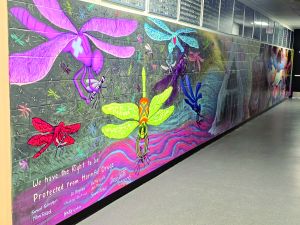
Students at the SVRSS were able to work with Johnston on creating a concept and painting the mural for the Re-Right Project. The Swan Valley mural is the seventh in the Re-Right Project. The mural shows the students’ interpretation of the right to be protected from harmful substances, including from making, selling or using drugs (UNCRC article 3).
“The mural was open to all high school visual art students from grades 10 to 12,” said SVRSS Graphic and Design and Visual Arts Instructor Amy Rogalski. “We had one class that focused on developing the mural and then students who expressed interest in participating in the painting portion of the mural. There were 20 students who were part of the class that developed the concept and eight students who participated in painting the mural with Charlie.”
“The creative process is always amazing for its strength, healing, and it’s engaging,” said Johnston. “I’ve worked with adults and young children on projects, but with kids, you put a brush in their hands and you can’t stop it; they just take off. As we get older, we get more conscious and thoughtful in the process. This was an opportunity for the youth involved to open themselves up to that process. It’s about finding the inner artist in oneself. This was an opportunity for the students to express their feelings about the issues that they felt the strongest about and let those feelings out and express them.
“In this process, I like to engage the participants in every facet of the creative journey. I like to get their creative intuition flowing from the start. In that sense, the students were the conceptual artists and put the idea together. They chose which declaration in the Human Rights Declaration was the one that mattered most to them. We went through a democratic process where we went through the list of Human Rights Declarations and they narrowed it down. They almost unanimously picked this particular issue, which is that children and youth have the right to be protected from harmful drugs.
“That really stood out like a beacon to them as the topic that they wanted to creatively express about,” said Johnston. “Then we went through the creative process of taking that idea and expressing it as a mural, and how you come up with the subject matter, imagery, style and the way it’s going to be painted.”
The Re-Right Project started within the first month that students were back to school and didn’t take long to complete. Once students fully understood what MACY does and the importance of having rights for children and youth, they became engaged in sharing their own personal experiences and providing input towards the project.
“We began the mural on September 28 with an introduction of the project and Charlie,” said Rogalski. “It was finished October 22 when the final signatures were applied.
“The students took about a day to engage. I think there is always the challenge of having a new teacher and then meeting an artist and being immersed in a new experience. Once they understood what MACY is and what the project meant and could represent for the community, they became more committed to what it could mean.
“The class that worked to develop the concept for the mural were really committed to the right they chose—the right to be protected from harmful drugs,” said Rogalski. “They were engaged in discussions of personal experiences and why this matters so much to them as students of the Swan Valley community. After concept development, the students who participated in the painting process were regularly ready to go. Every day of painting, they arrived to class for attendance and then were off to paint. You could see the pride, intensity, joy and focus they had in what they were creating and sharing with the community.”
“To us, this right means more than simply keeping harmful drugs away,” said SVRSS Student Liz Desjarlais. “It means building communities where people feel safe, where families can find support, and where those who are struggling with addiction are not forgotten.”
“Dragonflies were chosen to represent the heroes; they are a spiritual ally, as they have the ability to capture and contain the needle mosquitoes,” said SVRSS Student Sam Sakayigun. “The dragonflies are wearing symbols of health services, justice, safety patrol, and most importantly – love.”
The Re-Right mural unveiling was held on November 5, at the SVRSSS. The mural is located in the school hallway along the Cultural Arts Centre.
Chamber announces Business of the Year
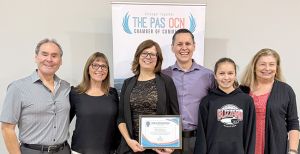
The Pas OCN Chamber of Commerce held its Annual General Meeting (AGM) and Citizen and Business of the Year Awards on ?
The 2026 Business of the Year was awarded to Tim Hortons, who received two nominations. Berscheid Meats came in second and the Wanless General Store in third. Kathryn and Derrick Sanderson were present to accept the award.
“We’ve been involved in running Tim Hortons since 2019, just before the pandemic,” said Kathryn. “We were working under Derrick’s parents, as they were still involved, but we officially took over the franchise in 2024.
“I think for us, being a respectful workplace is number one and key priority over anything else,” said Tim Hortons Franchise Co-Owner Kathryn Sanderson. “Also, I am a teacher by background, so it’s important to me to give everyone a chance, no matter what that looks like. It’s about trying to include as many people who want to work as we can, but also we are a fast-paced, high-volume place, and we have to meet those standards. We expect our staff to be friendly with customers and make good role models for Tim Hortons
Computing in another language
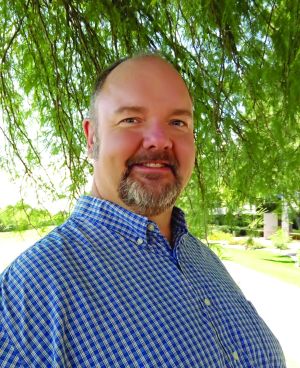
We’ve come a long way since the first computers, to having handheld devices that allow us to do just about everything from banking, translating, shopping, communicating, filming and more. Former Valley resident Carl Gable Watts, developed a keen interest in computers and programming as a youth, which led him on to a career in it.
“I was born and raised in Swan River in the neighborhood along the river that is now called Duncan Crescent,” said Watts. “My father was A. J. (Jack) Watts who had owned and run the Ford Motors dealership that was once on the NE corner of Main Street and 6th Avenue.
“Our neighbourhood was nestled in a curve of the Swan River and my childhood friends Linda Theodore, Barbra Weiller, Jeff Ukalchuk, Terry Hather, Tim Wenstob, Cameron Cook, and John Jacobs would spend every waking moment either on, in, or next to the river doing things like jumping rocks, swimming, tubing, building forts, catching crayfish, snow mobiling, and sledding on crazy carpets. I have a million great memories of those years.
“I had developed a fascination with electronic gadgets when I was younger,” said Watts. “When walking home from school I’d regularly drop in to the Radio Shack on Main Street to check out what new fascinating gadgets they had.
“One day they had this new thing that I’d never heard of before: a personal computer. It was 1980, I was 14, and this was one of the first. They had left the instruction manual out for it so every day, on my walk home from school, I’d stop at Radio Shack and read a page or two of the manual and type out the little example programs and run them.
“Quickly I was hooked and started the months long process of pestering my mom to buy it for me,” said Watts. “That was how I learned to program. By grade 11, I was a good programmer and helped my teachers teach the first programming classes at Swan Valley Regional Secondary School (SVRSS).”
From there, Watts embarked on advancing his education in computers.
“I left Swan River to attend the University of Manitoba in the fall of 1983,” said Watts. “Four years of university and living in the dorms on campus were incredibly fun. I made so many friends from all over the world and had another million adventures.
“I studied Computer Science and, in the fall of 1987, I graduated with my Bachelor of Science majoring in Computer Science.”
During the course of his career, Watts worked on various computer programming projects that led to bigger developments in technology. Much of his work focused on computer languages used for programming.
“My first job out of university was with Bell Northern Research in Ottawa,” said Watts. “Our team of about 15 people were designing a new computer language for programming the digital telephone switches that routed everyone’s phone calls. In addition to creating the programming language we also developed one of the first Integrated Development Environments (IDE) for writing programs in this new language.
“Later, in California, I also helped develop the first fully Object-Oriented programming language, Smalltalk, and the IDE that it was integrated with. Smalltalk inspired the creation of the programming languages Java, Python, and Ruby which inspired almost all programming languages we use today.
“I also worked on the development of one of the first handheld computers, the Palm Pilot, and the first smart-phone, the Palm Treo,” said Watts.
Watts recognizes that the times have changed and with that so has creating computer software. It can be very complex to start in now, but it’s something he still enjoys being a part of.
“Creating computer software now is very complex,” said Watts. “When I started out, a large program was 30 lines of code. Now the software I work with is regularly hundreds of thousands, if not millions, of lines of code and takes months for a new programmer joining the project to understand.
“Fortunately, Artificial Intelligence (AI) is very good at being able to read hundreds of thousands of lines of code in a minute and creating summaries of what each section of the code is doing and where the problems are.
“I enjoy writing software that can solve a particular need for the company I work for and see it run quickly and reliably for years solving that particular need every day,” said Watts. “It is kind of like creating a new life-form that lives and breathes and fulfills a necessary niche in the computer ecosystem in which it lives.
“I also appreciate that it pays well, which allows me to take a year off between jobs to relax, travel, and enjoy myself. I took my first year off in 1995 and travelled around Mexico for five months, in an old Volkswagen camper, with my partner at that time. We had adventures every day which I will cherish forever.
“Since then my career has given me the freedom to regularly take whole years off between jobs to do whatever I want, which usually involves lots of swimming, boats, sunshine, cafes, new friends, and card games,” said Watts.
Watts is now focusing on his own programming projects and has been working lots with AI to achieve that.
“Now I’m using AI to create my own programming projects, mostly online card games and board games, and, in my work, using AI to create new software to automate the financial company I work for,” said Watts.
“But my biggest projects now are my relationships with my partner, Anthony, and all my friends, and the adventures I continue to have sailing the seven seas, exploring the world, on cruise ships. I love sailing the seas on medium-sized cruise ships and exploring new countries.”
Setting his sights to the stars
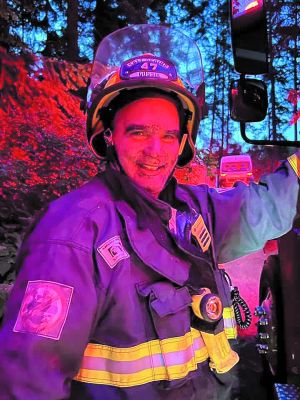
Not many of us take the opportunity to look up at the stars and the wonders in the sky. One former Valley resident, Grant Gussie, found a passion for astronomy at an early age and wound up getting an extensive education in the field.
“I was born in Beausejour, but my mother was a Cox and was born and raised in Swan River,” said Grant. “My parents are Cliff and Kay Gussie, and my father passed away a couple of years back. Our family moved to Swan River when I was quite young. I spent most of my childhood growing up on River Road.
“I fell in love with astronomy while my dad was still getting his university degree, so I was in Grades 1 and 2, and we were living in Gladstone at that time. During that time, I had a cool Grade 2 teacher, Mrs. Chandler, and she took us all into Winnipeg to see the Man of Nature Museum and the Planetarium. I still remember the Planetarium and I thought it was amazing.
“At that time, we lived out on a little farm, just outside of Gladstone,” said Grant. “I would go out and watch the stars. I remember seeing the Pleiades for the first time and trying to make some sense out of the star patterns. I would try to find the Big Dipper and Little Dipper. I just fell in love with that.
“When I was nine years old, I got my first telescope for Christmas. I quickly outgrew that one and got a serious telescope in grade 7. I saved up $150 and my parents put in the other $150, and I got this six-inch telescope, which for me was quite spectacular. That and a few books made me spend a lot of time in our yard, on River Road in Swan River, looking through my telescope.”
Grant was dedicated and passionate about looking up at the stars. During his younger years, he was fortunate to see many objects in the sky, some unique and some quite impressive.
“There is a list of objects in the sky, which is called the Messier List,” said Grant. “It came about with Charles Messier, who made a list of things to avoid looking at when looking for comets. If you find them all, you get this Messier Certificate. I wound up getting the Messier Certificate from the Royal Astronomical Society of Canada.
“The other thing that stands out for me was the first time I saw the Orion Nebula, the Andromeda Galaxy, and the Ring Nebula. The Ring Nebula is something called a planetary nebula, which is a gas cloud surrounding a dying star.
“I also discovered my own cluster of stars called the Coat Hanger,” said Grant. “I was 14 years old when I discovered it. But when I went to university, I found out I wasn’t the first person to discover the Coat Hanger, nor was I the first person to call it that, but I still discovered it.”
Grant took his love of looking through a telescope and fostered his education in science. He focused his post-secondary studies in the fields of mathematics, science and physics.
“I graduated from the Swan Valley Secondary School in 1981,” said Grant. “I won the Science Award for the highest mark in Science at my high school graduation. After I graduated, I went to the University of Manitoba for four years. I graduated at the top of my class and received the gold medal for the major course in Science and my degree was in Mathematics and Astronomy.
“Then in 1985, I attended the University of Victoria and got a Master’s Degree in Physics. That was quite difficult because I didn’t have a Bachelor’s Degree in Physics, so I had to do a lot of work to get a Masters in it. Then I went to the University of Calgary and got a PhD in Astrophysics. The topics of both my Master’s Thesis and Doctoral Dissertation involved the process of stars similar to the size of the Sun that are dying.
“For my Master’s Degree I did research from the Dominion Astrophysical Observatory just north of Victoria, BC,” said Grant. “My PhD was more involved with Radio Astronomy, and I did a lot of radio work. That was quite a bit more interesting as I got to travel more. I spent some time in the Netherlands working with the telescopes there. I went to New Mexico several times.
“I also really did like being in New Mexico,” said Grant. “When I was there, I was at the Very Large Array and it’s a series of radio telescopes. There are 27 of them and they are spread out along three railway tracks, each 21 kilometres long. One day I walked out along the tracks and plunked myself out in the middle of nowhere and looked up at the sky. It was amazing. There is a galaxy you can occasionally see with the naked eye in very dark skies. It’s called Messier 33. I saw it in New Mexico one night, when it was really dark.”
“I also went to Hawaii and the Mauna Kea Observatory and did some research there. In fact, I did radio stuff all over the world and then went back to the Dominion Astrophysical Observatory to do some more work with optical as well. I enjoyed that time immensely.”
Grant was able to find some research jobs in his field that took him all over the world. During some of these jobs, he saw some of the most incredible views in the skies.
“After my Ph.D., I got a job in post-doctoral research with the University of Tasmania from 1992 to 1995,” said Grant. “I continued working with radio on similar topics, with a little bit more involving star formation this time, rather than star death. I met my wife, who was a nurse at the large public hospital there.
“I also spent time in New South Wales, where the Australian Telescope Compact Array is. It’s a network of radio telescopes near Narrabri, in north-central New South Wales. And also at a large radio telescope near Parkes, NSW. It’s all grain land out there and it looks a lot like the Canadian Prairies, except it’s really hot. If you go out and lie out under the stars, the sky is spectacular.
“While in Tasmania, I applied for a job with the Commonwealth Scientific and Industrial Research Organization (CSIRO) after I had spent a year and a half in Antarctica. In the end, I didn’t wind up getting that job because my visa was tied to my job in Tasmania and I had to reapply for another one. The criteria for the job with the CSIRO required me to not be a foreigner in Tasmania. The only way they would consider me as an applicant was if no one else was qualified in that topic, so I had to withdraw my application. That was kind of disappointing.
“I returned to Swan River for a few months and then got a job in Calgary,” said Grant. “That was the end of my astronomical career. I only got offers for one or two-year contracts with small colleges, and then would have to look for another job. Those positions weren’t going to get me where I wanted to go.
Grant built himself a huge telescope as a hobby and a reminder of his passion for astronomy.
“I still have a telescope. When I lived in Calgary, I actually built a really nice telescope,” said Grant. “I made two of them so far, and one of them I donated to the Royal Astronomical Society of Canada. It was the prototype for the one I kept, which is the bigger of the two I built. The scale is about 8 ft tall. I brought it here with me.”
Now Grant works in a different field altogether, but he still enjoys looking up at the stars.
“I wound up working in the oil patch in Alberta,” said Grant. “When people search for oil, they send sound waves into the ground and have these geophones that listen for the echoes underneath the ground. From that, they construct an image. The mathematics of it is similar to how radio telescopes construct an image of the sky; it’s the same sort of thing. So I did some geophysics with that, but over the years I’ve done more computer programming.
“In 2004, we moved to Salt Spring Island in B.C., where we still live today. I got involved with the local fire department in 2006 and became a fully qualified firefighter, which is something I still do. So I’m now a computer programmer and a firefighter.”
Young receives award from Red Cross
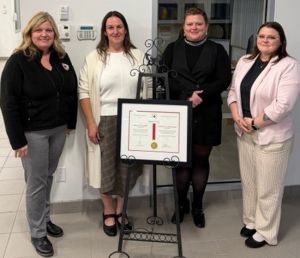
A local volunteer with the Red Cross has been identified for her years of service and dedication to helping others during a time of crisis. Melanie Young was presented with the Order of Red Cross, the organization’s highest honour, on October 7, 2026, in The Pas, surrounded by family and friends. Young has spent over a decade helping others through the Red Cross.
“I’ve been a volunteer with the Red Cross for 14 years and am going into my fifteenth year,” said Young. “Initially, a friend who was working with the Red Cross was trying to build up a team and asked me if I would participate.
The race is on for Town mayoral candidates

The Star and Times held a question-and-answer session with the two town mayoral candidates: Ainslie White and Lance Jacobson.
Q1. What qualifications and experience do you feel you have to be mayor of the town?
White: The role of mayor is for an individual who can lead while creating a positive culture both within administration and council, where decisions are made as a group with everyone’s best interest at heart. The last 16 years of my professional life provided me with extensive training and experience through leadership, associated training, leading meetings, presenting to large organizations, opportunities to liaise with governing bodies, and legislation interpretation. My professional experience has prepared me to lead our council and staff as mayor of our town. I would use my experience to encourage council to gather information, consult subject matter experts, and include those directly involved in the outcomes, while making educated decisions for the betterment of our town and Valley.
Jacobson: First, my knowledge of the true responsibilities of the mayor’s office. I have learned policies and regulations, and the procedures required to build and enforce them. I understand municipal finance documents, a key requirement for managing municipal funds and operations. Through my experience in governance from councillor to Mayor, I realize the importance of prioritizing professional representation. I possess the ability to lead the town in defining its strategic vision and acting on long-term development and infrastructure needs. Additionally, remaining professional during times of crisis and relying on my past experiences keeps me well-prepared.
I am accustomed to working closely with the public. A commitment to good communication helps me in negotiations and in bridging gaps between different community organizations and fellow council members.
Q2. What are your top three priorities or focuses in town and why do you consider them priorities?
White: Safety – Safety is at the top of the list. As the General Investigation Section (GIS) unit continues to advance with arrests and enforcement, I feel strongly that we need to keep that momentum. I remember when there were picnic tables out front of businesses where folks could have a cup of coffee or sit on a public bench. Many of these have been removed with the intent to protect worker and public safety. I want to restore the general feeling of safety in our town where residents can leave the grocery store without fear, and store owners don’t feel they need to lock their doors during hours of operation.
Healthcare - Access to healthcare in Swan River affects everyone in the Valley regardless of age or specific location. With continued collaboration with valley communities, this must remain a priority. Our hospital has maternity ward equipment; however, we currently don’t provide maternity services. This is a priority to me as a mother, and it is directly involved in our economic development and the growth of our town. We need our ambulances fully staffed and all care home beds to be available for use. Our precious aging community cannot stay in the valley without consistent access to healthcare.
Senior Support – Approximately half of our valley residents are a part of the senior community, yet we have not prioritized their support services to enable these folks/ourselves to stay and age here at home in the valley. We need to collectively fund Service to Seniors, provide support for operating costs, and regulate costs for transportation within and outside of Swan River for access to services. I want to work with Service to Seniors and the Age Friendly Committee to access available funding, ease the financial burden currently being experienced, and increase time/resource support with volunteers.
Jacobson: Public Safety – To continue the hard work and collaborative efforts that resulted in our local RCMP detachment receiving a General Investigative Section (GIS). I vow to stay on this front by continuing to lobby other levels of government to ensure permanent funding for the GIS in Swan River. Furthermore, I will continue to lobby for bail reform at the provincial and federal levels to stop the proverbial revolving door.
Economic Development and Medical Services – I will focus on retaining and attracting businesses to Swan River by providing further incentives for them to thrive within our limits. A priority is to continue to review and adjust our incentive planning, focusing on a vibrant Main St. to ensure storefronts are revitalized and inviting. Regarding healthcare, the province has proven that Swan River is a regional hub. Having successfully secured a CT scanner, I will now focus my time on ensuring Swan River becomes a regional stroke center.
Partnerships – First, I believe communication among local levels of government is vital in rural Manitoba. No matter how difficult, I will continue striving to ensure our council fosters strong relationships through mutual understanding and agreements on topics like shared services, a rural water agreement, and recreation. Second, regarding partnerships with stakeholders on large capital projects, I know firsthand we cannot do everything alone. I will pursue grant opportunities and collaborate with federal, provincial, and local levels of government, along with First Nations and the Manitoba Metis Federation, to build the consensus and communication needed to achieve our community goals.
Q3. What level of knowledge and experience do you have about governance, budgeting and infrastructure?
White: Governance is defined as “…the system of rules, practices, processes, and structures by which a country, corporation, organization, or project is directed, controlled, and administered”. I have years of experience directly involved in the establishment, implementation and training of processes within large organizations and small businesses of the aforementioned.
Intertwined within the governance is budgeting. Basically, how can we continue to improve and achieve outcomes with the funding available? This is completed in conjunction with professional accountants & making good decisions with the money we have. Regarding infrastructure, we have a large window of opportunity within the town. I have much experience developing and implementing preventative maintenance and management programs for infrastructure in corporate and municipal capacities. Low-hanging fruit for improvement in this area includes establishing a full list of town assets, defining their specific preventative maintenance programs/schedules, and implementing effective systems to ensure the town protects our assets in a proactive manner, rather than reactively.
Jacobson: I have a strong foundation in good governance, having served on council for 16 years—eight as a councillor and eight as mayor—as well as spending the last four years as a board member of the Association of Manitoba Municipalities. The strongest quality I bring to the table is a commitment to transparent communication and public accountability. I promise to maintain professional conduct at council meetings while always respecting the public voice.
Municipal budgets are complex and take time to dissect. I have consistently encouraged councillors to prioritize the short- and long-term financial health of the town. I welcome challenges and debates to ensure taxpayer dollars are spent as efficiently as possible. I also believe in strategic planning, a responsible process where projects are approved based on merit, community input, and financial feasibility. This experience ensures we can maintain existing assets while delivering the new services our taxpayers deserve.
Q4. How would you implement partnerships and demonstrate a good working relationship with RM Swan Valley West and other municipalities in the Valley?
White: I am committed to working in partnership with all municipalities and communities in the valley. I do not have any historical relationship barriers built with communities to tear down, whereas I am in a position only to build relationships. This includes building relationships with the leaders and councils in our valley to increase our reach with provincial and federal leaders. Presenting requests as a united valley will strengthen our lobbying efforts and associated outcomes.
Jacobson: I believe in a strong Swan River Valley; the success of our rural areas only makes the town stronger, and vice versa. While relations have proved difficult in recent years, I will continue leading our council’s efforts to enhance partnerships with all our municipal neighbours. While it takes two to tango, I can promise that I will always be eagerly waiting on the dance floor.
My approach remains consistent with how I have always entered negotiations: willing to listen and meeting colleagues with respect, while fiercely representing the taxpayers of Swan River.
Q5. What ideas would you bring to the council table to look at attracting new business and building economic development in Swan River?
White: I suggest that council review by-laws and procedures that are outdated or misaligned with our current needs. Identify what the barriers are for developers and investors through discussion and direct involvement of developers and investors. Council needs to understand why some investors are looking to build outside of Swan River and how we can bridge those gaps. Our local Chamber of Commerce needs to be reignited with businesses on the board, involved in decision-making for promotion, programs and growth. Council needs to look further than only business expansion and include the expansion of housing complexes for all levels of income. I want to encourage the council to work with developers and streamline applications and approvals so developers want to build and invest here.
Jacobson: I believe in the need for an economic development officer, and not just for the town; I would support this position to be inclusive of the entire Swan River Valley. I would be very open to partnering with other municipalities for the opportunity to sell the Swan River Valley.
To achieve this, the work behind the scenes demands a great deal of time. From grant writing, local incentives to business retention, federal and provincial advertising, and industry-specific marketing.
Maintaining a high standard is essential, as good business attracts good business. To properly sell Swan River, we must be realistic and professional in developing our town, particularly within a competitive rural market.
Q6. How do you propose to help Swan River with the issues surrounding homelessness, addiction and crime? And which local agencies would you like to see council work with to achieve goals?
White: In many cases, a lack of housing is the underlying root cause of crime and addiction. While building relationships with ministers, I want to collaborate with communities in the valley and apply pressure using bylaws to hold Manitoba Housing & Homelessness accountable for the dozens of homes in our community that are in a derelict condition. The province must take responsibility for the condition and livability of the homes they have provided in the town, which are no longer inhabitable and boarded up. I would like to encourage council to work with our already embedded organizations such as Teen Challenge and the Canadian Mental Health Association. Organizations such as those have many connections and resources available, as well as experience with what has worked and what hasn’t. We need to reach out to other municipalities that have successfully made improvements in these areas and gather information to continue moving forward in Swan River.
Jacobson: Regarding homelessness and addiction, this is a complex issue spanning multiple layers. We must acknowledge the difficult reality that some individuals choose this lifestyle, while focusing support services on those willing to accept help. I propose lobbying for supports ranging from housing to addiction and crime intervention to directly assist those ready for change. This is a far-reaching issue; therefore, I believe this initiative should be led and funded by the province and organizations outside of Municipal Government.
On the crime front, we will continue lobbying the provincial and federal governments to secure the GIS program permanently for the Swan Valley RCMP detachment. Regardless of personal situations, everyone has the right to feel safe in our community, period.
Q7. What lessons can be learned from the flooding that took place this summer and how could council be more emergency-prepared for the future?
White: In my experience, from a professional health and safety standpoint, the town should continue with the land survey and professional consultation currently underway, along with the provincial assessment. As the assessment hasn’t yet been completed, my opinion of high-level lessons learned includes, but isn’t limited to;
-Water level forecasting, communication tool assessments and implementation
-Evaluate building a dyke around Swan River and other water routing options for prevention
-Clearly establishing direct contacts provincially and within municipalities to ensure the most efficient use of resources during an emergency
-Public education for property protection and emergency response
-A formal process established for post-emergency timely reviews by council and the province
-Tabletop reviews/discussions of various flood scenarios to find gaps in planning and preparation
-All potential emergencies must be practiced to ensure those with responsibilities understand what those are and how to act on them efficiently
Jacobson: First, we need better funding relief for affected properties. I will encourage our council and utilize my position as an AMM board member to lobby the province to establish a fund that delivers real-time support to affected properties. While federal disaster relief exists, it can take years for people to see assistance when they need help immediately after losing their homes. People needed help immediately!
Second, communication requires improvement. While the Town of Swan River has solid disaster control systems, communication among large governments, external organizations, and private entities can be enhanced. I commend the hard work done during the recent flooding, but optimizing the timing of critical decisions through good communication systems will improve future outcomes.
Q8. Swan River is in need of a new or upgraded arena. What is your personal take on what needs to be done and what methods would you pursue to make it happen?
White: I have recently had the opportunity to review the assessment and recommendations presented in 2018 by WSP out of Winnipeg with respect to the Centennial arena. The report clearly states that this facility can certainly be upgraded and maintained to a level to provide use to the community for many more years based on the upgrades detailed herein. In 2018, it was noted that a new arena would easily cost upwards of 20 million dollars. In 2027, I would imagine that number to be significantly larger. I would encourage council to pursue an updated assessment inclusive of the upgrades recently completed/invested in, for continued use of the arena with the goal of protecting our assets while promoting economic development. The arena is used by all communities in the valley in various capacities. I would propose we move forward with the inclusion of the perspectives and ideas from all involved as part of the data-gathering effort, towards an informed decision. This includes input and involvement from all valley communities and the Swan Valley School Board.
Jacobson: A vibrant and growing town requires recreation facilities that serve the community and promote healthy lifestyles. Swan River and the Valley have always been at their best when our communities could gather in places to meet, play and respect each other.
The Town of Swan River realizes this is a large and complex project that requires the community and its residents to work together so we can be successful.
Replacing a 60-year-old arena with something new takes a tremendous amount of planning, work and caution. It also takes volunteers who are dedicated to making our Valley and town a better place.
The Town of Swan River has partnered with the Swan Valley Legacy Committee (SVLC). It consists of dedicated residents from all over the Valley who have approached this project with a determined pioneer spirit. SVLC has committed to applying for grants, fundraising, and consulting with community groups to ensure we have a successful plan that has the least impact on local taxpayers.
We continue to talk to the federal and provincial governments and understand that this project can only proceed with their involvement.
A kickin’ season comes to a close for soccer
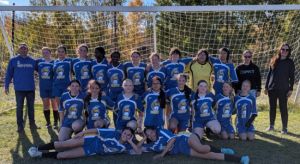
Margaret Barbour Collegiate Institute (MBCI) had two teams that travelled to soccer zones last week to play against four teams to see who would advance to provincials.
“Soccer zones were held on October 2 and 3, 2026, in Flin Flon,” said MBCI Soccer Coach Monte Koshel. “There were teams from Norway House, Flin Flon, Cross Lake, Thompson, as well as us in attendance.”
The MBCI Spartan Boys’ Soccer Team had a real fight to the finish on the field as they clawed their way back from a loss in the first round.
“The boys played Flin Flon first and lost,” said Koshel. “That put them in the consolation bracket, which meant they had to win every game after to make it to the finals. They then played Norway House, Cross Lake and a nail-biter against Flin Flon again to make it to the final. The win over Flin Flon went into penalty shots after a tie.
October is Fire Prevention Month
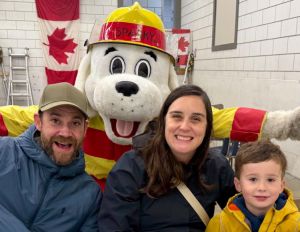
Last Saturday, The Pas Fire Department (TPFD) hosted its annual open house with a BBQ. All proceeds from this BBQ will be donated to the Manitoba Fallen Firefighters Foundation, which helps honour and remember the firefighters around the province who have given the ultimate sacrifice.
This event also gave the fire department a chance to help educate the public on what they do and about fire prevention.
“To effectively protect your home, establish habits like charging all devices on hard, flat surfaces away from soft furnishings and staying in the kitchen whenever food is actively cooking,” said TPFD Fire Chief Byron Shangraw. “You should also maintain at least three feet of clear space around all heating appliances, including space heaters, furnaces, and wood stoves. Finally, design a home emergency escape plan with two exits per room and a dedicated outdoor meeting spot, making sure to practice it with your household at least twice each year.”