
JENNIFER LAVIOLETTE
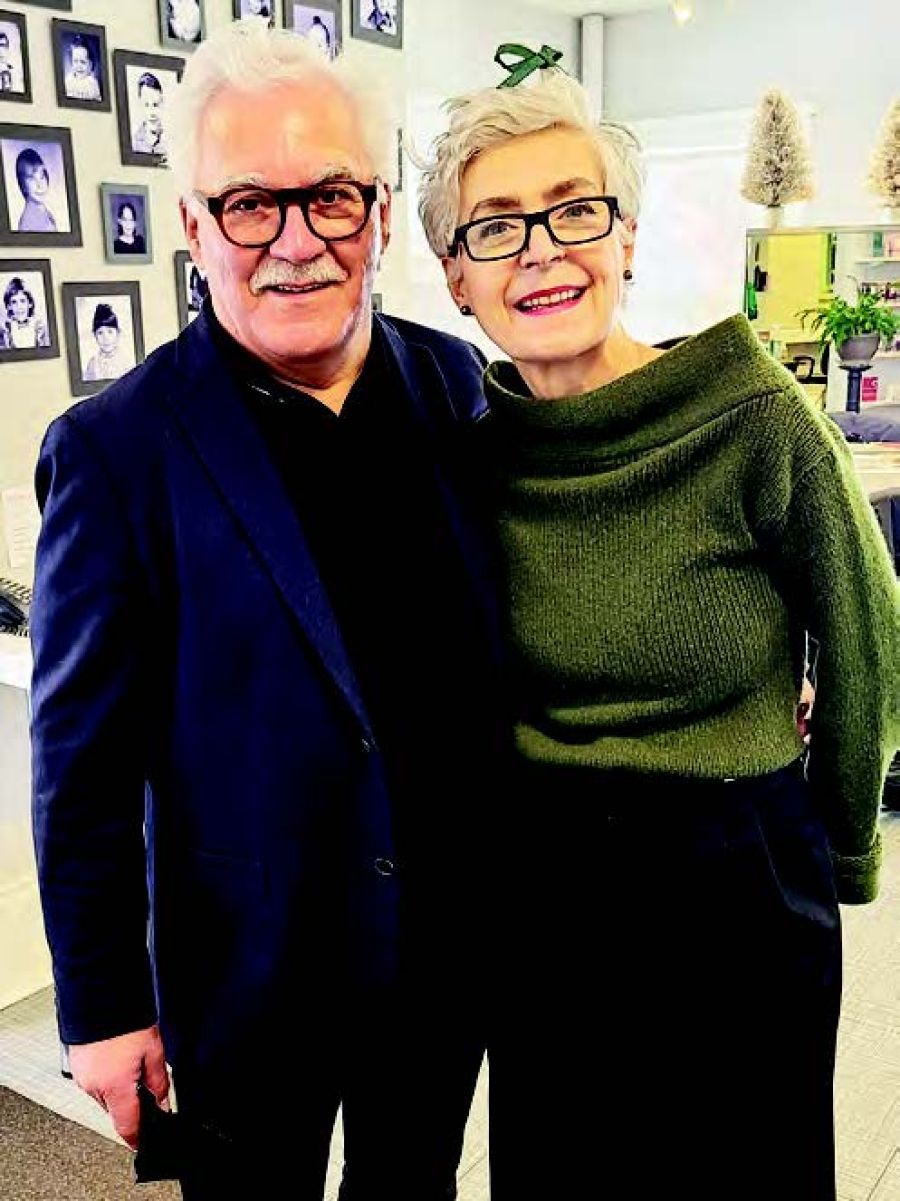
Building a career out of loving what one does will leave a person richer and more successful than any billionaire listed in Forbes magazine. Striving to work towards becoming the best a person can be in their field and loving what they do is the ultimate reward, for the job never feels like work. This is how former San Clara resident and Winnipeg hair salon operator Edward Carriere has framed his passion for hairstyling with running his own business. “I still see myself as being from San Clara and not some fancy guy,” said Carriere. “I still do what I got to do to get things done and that includes the stuff that requires some hard work.” Carriere didn’t always know he wanted to be a hairdresser when he finished high school. He had a profound admiration for the profession, and his path in life eventually led him to fulfill that calling. “When I went to St. Vlad’s College, a student’s parents were hairdressers,” said Carriere. “I saw how successful they had become in that profession and it had me thinking about it. There was no direct connection with them, but I just saw the success they had built for themselves. “Both of this student’s parents were hairdressers and had opened their salon. I wasn’t necessarily inspired by their salon, but rather by the work that went into becoming successful at what a person does for a living. That was my introduction to seeing someone become successful in hairdressing. I never really thought about it again as I finished my education.
“After I finished high school, I went to Thompson and worked in an open pit mine in Pipe Lake,” said Carriere. “It was a wellpaying job, but the lifestyle of being so rough and isolated with very little else to do was not something I wanted for myself in the long term. At the time I was happy to go to work and earn some money. I worked hard to learn everything I had to in order to do the best job I could out there. “Then they laid off the employees for the winter and I went home to San Clara for a few months. It wasn’t long before I felt the urge to get another job. We were told when we wanted to get back on with the mine, we had to go to Winnipeg and get our name back in on the list. When your name got called, you would have the choice of where you wanted to go and what you wanted to do. “I thought I couldn’t sit around and not do anything, so I headed to Winnipeg to put my name on that list and see what happens,” said Carriere. “When I got there, I was about the 200th person on the list, and I figured I wouldn’t get a job with that many people ahead of me. As I was walking back to my friend’s apartment, I went down Portage Avenue and walked by the Scientific Beauty School for hairdressing. “I was impressed and thought I should see what it was about. There was a sign outside saying to apply and become a hairdresser. I went upstairs to the office and saw all these people dressed in white and could smell the perm solution. I stood there and just watched them as they did perms and talked to people. It was a big commotion so to speak, of all hustle and bustle. Someone came to the desk where I was standing and asked if they could help me. I told them I was checking the school out. “The school’s manager came to talk to me and I grew interested,” said Carriere. “I asked when the next class started. She told me a new class started that Monday, and asked if I would like to enroll. That was on a Friday, and on Monday morning, I returned and went upstairs to class. I had no idea what I was in for.” Carriere had a real learning curve to face as he learned the art of hairstyling, for he never styled a person’s hair before. In his experience, haircuts were a necessity and now this shy young man from San Clara had to step outside his comfort zone to learn and grow as a hairstylist, then to find his place in the industry. “The first part of learning consisted of reading a book and learning all the things a hairdresser had to do,” said Carriere. “Then we started learning by example. The instructor showed us how to do a perm and we started learning how to do perms. It was one step at a time. I didn’t even know how to put a roller in someone’s hair never mind doing a perm. I was absolutely stunned and thought to myself, what was I thinking? It was tough because I had never combed a woman’s hair. “As a kid, my dad would cut our hair, but it was never about styling it.
Growing up, we cut our hair short in the summer and that was that. “At that time, I was a slow learner, because I couldn’t get the perm rods in the hair and couldn’t get the hair to stay in the papers,” said Carriere. “The instructor could see I was struggling and she came over to talk to me. She told me I would make a good hairdresser, I just needed to practice more on learning the basics. “That night I went home, called my cousin and asked her to come over so I could practice putting perm rods in her hair. Every night I would go home from school, and I would have cousins or friends come over and I practiced putting perm rods in their hair. Eventually, I put the perm rods in properly and then went on to putting in rollers and cutting hair. “I had to learn and practice everything, every step of the way,” said Carriere. “I didn’t walk in there knowing how to do any of it. There weren’t very many men as hairdressers in the 1970s. There were only two other men at the school in a class ahead of me. I knew it could be done and so I practiced. The more I practiced the better I got. I got into the mentality of doing whatever it took to get good at it and I kept going at it.” It wasn’t long after that, Carriere got his introduction to working in a salon doing shampoos for clients. He learned very quickly from those experiences as to how a client and employees want to be treated when they come to a hair salon, whether it was to work or get their hair done. “Then the school would get calls from other salons in the city for students to come and shampoo hair on the weekends,” said Carriere. “At the school, we had learned how to shampoo people’s hair properly and then would go out to these salons on the weekends to work. My first time going to a salon and shampooing hair was one in the north end. I shampooed hair all day Saturday and they paid me $10. The next weekend I got another call to go to and do shampooing at a different salon. “This time I walked into an Italian salon. There was no one around, so I sat by the front desk. I could hear all this commotion in the background. Women would walk in, head to the back and get their hair set. I was shy and didn’t know where to go or what to do until finally someone came and got me.
“The following weekend, I got another call to go to a different salon again,” said Carriere. “I was set to go to this new salon, but the other one from the week before had called and requested me to come back because they liked what I did. The more I shampooed, the better I got. I committed to going to this other salon already, so I went. “When I arrived, I was welcomed by the owner and it was such a different feeling from the week before where I sat there and they didn’t even know I was there. I walked into this salon and was greeted, shown around and things were explained to me. I instantly became a part of the salon and it was a great feeling. This led to me accepting a job there, where I stayed for seven years after I completed my hairdressing course.” Carriere was fortunate to find a mentor to work under so early out of school. Despite having a fantastic employer and teacher in the business, he continued cutting and styling hair every chance he got, in an effort to perfect his craft. “The owner, Alphonse, was Belgium and he met his wife, Amy, at a hair salon,” said Carriere. “They got married and opened up their salon together on Stafford Street called Coiffure Caprice. They were the nicest people in the world and I felt so good walking in there and talking to them. “I started just doing shampoos, and then eventually Alphonse showed me how to do perms and colours and had me doing those as well. He was my first teacher after school and was really good. He had me cutting his hair and then I was well on my way to doing all sorts of cuts and styles, growing as I went along. “Every night, when I went home from the salon, I would do haircuts and styles for my cousin and her friends,” said Carriere. “They would come over and let me do their hair. So, I would put in a full day at the salon, then come home to my apartment and do more hair in the evenings and weekends. I set it up in my apartment to practice out of and do hair. I bought an old hair dryer in the corner and a kitchen sink with a hose to wash hair. I washed hair, put rollers in, and did some cuts, colours and perms. I built up a whole little business of doing hair at night. “I would take the bus home from the salon and there would be a lineup outside my apartment door,” said Carriere.
“Eventually, I bought a car, and I started booking clients. I hardly charged any money because it wasn’t about making money, it was about getting better at what I was doing as a hairdresser. “I eventually started offering wine and beer to customers while they waited or were getting their hair cut. It built up so much that I was cutting hair for 10 to 15 clients a night in my apartment after my regular shift at the salon and built it up that way. “Alphonse knew I was going home and cutting hair out of my little apartment in the evening for more practice,” said Carriere. “I had asked Alphonse before I started if that would be acceptable with him because I didn’t want him to think I was stealing his clients. I even offered to do it at the salon after hours, but he didn’t want to be open after 6 p.m., so he was fine with that arrangement.” Carriere would always come back home to San Clara and soon began cutting hair for people when he came for visits. This also helped him grow his clientele base. “Then on the weekends, I would come back home to San Clara and cut my mom’s hair,” said Carriere. “She would have a few friends lined up at her house to have their hair done as well. Whoever came to my parent’s house, I wound up cutting or styling their hair. Then some people I knew in Roblin who found out that I was doing this, asked if I could stop by there and cut their hair before I returned to the city. “This led me to build a clientele in San Clara and Roblin. So, every few weeks I drove back and did their hair on Sundays and Mondays when the salon was closed.”
After seven great years of training and working for Alphonse, Carriere built a strong clientele base and was ready to spread his wings. He opened up Edward Carriere Salon in the late 1970s and has been there ever since. “I left in 1978 to open my own business on Broadway Avenue and Spence,” said Carriere. “I had built a clientele base from working with Alphonse and cutting hair for practice out of my apartment. Even after I opened my salon, I continued to drive back on weekends to my parent’s place to cut my mom’s hair and other people’s as well.” During his career in the industry, Carriere became one of the most soughtafter hairstylists in the city. He was known to be the stylist for many television news anchors and even styled the Duchess of York, Sarah Fergusson’s hair when she came to Winnipeg. To Carriere, it didn’t matter what the client’s status was, for his clients were all like family to him and he believed that everyone should look and feel good when they left his salon. He built his business on that basis and went above and beyond for his clients. “I had a client who lived in Killarney and she was a doctor’s wife who came to my salon in Winnipeg,” said Carriere. “She loved what I did and was one of my regular clients. Eventually, she was diagnosed with cancer and couldn’t come to my salon in Winnipeg. During one of my conversations with her, I told her I travelled to San Clara to do my mom’s hair. So, this client asked if I would travel to her house and do her hair in Killarney. “I didn’t know where Killarney was, but I knew it was near Dunrea, which was where Dollard and Marguerite Mailhot lived. Back in the day, my family lived in the San Clara Hotel and my dad worked for Dollard and Marguerite. I agreed to come and do her hair for her in Killarney and she said she would line up some people to cut hair for as well, so I wasn’t just coming that way to do her hair only. “When I went out there on Sundays, they would serve food and had a nice spread, while I cut hair for people,” said Carriere. “They were the nicest people in the world and sadly she passed away. All the time while I was cutting her hair and the people who came to her home, I built up my clientele through that too. Then those clients came to the city to see me at my salon. “I worked hard and did what I had to do to become better at hairstyling. I aimed to do whatever I could to make a client happy. I didn’t have to drive to Killarney to cut hair, but that client loved what I did and she wasn’t able to continue to come to the salon, so I made that effort for her. It wasn’t about the money, I wanted to do that for her and treated all my clients that way. “My clients were always like family to me,” said Carriere. “It’s a great business and a way to be nice to people and feel connected to them.
Your clients will tell you very personal things as you gain their confidence and trust, which forms a special connection with them. It was never about the money. Now the business has grown so much that we do have to focus on earning money to pay for everything from hydro to staff wages, but still, in my heart, I do it because I love it. People leave the salon and feel and look good.” Carriere has established his salon to have the same working atmosphere and disposition that his mentor, Alphonse instilled in him during his early years in the business. “There are staff that have been working at the salon now for 25 to 30 years, and they too are like family,” said Carriere. “They train the new staff coming up. We have new people working at the salon and they love the atmosphere there and have people who are willing to take the time to train them, which is so important to being successful in a career or owning a business. It’s an ongoing good feeling. When it came to working at the salon, people liked what I did because I made it as comfortable as I could, in terms of a place to learn and work. “I’m slowing down now and only working three days a week. I’m hoping someone will come with the same enthusiasm and spirit I have and want to buy my salon. If they wanted me to continue working for them, I would. This is a job I want to continue doing for the rest of my life and as long as I can.”
