

Travis
The Russell Inn
Night Housekeeper
MJHL adds Munz to steer clubs to higher standard

By Derek Holtom
On average, statistics say people will change their careers three to seven times throughout their lifetime. This is much different from baby boomers who often got a job and kept it until they retired.
I mention this as the MJHL announced that Brian Munz has been hired as their new Manager of League Development. Munz is fairly well known in the hockey world, having covered hockey for pretty much his entire working life – I first met Munz in the 1990s when I was covering the WHL’s Prince Albert Raiders and he was covering the SJHL’s Melfort Mustangs.
Munz would go onto a prolific career in junior hockey, even being named to the SJHL Hall of Fame in 2014. He would go onto working in the professional ranks, doing play-by-play for the Winnipeg Jets, Edmonton Roadrunners, and other work for TSN.
He took a break from actual hockey coverage to work as the director of communications for Golf Manitoba before coming back to hockey with this MJHL job. So, while his jobs varied slightly, Munz has always been in the business of being involved in sports, and that looks to continue – though now rather than covering sports, he’ll be helping develop it.
The MJHL explains Munz, in this newly-created position, will be responsible for the following duties:
- Working with teams to elevate operational hockey standards across the league.
- Help to ensure a high-quality, consistent experience for players, coaches, and fans in all arenas (both home and away).
- Support facility, game presentation, broadcast and service benchmarks.
- Provide guidance on individual team and league-wide broadcast standards and best practices.
- Strengthening grassroots connections to help drive attendance and long-term fan growth.
- Managing special projects for the MJHL.
“We are very excited to welcome Brian to the MJHL,” shared Commissioner, Kevin Saurette. “With his vast experience in hockey at all levels, he will be an asset to the league office and member teams across the province moving forward.”
The MJHL is making moves to keep up with other junior A leagues across the country, demanding more from all teams to raise the standard for players and fans alike. It will be interesting to track the return on this investment over time.
- Plenty of trades to report from the eve of the start of the regular season. Here’s a recap of teams in my coverage area in the Parkland.
The Northern Manitoba Blizzard shipped forward Dylan Westmann to Hearst of the NOJHL for a player development fee (PDF). He had 11 points in 24 games for the Blizzard last year.
The Neepawa Titansacquired forward Carter Stamp-Vincent from Flin Flon of the SJHL for a PDF.
The Titans also acquired defenseman Casey Magarrell from the Melfort Mustangs of the SJHL for a PDF. Magarrell actually played two games for the Swan Valley Stampeders last season, but spent most of his time with the Pembina Valley Hawks where he scored 38 points in 48 games.
The Swan Valley Stampeders acquired defenseman Owen Lutgen from Flin Flon of the SJHL. The American had 25 points in 30 games in high school last year.
The Stampeders also shipped forward Simon Ward to Navan of the CCHL for a PDF.
The Waywayseecappo Wolverines traded forward Peyton Thiessen to the Winnipeg Monarchs for a PDF. The Beausejour native had 45 points in 41 games with the Eastman Selects last year.
The Wolverines also sent defenseman Noah Bonds and a PDF to the Selkirk Steelers for forward Carter Haney and future considerations. Bonds had 29 points in 47 games with the Winnipeg Thrashers last year, while Haney had 33 points in 53 games for the Steelers.
And finally, the Winkler Flyers shipped defenseman Kaden Sutherland to the Wolverines for a PDF. Sutherland was the captain of the Winnipeg Thrashers last year, scoring 31 points in 44 games from the blueline.
Manitoba will move to permanent Daylight Savings Time

After listening to the views of Manitobans on seasonal time changes, the Manitoba government has decided to remain on daylight saving time (DST) permanently, Premier Wab Kinew announced today.
“We heard from Manitobans loud and clear – no more changing the clocks in Manitoba,” said Kinew. “Permanent daylight saving time is good for our health, good for business and good for parents. For families, especially those with young kids, that one-hour shift can disrupt sleep and routines for days. This change means one less adjustment families have to deal with each spring and fall. That’s why this November, your clocks won’t be changing.”
This change means Manitobans’ clocks will not revert to standard time on Nov. 1. Manitoba joins several other provinces and territories that have adopted or are moving toward a permanent time including British Columbia, Yukon, Northwest Territories, Alberta and Saskatchewan.
In May, Manitobans were asked to share their views on the future of time changes and nearly 72,000 votes were submitted. A total of 92 per cent of Manitobans surveyed wanted to see an end to seasonal time changes. A majority of Manitobans (58 per cent) preferred to stay on permanent DST, while 34 per cent voted to eliminate the time change but stay on standard time.
The Manitoba government is working closely with organizations, businesses and industry partners as it works to implement permanent DST, the premier noted.
“Permanent daylight saving time is good for Manitoba businesses,” said Loren Remillard, president and CEO, Winnipeg Chamber of Commerce. “More daylight in the evening means more opportunity for restaurants, retailers, farmers, and communities across our province to make the most of the day. Ending the twice-a-year clock change reduces friction for companies working across provincial borders and offers all Manitobans greater predictability and stability. The Winnipeg Chamber welcomes this practical step to make doing business in our province a little easier.”
An analysis by Manitoba Health, Seniors and Long-Term Care concluded that eliminating time changes would be better for population health than maintaining the status quo.
The full report is available at: https://manitoba.ca/asset_library/en/proactive/20252026/time-policy-factsheet.pdf
Huge interest in Manitoba mining and PADCOM at investment summit

By Terrie Welwood
Russell Banner
“It was an incredible – such pro-Canada spirit and energy that I’ve never experienced in my life before. The spirit was ‘enough talking, let’s get it done and get Canada independent’” Daymon Guillas President of PADCOM
At the invitation of the Prime Minister, Daymon Guillas attended the Canada Investment summit as part of the Manitoba team which included the finance minister, the minister of mines and economic development and others.
A large part of the Manitoban pitch to investors revolved around the port of Churchill and it’s importance to not only the protection of the Arctic but opening of transportation to European and Asian markets as well as the focus on increased mining in Manitoba.
One of the biggest changes is happening before a shovel even hits the ground, with average mine permitting times reportedly falling from more than 300 days to about 95.
There’s already a small proof of concept for the Churchill route, PADCOM recently sent a 20-tonne shipment through the Arctic port to Belgium.
Now, days after the Canadian Investment Summit has concluded, panels of economists are talking about the importance of and the excitement around PADCOM as the first and only potash mine at a time when potash and fertilizer is so very important on the world stage. That and the fact that it’s the first shipment of potash to Europe through the Port of Churchill.
Find out more on the front page of this week's Russell Banner.
Thinking you don't want to miss out on what is happening in the Russell area? Click the link below to subscribe to our mailed or online edition of the Russell Banner.
Subscribe | The Russell Banner
RES students start new school year

BY JENNIFER LAVIOLETTE FOR THE REVIEW
It’s the start of a new school year for students and Roblin Elementary School (RES) has been preparing to welcome back staff and students for some time. This year, there are only a couple of new staff to join the team at RES.
“We got a couple of new staff this year,” said RES Principal Mark Rathgeber. “We have Meagan Bonnema and she is a part-time secretary in the office. We also have Rebecca Olson, who is teaching grades 3 and 4 in the afternoon. We had a couple of teachers, Mrs. Bailes and Mrs. Campbell, retire last year. We’ve been fortunate to always find good staff to come and work here.”
There are some new changes to the curriculum this year for students. A lot of the changes reflect and tie into getting students to develop critical thinking skills as they develop their reading and scientific processes.
Get the whole story on page 8 of this week's Roblin Review.
Goose Lake High students back in class

BY TERRIE WELWOOD FOR THE REVIEW
Students and staff have returned to Goose Lake High school with a couple of new staff members and student numbers that have grown consistently over the last few years.
“Our highlight this year is our increased enrollment,” Goose Lake principal Kirk Wilson said. “Last year at this time, we were up 25 students and this year we’re up another 10 students for a student count of 171 registered students.
“That largely comes because we inherited a rather large grade nine class along with a few new families who have moved to Roblin.”
As always, the international students form an integral part of the Goose Lake classrooms too, Wilson said.
Get educated on what is new at GLH for the 2026-2027 school year in this week's edition of The Roblin Review.
Descendant tells the story of the British Home Children
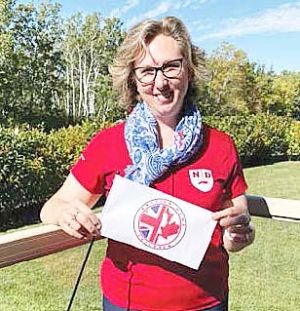
ED’s Note: This is the first part of a feature article written by Ashley Bochek and appears courtesy of The World-Spectator in Moosomin. Her feature about British Home Children appeared in the October 2024 edition of The Plain and Valley. Our thanks to Lois Beer for submitting it.
Over the course of a century, more than 100,000 British Home Children crossed the Atlantic Ocean from London, England to Canada.
The children were first sent to Barnardo Homes in England to help relieve financial stresses of young British families in the 1800s.
The children were then sent on to Canada through the Barnardo organization. Parents were unaware until returning to the homes to find their children, that children had been sent to Canada.
Debbie Bochek, a teacher at the McNaughton High School in Moosomin and a descendant of a British Home Child, explains her family’s connection to this little-known part of Canadian history.
“In the 1800s in England after the Industrial Revolution, a lot of farm families were moving into the cities for jobs, and as they moved into the cities it resulted in overcrowding and overpopulation. A lot of families then were having trouble supporting all of their children and it became a time of poverty. So, children ended up living on the streets and it was a problem in the cities – in London, in particular.
Catch the rest of the first part of this story on page 7 of this week's Roblin Review.
Raising Awareness

The Roblin H.E.R.O. Club joined people in communities around the globe in recognizing World Suicide Prevention Day with an activity called
“Chalk the Walk” to promote hope and awareness and as a way to start conversations to reduce the stigma surrounding suicide. Chalk was distributed
throughout town and everyone was invited to take part. Pictured with some artwork are Amanda, Arnold, Blaine and Proctor, Shaelyn.