
By Terrie Welwood
Russell Banner
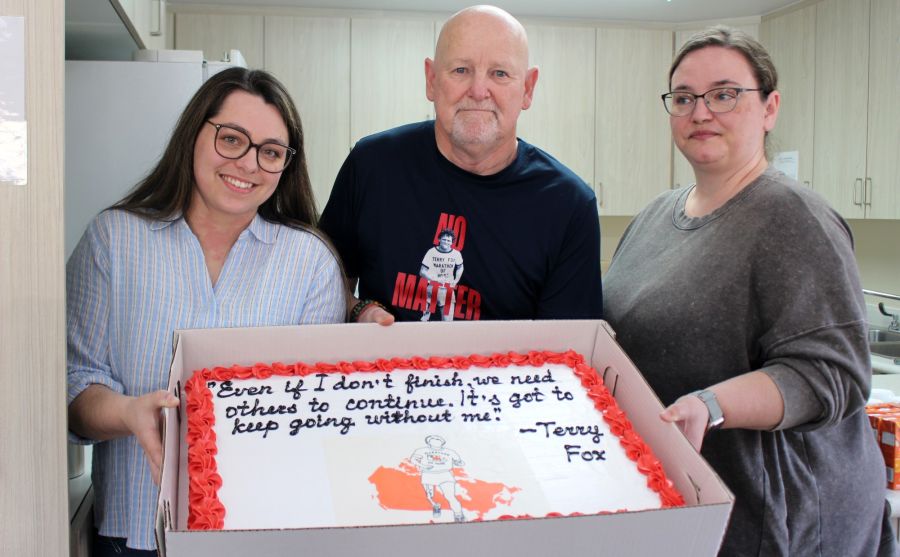
Even if I don’t finish, we need to continue. It’s got to keep going without me,” Terry Fox.
Fred Fox is one of Terry Fox’s four siblings. As the oldest, he’s 18 months older than the man whose heroic efforts to run across Canada in aid of cancer research after having his leg amputated after a cancer diagnosis.
Now, Fred and his siblings Darryl and Judy are keeping their late brothers vision alive by spreading his story around 34 countries.
Fox has been touring across Manitoba and Saskatchewan visiting schools and community gatherings along the way.
He met with community members at the Park Manor last Monday, just six days before the 46th anniversary of the date that Terry Fox dipped his prosthetic leg in the Atlantic ocean in St. John’s Nfld before taking off on his cross country journey.
He was forced to end his run just outside of Thunder Bay on September 1, 1980, when cancer returned in his lungs. He was treated in Port Arthur Hospital before returning to British Columbia.
Fred Fox was with his younger brother on his run.
“We knew that Terry must have been in constant pain,” Fred told the room.
“Over the 143 days and 5,373 kms of his journey he was running on a prosthetic leg meant for walking and certainly not for running at all, let alone that distance.”
While Fred said it was impossible to know what his younger brother was thinking, he’d made one wish abundantly clear.
“We were all so thrilled to see Canadians lining the streets, cheering and making donations along the way and the one thing we did know was that this run would not end.”
While the majority of the events take place in Canada, over 60 countries worldwide have hosted a Terry Fox Run. In places like the United Kingdom, Cuba, India, and Australia. In February the Terry Fox Foundation announced that it had surpassed $1 billion raised for cancer research since the inception of the Marathon of Hope, funding over 1,300 innovative cancer research projects, medical breakthroughs and significantly improving treatments and survival rates worldwide.
