

Shawn Bailey
Ceremony launches new and improved courthouse

Widely regarded as the perfect bridge between the past and the future, the freshly renovated Dauphin Courthouse was celebrated during a special ceremony, last week.
While the facility has been open and operating for several months, Manitoba Justice officials, local dignitaries and members of the community gathered in the building’s lobby for an offical grand opening, Jan. 15.
“What an incredible opportunity it is to be here today to open this amazing facility, Manitoba Justice Minister Matt Wiebe said,
“This is a beautiful space and one that I’ve had a chance to watch throughout the different iterations, seeing the old jail, seeing the old courthouse and seeing where it was going. Now to be here in person, what an incredible journey.”
Having heard what the facility means to the community, Wiebe added the renovations reflect the Manitoba government’s commitment to the community and to the region as a whole, through a modern, safe, accessible and technologically advanced facility
“It includes expanded courtrooms, expanded administrative space, the enhanced security features which folks know about, the upgraded video conferencing technology, which supports remote hearings,” Wiebe said, adding one of his department’s guiding strategies is ensuring access to justice is fully supported.
“All of these pieces are so important to delivering that kind of access to justice that Manitobans expect. Improvements ensure that the courthouse meets the needs of all Manitobans, whether they’re seeking justice, whether they’re providing legal support in the courtroom, or whether they’re working at any level within our system.”
The facility, he added, is also a symbol of the government’s commitment to walking the path of reconciliation, highlighted by an Eagle Feather Renewal Ceremony prior to the formal agenda led by Michael Pierre, Manitoba Justice’s executive director of Indigenous Services.
Eagle feathers were introduced into Manitoba courtrooms in 2019 as an option for Indigenous people swearing their oath prior to giving their testimony, rather than affirming of swearing on a bible.
For the full story, read this week’s edition of the Dauphin Herald.
City council reorganizes for 2026

Dauphin city councillors have received their marching orders for the final year of their terms.
At their regular meeting, Jan. 5, councillors approved appointments to internal committees and community boards.
Internal committees
The Audit and Finance Committee will be comprised of mayor David Bosiak and councillors Ted Rea and Christian Laughland, while the Employee Relations Committee includes Bosiak, Laughland and councillor Kathy Bellemare.
The Environmental Stewardship and Climate Adaptation Committee, as well as the Planning and Priorities Committee will involve the full council.
The Property Standards Task Force Committee will include Rea and councillor Devin Shtykalo.
The Protective Services Committee will be comprised of Bosiak, Bellemare and councillor Randy Daley.
External committees
(Governed by City)
Councillor Steve Sobering and Rea will represent the City on the Active Living and Transportation Committee, while the full council will sit on the Board of Revision.
Bosiak and Laughland will sit on the City of Dauphin Liaison with the RM of Dauphin Committee, while Laughland and Bellemare will serve on the City Beautification Committee.
The Community Safety and Well-Being Advisory Committee will include Bellemare and Rea, while Sobering and Shtykalo will serve on the Dauphin Business Park Committee and Rea will represent the City on the Dauphin Community Band Committee.
Bellemare will return to the Dauphin and District Allied Arts Council Liaison Committee, while Bosiak and Sobering will sit on the Dauphin Economic Development Committee.
The emergency measures committee will include Bosiak, Rea and Daley, while Rea will represent the City on the Municipal Heritage Advisory Committee.
External committees
(Governed by others)
Rea will represent the City on Dauphin At Risk Teens, while Bellemare will sit on the Dauphin and Area Welcoming Communities Committee and the Dauphin and District Allied Arts Council Committee for the Watson Arts Centre.
Sobering will continue to serve on the Dauphin and District Handi-Van Committee, while Bellemare will sit on the Dauphin Public Library Committee.
Rea and Shtykalo will sit on the Dauphin Recreation Services board, while Laughland will join Shtykalo on the Dauphin Regional Airport Authority Board and Daley will remain with the Dauphin Veterinary Services Board.
Bosiak will represent the City on the Inter-Mountain Watershed District Vermillion River Sub-District Committee, while Laughland will sit with the Parkland Chamber of Commerce and Bellemare will sit on the Parkland Regional Library Committee.
Bosiak will represent the City on the Parkland Regional Municipal Working Group, the Riding Mountain Regional Liaison Committee and the Riding Mountain UNESCO World Biosphere Reserve Committee, while Bellemare and Sobering will sit on the Riverside Cemetery Board.
Citizen appointments
Shirley Genik and Mark Kohan were appointed to the Dauphin Community Band for two-year terms expiring December 2027. Lynn Smith was appointed to a one-year term on the Dauphin General Hospital Foundation expiring in December, while Mavis Wood, Regan Lemieux and Todd Pedersen were appointed to two-year terms on the Dauphin Public Library Board expiring in December 2027.
City on the hunt for new director of Public Works and Operations

The City of Dauphin is once again on the hunt for a new director of Public Works and Operations after Bernardo Pasco tendered his resignation.
Citing family commitments as his motivation to return to the City of Winnipeg, Pasco’s last day on the job was Dec. 31, 2025.
City manager Sharla Griffiths said the search for Pasco’s replacement will begin immediately.
“We’re going to advertise and just see what comes our way. We’re going to post it today and run it probably three weeks or so,” she said, adding she has also had a conversation with a professional recruiter, although no outside party has been contracted to tlead the search at this point.
“We are looking for an engineer or a civil technician, somebody who knows their way around public works type situations, construction, contracts, surveying, all that kind of stuff.”
Griffiths said recent retirements in public works and uitilities have allowed the City to make some changes that will ease some of the workload for the new director, whoever that may be.
Pasco joined the City of Dauphin administration team last July replacing Mike VanAlstyne, who left the City to take a job with Manitoba Transportation and Infrastructure.
Originally from Philippines, Pasco worked in that country as a municipal engineer for 22 years before emigrating to Canada.
He came to Dauphin from Winnipeg after working in three other Manitoba municipalities.
More good things on the horizon for Dauphin: Bosiak

As the calendar turns to 2026, Dauphin mayor David Bosiak is looking ahead to the coming year with optimism, while reflecting on 2025 with satisfaction.
“I think we had a pretty good year. We had some challenges and some opportunities in the public works department,” he said, citing the resignation of Public Works and Operations director Mike VanAlstyne and the retirements of Public Works foreman Terry Genik and Utilities foreman Jeff Weselowski.
“Which gives us tremendous opportunity to bring in some new blood, young people, but also you lose almost 100 years of experience. It has an impact on the organization.”
Despite the changes, Bosiak is pleased with the connection between City hall and the public works shop, saying morale is good on both sides.
The changes in leadership have also provided an opportunity for restructuring in an effort to find efficiencies, he added.
“We’re looking at restructuring a little bit, so we can have our Public Works manager looking after the multi-million dollar projects, but not losing oversight on smaller projects because they are too busy doing the big stuff and there’s no one else to help,” Bosiak said, adding the creation of a project manager position late in the year is paying dividends in that regard.
“Justin Tokarchuk has become our new project manager and that’s worked out, I think, really well so far in the sense that he’s latched on to all those smaller projects.”
In the past, there has been some frustration among councillors when some of the smaller projects fell by the wayside, he added.
“We often had a surplus at the end of the year, but it was not because we did great stuff. It was because we didn’t do a couple of little things that we wanted to do,” Bosiak said.
Read the full story in this week’s Dauphin Herald.
RCMP, FD squaring off for food bank

Two local emergency services organizations will once again go head to head in what has become a Christmas tradition in Dauphin.
The Dauphin RCMP Detachment and the Dauphin Fire Department are competing in the Cram the Cruiser and Pack the Pumper food drive for the sixth time.
Donations are being accepted now and the official weigh-in takes place, Dec. 16.
The friendly competition allows the two agencies an opportunity to support the community, and each other, beyond their emergency services work, with the Dauphin and District Community Food Bank (DDCFB) being the real winner.
“It’s a great cause for the community to raise some funds and get some food donations for our local food bank,” Dauphin fire chief Cam Abrey said, adding the competition also gives the two groups of first responders an opportunity to interact outside of the high-stress emergency situations they normally encounter together.
“We have a great working relationship with the RCMP. This is just a little fun competition where it’s not that we’re responding to calls together.”
It is a sentiment shared by the Dauphin RCMP Detachment, said Const. Frank Giesbrecht, who is spearheading the effort on behalf of the RCMP.
“Anything to help our community is important and times are tough right now for everyone,”
With a bit of the late start this year, the RCMP and the fire department will not be able to be out in the community promoting the food drive, but both sides will be at the Dauphin Kings game next Tuesday.
“We’re going to be out at the Dauphin Kings game in the parking lot on, Dec. 9. The RCMP will have a cruiser there. We’ll have a pumper there,” Abrey said.
“So we’re asking if you’re coming to the game to bring a tin for the bin.”
Giesbrecht said, knowing the fire department always attends a Kings game during the annual food drive, he thought the RCMP should get in on the action.
“We’re going to go because I know Cam always goes there. So, I pitched it to Cam, why don’t we do a head-to-head and people can choose who they donate to,” he said adding the night will add a little fun to the competition.
Those not able to contribute to the food drive that night can still get involved.
Anyone wanting to contribute to the fire department side can call the station at 204-622-3100 to arrange a pick up of donations, or they can bring food items to the fire station Monday to Friday between 8 a,m, and 5 p.m.
“We’d be glad to take your donations,” Abrey said, adding the fire department has only won the competition once in the last six years.
“We need a win. We ask that you drop off to the fire department, because we’re here for the community. And not that the RCMP isn’t, but we desperately need those bragging rights for who’s brought in the most amount of food.”
For those wanting to back the RCMP in the competition, Giesbrecht said, a cruiser will be available in the detachment parking lot throughout the collection period.
“People can drop off or they can call us and when members are free, we can come pick them up,” Giesbrecht said.
Some of the DDCFB’s most needed items include dry cereal, oatmeal, pasta, pasta sauce, canned baked beans, canned meats, canned fish, canned fruit, mac and cheese, tea, coffee, soup, crackers and canned vegetables.
AMM convention a positive experience, says deputy-mayor

Maybe not a lot of tangible work gets done at an Association of Manitoba Municipalities (AMM) convention, but the semi-annual get together of municipal officials from around the province is a networking opportunity that is second to none, said Dauphin deputy-mayor Christian Laughland.
This year’s fall convention took place, Nov. 25 to 27, at the RBC Convention Centre in Winnipeg.
“I think the City of Dauphin is pretty well respected at the AMM level. There’s a lot of people there that we all know, not just myself, but the staff and the other councillors that go and it’s a really good event to go and see what everybody else has got going on,” Laughland said.
And a lot of people like to hear about what Dauphin has got going on, especially at the City Caucus.”
The new recreation deal between the City and the Rural Municipality of Dauphin was a hot topic at the Cities Caucus meeting, as was the fallout from this past summer’s wildfires and the extensive infrastructure projects most communities are working on or are facing.
“It’s always good to go and hear the stories,” Laughland said.
“Thompson talked a lot about the fires they had up there. They’re also hosting the winter games, so they are really excited for that. There was a lot of wastewater conversation, which Dauphin is ahead of the game there. We’re working on ours. But places like Winkler and Steinbach are dealing with that.
“It’s unfortunate that there’s an election in a year and some of those people might not be around, but it’s still fun to go to the fall convention and talk to all those people.”
On top of the plenary sessions and keynote speakers, the convention also provides an opportunity for some face time with provincial officials.
This year the City met with Minister of Labour and Immigration Malaya Marcelino, as well as with Minister of Education and Early Childhood Learning Tracy Schmidt.
“(Marcelino) was great to meet with,” Laughland said.
“(Schmidt) talked really highly of the Dauphin area and everything going on here. We obviously discussed the new day care, Prairie Park Place. She was really happy to help us there. The next step there is staffing, so we talked about that. And she heard about the Dauphin Kings hosting a Countryfest game this weekend and she wanted to see the jerseys. So it was a really good conversation with her, as well.”
Finally, City officials met with the deputy minister of Housing, Addictions and Homelessness.
“They had nothing but compliments about how Dauphin is handling the (housing) the situation especially at the highrise, and how good we’ve been to work with,” Laughland said, addling on top of the formal meetings, there were several impromptu conversations with provincials officials in the hallways such as Agriculture Minister and Dauphin MLA Ron Kostyshyn, as well as Premier Wab Kinew, who, Laughland added reiterated the promise that physical work on the new community justice centre will get underway in 2026 in his keynote address.
“You pass these people going through the hall ways and they’ll stop for some quick conversations. Those relationships, we didn’t have that with the previous government. Those guys wouldn’t come up to us and talk to us, they would more so avoid us in the hallways,” Laughland said.
“These current ministers and MLAs, and the premier, they’ll walk out of their way when they see people from Dauphin to strike up a conversation. It’s a nice breath of fresh air.”
Study looking at the future of fire station

When you outgrow your home your options are simple - move or renovate.
And with the awarding of a contract for a building assessment and conceptual design of a new addition for the Dauphin Fire Station to Sputnik Architecture to in the amount of $55,000 plus applicable taxes, Dauphin Fire Department will soon have a better idea of its options.
“Our call volume has increased. Twenty-six years ago, we were running 50 calls a year. Now, we’re running anywhere between 250 to 350 calls a year. The types of calls have changed and our apparatus needs have grown, as well as the size of the fire trucks,” fire chief Cam Abrey said.
“So, the department has outgrown its home here and we’re looking towards the future as to what can we do?”
The Dauphin fire station was built in 1970 and received two additions in the 1980s, as well as a renovation in the 1990s when the RCMP moved out of the building.
A lack of insulation, problems with the roof and drainage, as well as some issues with the building envelope have all created challenges, Abrey said and need to be addressed.
“This whole plan has been in the works for about three or four years,” he said.
“The first step was doing a feasibility test on the entire station as it stands right now. So, it’s now bringing in engineers to take a look at the structure and tell us what needs to be done to make this building not more functional, but more user friendly, more environmentally conscious.”
Additionally, because it was originally constructed as the RCMP detachment and the fire department, the building also has separate mechanical systems which present many problems, Abrey said,
“We have separate (electrical) panels. We have separate furnaces and we’re looking at streamlining the services and what we can do to make it economically friendly.”
For the full story, read this week’s edition of the Dauphin Herald.
Cinema looking for help over a financial hurdle
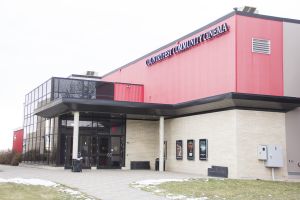
Since the pandemic took away its customers, Countryfest Community Cinema in Dauphin has been struggling to lure them back and, as a result, is fighting to keep the lights on.
And while the community has not been buying tickets to the same extent it once did, the cinema’s board of directors is asking for a different kind of commitment to help get it through this tough stretch.
As part of a three-pronged approach to raising an urgently-needed injection of capital, the cinema has launched a GoFundMe campaign to help raise the $30,000 needed to support operations and the $80,000 board chair Ron Hedley said is needed in the long term. The other two prongs are a corporate fund-raising drive and the sale of new monthly cinema memberships.
“The most exciting thing for me, I’ve been trying to do for five years is to have a monthly membership, a $10, $20 or $30 membership. It’s on our website now. We’re just kind of finalizing the touches of it,” Hedley said, adding the program is modeled like memberships to Netflix and other streaming services, which most people already purchase.
“So people can get one seat for $10, two seats for $20 and a family, I think for $39. But the whole idea is that it will help make us sustainable because it’s just going to be a recurring income.”
Hedley said an extra $7,000 to $8,000 per month is needed to keep the cinema viable.
“As far as extracurricular income, like away from the movie screen,” he said.
“If you want a theater, that’s what we need to do.”
Hedley said the cinema was operating smoothly when it was presented with a series of obstacles.
“We were doing well and had some financial reserves and then we were hit with hurdles such as the pandemic, the actors guild strikes in Hollywood, and the rise of streaming services,” Hedley said, adding those reserves were burned through during that period.
On top of operating costs, the cinema has a remaining mortgage of $1.139 million, reduced from the original $2.5 million in 2011, which, Hedley said, represented only half the actual value of the building.
Hedley added he has heard comments that the cinema has always been a losing proposition, but that simply is not true.
“We’ve held our own for a long time. We just need to get over this little hump,” he said, adding the entire board is committed to the future of the cinema.
“We need a short-term lift to get us back on track. Recently, there are days you can come to the movie theatre and it feels like a private screening. This building was meant to bring people together, but right now we’re struggling to convince people to show up and see a movie.”
As part of the drive, the board has decided to change direction when it comes to day-to-day management of the business and is searching for a new general manager, a task made more difficult by the current financial challenges.
Hedley said existing staff and the board will guide the transition along with some help from City staff.
“We have 13 employees there that we want to look after, so that’s our first priority right now, to make sure there’s enough for them,” Hedley said, adding with the recent moves that have already been made, he is confident the campaign will be a succes.
“It’s a new kind of wave. I like it. A new kind of breath.”
While the Cinema is a non-profit organization and cannot issue charitable tax receipts, there are still many ways to help:
- Donate directly to the GoFundMe campaign online at gofund.me/994e7d428.
- Share the campaign with friends, family and colleagues.
- Reach out to the cinema board with partnership or fund-raising ideas.
“This is your cinema,” Hedley said.
“It’s where we’ve celebrated birthdays, fundraisers, community events, first dates, and countless family nights. If you have ever made a memory here, please help us make sure the next generation can, too.”
To discuss how you can help, contact This email address is being protected from spambots. You need JavaScript enabled to view it..
Pilot project offering a warm safe space for railway riders
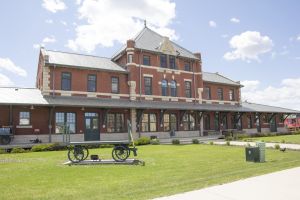
VIA Rail passengers will now have a warm place to wait for the train in Dauphin thanks to a new partnership between the City of Dauphin and the Dauphin Rail Museum.
Beginning earlier this week, Dauphin Rail Museum extended its operating hours to ensure rail passengers, whether they are boarding in Dauphin or stopping while en route elsewhere, will have access to washrooms, a warm waiting space, and the opportunity to explore Dauphin’s rail heritage.
The Rail Museum will open its doors approximately 30 minutes before each scheduled VIA Rail arrival and remain open until departure.
Museum president Jason Gilmore came up with the idea last winter as he was clearing a path from the platform to the tracks so passengers could make their way to the train.
“Over the last two or three years ridership has been going up quite a bit comparatively and especially during the colder months, there is nowhere for people to sit, stand, use a bathroom facility, so on and so forth,” Gilmore said.
“I was out there shoveling and there was a woman with two small children, a stroller, a blind guy, some elderly people, and I did a social media post - and it wasn’t blaming - it was just we need to do better as a community. We should be welcoming, especially for travelers.”
When he approached Dauphin mayor David Bosiak about his ideas, he was strongly on board.
“Just in passing on the street, we talked about it a little bit and he was encouraging and so we are just seeing how it goes, the dynamics of it,” Gilmore said.
Bosiak said the program is about partnership, hospitality and heritage.
“We want visitors arriving by train to feel welcome in Dauphin, and this program also shines a light on the important work of the Rail Museum in preserving our community’s history,” said Bosiak.
And Gilmore hopes the partnership will not go unnoticed as VIA Rail implements its 2030 strategic plan, which includes replacement of its the entire fleet.
“I just foresee amazing opportunities for Dauphin, if and when that occurs,” Gilmore said.
“So it’s trying to show the initiative on a community level with VIA saying, ‘Yeah, we’re serious about this. Help us out. Let’s go’.
“I’m working with Dan Mazier’s office, trying to get a meeting with VIiareps in regards to the strategic plan. I have letters from all levels of government, Travel Manitoba, all the major stakeholders here that would benefit like the festivals and Northgate Trails. I’m really excited about the potential and I think this is a good first step.”
The Dauphin Rail Museum will share VIA Rail arrival and departure updates for Dauphin through its official Facebook page. Passengers and residents are encouraged to follow the Museum on social media for these updates.
The pilot program will be evaluated in spring 2026 to determine future opportunities.
Yakimishen standing out in Canadian manufacturing scene

The role manufacturing plays in rural economies often goes unnoticed, especially in areas where agriculture dominates the scene.
But Ritz Machine Works Inc. in Dauphin was drawn out of the shadows recently when it’s Director of Operations, Bryan Yakimishen, was named one of the top 10 manufacturing leaders in Canada under the age of 40 by Plant, a leading industry magazine.
The awards are meant to recognize the next generation of talent in Canada’s manufacturing industry and celebrate those who are helping to actively shape the future of the sector.
When the call for nominations came out, Ritz’s chief executive officer Rick Ilnisky knew his company included such a person.
“I thought of Brian right away because he’s done some great things at our company over the 10 years plus,” Ilnisky said.
“I felt that he had come through the ranks within that 10 years. He’s had the opportunity and he’s had the aptitude to succeed. And it’s nice to see a story where a fellow from a small town can go away, get his education, and come back and thrive.”
Yakimishen started his journey with Ritz in 2015 as an engineering student home from the University of Manitoba for the summer.
After completing his degree, he remained with the company as a manufacturing engineer, eventually leading the engineering department. In that role he helped implement the company’s ISO 9100.
Last year, Yakimishen became Ritz’s director of Operations, overseeing production, engineering, maintenance, quality, human resources and more.
Humbled by the recognition, Yakimishen feels the achievement is not his alone, but rather is a testament to the work of everyone at Ritz, from owners through to the shop floor.
Read the full story in this weeks edition of The Dauphin Herald.