
Kings looking for secondary scoring as season progresses

It was another week of mixed results for the Dauphin Kings, last week.
Bryson Yaschyshyn made 42 saves in helping the Kings to a 2-1 win over the Swan Valley Stampeders, Tuesday in Swan River.
On home ice Friday, Yaschyshyn was pulled after allowing four goals by the 5:30 mark of the second period as the Winnipeg Monarchs skated to a 5-3 win.
Kings head coach Bryan Kromm said he wouldn’t make any excuses for the mistakes that happened following Friday’s loss.
“We get what we get. The results are what they are,” he said.
Yaschyshyn has the Stampeders’ number in Swan River, having stopped 96 of 99 shots in two games up north.
“He played very, very well. We saw his game or what I thought he could do. We were waiting for that to come to fruition and it did on Tuesday, for sure,” Kromm said.
Kromm feels the Kings are starting to improve play in the offensive game.
“I think we had some good possession tonight and some good looks tonight. So I think that side of the game is something that’s positive and so we’ve just got to keep building on that,” he said.
Most of the team’s goals have come from Quentin Fisk, Brody Green and Bennett Muller, who have scored 24 of the Kings’ 40 goals.
So Kromm would like to see increased secondary scoring.
“I think it will come. I think there’s some new guys in the lineup that once they get comfortable with us, they’re going to start to produce that secondary scoring for us,” he said.
The Kings dealt forward Kurtis Kinoshita to the Northern Manitoba Blizzard last week in exchange for Renat Nahnieiev, a native of Kremenchuk, Ukraine.
The 20-year-old forward picked up his first point Friday, assisting on Fisk’s goal 48 seconds into the game.
Dauphin also added 17-year-old Tegan Kurtz, who was with the Niverville Nighthawks, and had two assists, Friday.
Kromm was impressed with their play on Friday.
“They were good. They’re exactly what we were hoping they would be. They’re bringing in more of an offensive punch to our game, so I’ve liked what I’ve seen in the first little bit since they’ve gotten here,” he said.
Kurtz, who doesn’t turn 18 until Dec. 3, had been dealing with back issues the last two years and Friday’s game was his first since the 2024-25 season when he was with the Winnipeg Wild.
“It was good to see him back on the ice finally,” Kromm said.
Kromm said there may be another trade or two to come, but that’s about it.
The Kings host the Steinbach Pistons, Friday at 7 p.m., for Ladies Night.
With that the only game this week, the focus in practice will be to get everybody on the same page.
“Obviously, we’ve talked about the newcomers. They have to start to get a feel for the guys and what we do five-on-five. I’m really looking forward to the practice time and getting us all on the same page for Steinbach,” Kromm said.
Setting his sights to the stars
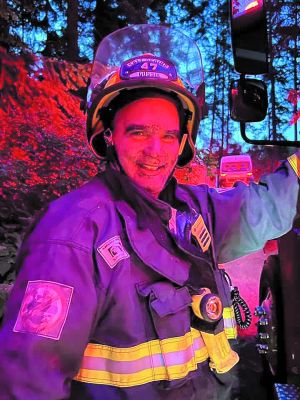
Not many of us take the opportunity to look up at the stars and the wonders in the sky. One former Valley resident, Grant Gussie, found a passion for astronomy at an early age and wound up getting an extensive education in the field.
“I was born in Beausejour, but my mother was a Cox and was born and raised in Swan River,” said Grant. “My parents are Cliff and Kay Gussie, and my father passed away a couple of years back. Our family moved to Swan River when I was quite young. I spent most of my childhood growing up on River Road.
“I fell in love with astronomy while my dad was still getting his university degree, so I was in Grades 1 and 2, and we were living in Gladstone at that time. During that time, I had a cool Grade 2 teacher, Mrs. Chandler, and she took us all into Winnipeg to see the Man of Nature Museum and the Planetarium. I still remember the Planetarium and I thought it was amazing.
“At that time, we lived out on a little farm, just outside of Gladstone,” said Grant. “I would go out and watch the stars. I remember seeing the Pleiades for the first time and trying to make some sense out of the star patterns. I would try to find the Big Dipper and Little Dipper. I just fell in love with that.
“When I was nine years old, I got my first telescope for Christmas. I quickly outgrew that one and got a serious telescope in grade 7. I saved up $150 and my parents put in the other $150, and I got this six-inch telescope, which for me was quite spectacular. That and a few books made me spend a lot of time in our yard, on River Road in Swan River, looking through my telescope.”
Grant was dedicated and passionate about looking up at the stars. During his younger years, he was fortunate to see many objects in the sky, some unique and some quite impressive.
“There is a list of objects in the sky, which is called the Messier List,” said Grant. “It came about with Charles Messier, who made a list of things to avoid looking at when looking for comets. If you find them all, you get this Messier Certificate. I wound up getting the Messier Certificate from the Royal Astronomical Society of Canada.
“The other thing that stands out for me was the first time I saw the Orion Nebula, the Andromeda Galaxy, and the Ring Nebula. The Ring Nebula is something called a planetary nebula, which is a gas cloud surrounding a dying star.
“I also discovered my own cluster of stars called the Coat Hanger,” said Grant. “I was 14 years old when I discovered it. But when I went to university, I found out I wasn’t the first person to discover the Coat Hanger, nor was I the first person to call it that, but I still discovered it.”
Grant took his love of looking through a telescope and fostered his education in science. He focused his post-secondary studies in the fields of mathematics, science and physics.
“I graduated from the Swan Valley Secondary School in 1981,” said Grant. “I won the Science Award for the highest mark in Science at my high school graduation. After I graduated, I went to the University of Manitoba for four years. I graduated at the top of my class and received the gold medal for the major course in Science and my degree was in Mathematics and Astronomy.
“Then in 1985, I attended the University of Victoria and got a Master’s Degree in Physics. That was quite difficult because I didn’t have a Bachelor’s Degree in Physics, so I had to do a lot of work to get a Masters in it. Then I went to the University of Calgary and got a PhD in Astrophysics. The topics of both my Master’s Thesis and Doctoral Dissertation involved the process of stars similar to the size of the Sun that are dying.
“For my Master’s Degree I did research from the Dominion Astrophysical Observatory just north of Victoria, BC,” said Grant. “My PhD was more involved with Radio Astronomy, and I did a lot of radio work. That was quite a bit more interesting as I got to travel more. I spent some time in the Netherlands working with the telescopes there. I went to New Mexico several times.
“I also really did like being in New Mexico,” said Grant. “When I was there, I was at the Very Large Array and it’s a series of radio telescopes. There are 27 of them and they are spread out along three railway tracks, each 21 kilometres long. One day I walked out along the tracks and plunked myself out in the middle of nowhere and looked up at the sky. It was amazing. There is a galaxy you can occasionally see with the naked eye in very dark skies. It’s called Messier 33. I saw it in New Mexico one night, when it was really dark.”
“I also went to Hawaii and the Mauna Kea Observatory and did some research there. In fact, I did radio stuff all over the world and then went back to the Dominion Astrophysical Observatory to do some more work with optical as well. I enjoyed that time immensely.”
Grant was able to find some research jobs in his field that took him all over the world. During some of these jobs, he saw some of the most incredible views in the skies.
“After my Ph.D., I got a job in post-doctoral research with the University of Tasmania from 1992 to 1995,” said Grant. “I continued working with radio on similar topics, with a little bit more involving star formation this time, rather than star death. I met my wife, who was a nurse at the large public hospital there.
“I also spent time in New South Wales, where the Australian Telescope Compact Array is. It’s a network of radio telescopes near Narrabri, in north-central New South Wales. And also at a large radio telescope near Parkes, NSW. It’s all grain land out there and it looks a lot like the Canadian Prairies, except it’s really hot. If you go out and lie out under the stars, the sky is spectacular.
“While in Tasmania, I applied for a job with the Commonwealth Scientific and Industrial Research Organization (CSIRO) after I had spent a year and a half in Antarctica. In the end, I didn’t wind up getting that job because my visa was tied to my job in Tasmania and I had to reapply for another one. The criteria for the job with the CSIRO required me to not be a foreigner in Tasmania. The only way they would consider me as an applicant was if no one else was qualified in that topic, so I had to withdraw my application. That was kind of disappointing.
“I returned to Swan River for a few months and then got a job in Calgary,” said Grant. “That was the end of my astronomical career. I only got offers for one or two-year contracts with small colleges, and then would have to look for another job. Those positions weren’t going to get me where I wanted to go.
Grant built himself a huge telescope as a hobby and a reminder of his passion for astronomy.
“I still have a telescope. When I lived in Calgary, I actually built a really nice telescope,” said Grant. “I made two of them so far, and one of them I donated to the Royal Astronomical Society of Canada. It was the prototype for the one I kept, which is the bigger of the two I built. The scale is about 8 ft tall. I brought it here with me.”
Now Grant works in a different field altogether, but he still enjoys looking up at the stars.
“I wound up working in the oil patch in Alberta,” said Grant. “When people search for oil, they send sound waves into the ground and have these geophones that listen for the echoes underneath the ground. From that, they construct an image. The mathematics of it is similar to how radio telescopes construct an image of the sky; it’s the same sort of thing. So I did some geophysics with that, but over the years I’ve done more computer programming.
“In 2004, we moved to Salt Spring Island in B.C., where we still live today. I got involved with the local fire department in 2006 and became a fully qualified firefighter, which is something I still do. So I’m now a computer programmer and a firefighter.”
Harvesting food for the fall

The robins were in Melonee Hunt’s yard stripping the berries from their Mountain Ash tree.
Shell River bridge on Hwy 83 set to reopen to traffic in December

Manitoba Transportation and
Infrastructure is providing an update on
repair work to the Shell River Bridge on
Provincial Trunk Highway 83 near
Inglis. The bridge remains closed following
significant damage caused by
heavy rainfall in June.
A detour remains in place via
Provincial Road 482 through Shellmouth
and Dropmore.
Engineering assessments have been
completed, temporary steel supports
have been installed and demolition of the
damaged south abutment is complete.
Work is now focused on constructing a
new foundation and abutment, to be followed
by rebuilding the riverbank and
roadway approaches.
The bridge is expected to reopen to
traffic in December, subject to weather
conditions and construction progress.
Final project work and cleanup are
expected to be completed by early next
summer.
For the latest information on road
conditions, closures and travel advisories,
visit Manitoba 511 at https://manitoba511.ca/
2026 Candidates Forum Held

As the meeting started, chairs became scarce every chair found in the building was gathered to seat those in attendance. In all 77 people showed up at the election public forum. more than sixty questions were submitted to be asked at the meeting. Each candidate was given a few minutes to speak before the questions were asked - although, not many were asked as time was short. The candidates were each given some of the more involved questions the night before the meeting. Questions were also taken at the door and eventually the floor was opened to the public. The evening gave citizens a chance to each hear the questions posed as well as the answers in a safe and non confrontational space. James Roszell and Celina Nernberg who are both running for a postion at the Park West School Board table were also on hand to tell the crowd about themselves and what they hope to accomplish as a trustee.
There's an end in sight

Manitoba Transportation and Infrastructure has provided an update on repair work to the Shell River bridge on PTH #83 near Inglis.
The bridge remains closed following significant damage caused by heavy rainfall and the flooding of the Shell River in June.
Details in this issue.
Young receives award from Red Cross
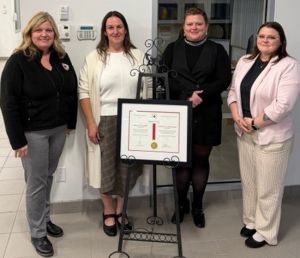
A local volunteer with the Red Cross has been identified for her years of service and dedication to helping others during a time of crisis. Melanie Young was presented with the Order of Red Cross, the organization’s highest honour, on October 7, 2026, in The Pas, surrounded by family and friends. Young has spent over a decade helping others through the Red Cross.
“I’ve been a volunteer with the Red Cross for 14 years and am going into my fifteenth year,” said Young. “Initially, a friend who was working with the Red Cross was trying to build up a team and asked me if I would participate.
Progress is being made at DRHC, says Slate
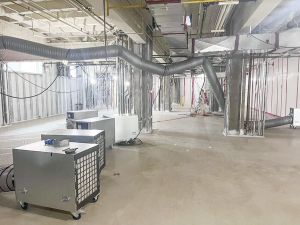
While there is still no timeline in place for the complete reopening of Dauphin Regional Health Centre, Prairie Mountain Health CEO Treena Slate was in Dauphin, last week, meeting with engineers and contractors trying to nail down something more definite.
“We’re meeting with our clinical folks, the engineering company, and our construction company, and working on developing a schedule and a set of priorities based on what the clinicians see are the priorities,” Slate said, adding all options are being explored should systems such as HVAC and other infrastructure or medical gases become available.
“So we are hoping for some overarching, high-level timelines or estimates in terms of what the public can expect in the coming months. But with what we know right now, we want to try to plan with what systems we have, so we can open sooner rather than later.”
Slate added some announcements are expected soon around cancer care, hemodialysis and the expansion of lab services to support patient care.
“Around some of the tests that will be offered. That’s important. We want to make sure that we’re supporting physician practice and clinic practice,” Slate said, adding more lab services will also benefit the public in tangible ways.
“Because people are right now having to travel for some of those tests, and we want to limit that as much as we can.”
With the emergency department open and other services increasing, the need to get more support departments up and running is more urgent.
“We are working on also getting some mobile trailers in to support some of the services that are going to be shut down for a long period of time. We’re not going to have a sterilizer for a long period of time. We’re not going to have a pharmacy for a long period of time,” she said.
“So we’re working on getting some mobile supports for those services in, so that we can get things up and running as soon as we can.”
Those services which can be offered, such as emergency medical services, have been operating well and have been busy, Slate added.
“The volume, the number of patients we’re seeing in the Dauphin emergency room, are pretty close to what we normally saw in the Dauphin emergency room. So that’s a good sign that people are accessing that service,” Slate said, adding PMH is constantly looking to tweak operations to make things more streamlined.
(The ER) has actually been working okay. I mean, it’s not the same as it always was, so we’re working on improving accessibility to spaces in the emergency department. Those are things that we can expand sooner rather than later in the emergency department to get it a little bit more functional and accessible.”
From the beginning, much of the remediation work has focussed on the hospital’s crawl space, which houses many of the mechanical systems and was completely filled with silt from the flood waters. Meaningful progress on that work has been made, Slate said.
“They’ve done a tremendous job of cleaning out that silt. After that’s cleaned out, they still have to do soil testing and some remediation work in there, and then they can at least get at some of the infrastructure to start replacing it and get working on that,” she said.
“It’s not completely done, but they’ve made really good progress on it.”
Throughout it all, feedback has been positive, Slate said, from the public and from PMH staff.
Patients and staff are pleased things are getting closer “normal” and ensuring critical services such as cancer care and hemodialysis back close to home before the snow flies is really key, she said.
“The staff that can be home and working, I think are, for the most part, happier to be here. But really, everybody wants everything back up and running just as it was. We want that, too, of course,” Slate said.
“We just have to work with the project teams on getting things done as soon as we can, and making sure that the clinicians and the frontline staff are involved in that planning, so that they can inform what makes sense in terms of their workflows and providing the most appropriate care for patients.”
Mayor hopefuls tackle crime issue in the city
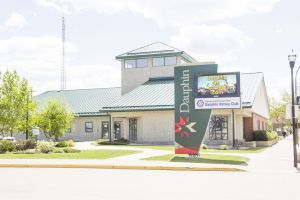
To continue disseminating information to voters as they make their decision about who will serve as Dauphin’s next mayor, the Herald posed another question for candidates to answer.
This week we asked, “Crime continues to be a major issue for local voters. Considering the municipal government has no power to legislate criminal laws, has no influence over the courts and no real control over RCMP operations, what role do you see for the City in the fight against crime?”
Answers were received from two of the three candidates. They follow:
Steve Sobering
Crime and public safety are major concerns for our residents and local businesses, and they deserve practical action. While criminal law, the courts and the operational control of the RCMP fall largely outside municipal authority, the City still has an important role to play through effective local policing, safe public spaces, and collaboration with the organizations responsible for treatment and support services.
Policing is one of the City’s largest annual expenses, costing approximately $3 million, with the Province providing a rebate of about $1.2 million. Unlike many smaller municipalities, the City has a significant responsibility for funding its local RCMP service. One of the most important things we can do is make Dauphin an attractive place for officers to live and work. For the first time in many years, our local RCMP detachment has a full complement of officers, many of whom are recent graduates. Mayor and council also meet regularly with RCMP leadership to discuss local concerns and policing priorities. The introduction of street patrols, an RCMP initiative supported by council and welcomed by the community, is one example of this collaboration.
We must also recognize that crime, addiction and mental illness are related issues, but they are not interchangeable. Criminal activity, drug dealing, trafficking and behaviour that threatens public safety must be addressed. At the same time, people struggling with addiction or mental illness need access to appropriate treatment, mental health services and housing suited to their circumstances. Enforcement alone will not solve these challenges, nor will providing shelter without access to the right supports.
The safe warm space established through the Manitoba Métis Federation was an important initiative to help people get out of the cold during winter. However, an emergency warming space cannot be expected to replace specialized mental health care, addiction treatment or appropriate transitional housing. We also have a responsibility to residents, customers and business owners who have experienced threats, vandalism and disruptive behaviour. We need a model that provides compassion and support while maintaining clear expectations for public safety and cleanliness.
I will strongly advocate for greater provincial investment in organizations such as the Addictions Foundation of Manitoba, Echo Housing and appropriate mental health facilities. People dealing with mental illness and addiction deserve access to treatment and support based on their needs. We need more trained staff, appropriate spaces and consistent funding.
I also believe we should work with the relevant health authorities and local service providers to explore establishing the safe warming space at our health centre.
With appropriate staffing, security and sustainable funding, a seven-day service could help assess people’s needs and connect them with the right providers. Co-ordinating services in one location may also reduce duplicated costs and allow more resources to be directed toward care.
As mayor, I would continue working with the RCMP, local businesses, community organizations and other levels of government to identify problems, support effective solutions and measure progress. Where programs are working, we should advocate for their expansion. Where they are not, we must be prepared to make changes.
Residents deserve safe streets, businesses deserve to operate without fear of threats or vandalism, and people struggling with addiction or mental illness deserve appropriate care.
We can work toward all three goals through practical action, collaboration and accountability.
Keith Durston
I have to disagree with you, we do have local control on policing. We pay the police costs so we have the say.
With that being said it requires a multi-disiplinary approach utilizing local stakeholders and commuting our concerns to the local police. Why are we double paying for lower quality of policing with implementation of security guards?
I plan to be an effective communication for the people of Dauphin and to listen and implement the ideas and concerns from the citizens.
The potential for this city is astronomical due to the amenitiies available within 15 to 20 minutes, community spirit, and volunteers. The rec centre, the cinema, summer games just to name a few accomplishments of the people of the City of Dauphin.
I am in no way going to infer youth are responsible for the crime influx by suggesting more recreational and constructed participation. A good thing for sure in the upbringing. Crime is not transferable to one sector. Crime is a choice one takes to make and must be stemmed by all means necessary.
Clippers sail to preseason tournament title

The Dauphin Clippers hockey team won the Glenboro Wildcats Preseason Tournament, this past weekend.
The Clippers opened the tournament with a 5-2 win over the St. Thomas Aquinas of Kenora, Ont.
Ethan Zalischuk with two, Riley Durston, Josh Beyette and Forrest Karlson scored for Dauphin, while Ben Miner picked up the win in goal.
In the semifinals, Dauphin beat Boissevain, 9-0, behind a three-goal effort from Brayden Budolowski.
Samson Bourgouin added a pair, while Loden Campbell, Larson, Brandon Wood and Carter Smigelsky had singles. Xander Perih earn the shutout in goal.
Dauphin clinched the title with a 6-2 win over the host Wildcats.
Budlowski led the way with three goals, with Wood, Jordan Height and Axel Dunning adding singles. Miner earned the win in goal.
Clippers coach Drew Kulcheski felt the Clippers were strong in all aspects of the game.
“Even when we had a little bit of adversity in some of the games, we were able to rally around each other and find a way every shift to create some energy and make something happen,” he said.
Kulcheski feels there is a lot of potential for this team, noting they are working on new systems.
“But I think once we get going and we develop later in the season, we’re going to be a team to look out for,” he said.
The Clippers open the season, Saturday, when they host Glenboro at 8 p.m.
Noting the tournament final was Glenboro’s second game of the day, Kulcheski expects a much tougher game from the Wildcats.
“I’m expecting them to come out with a little bit more energy than they did (Saturday). But our guys are also going to be playing on a little bit bigger ice and I think they’re going to have the chance to use their speed and their skill and create a lot of opportunities for themselves and keep the momentum going all the way to March,” he said.
The goal for the season is simple.
“Given the last couple seasons we’ve had, I think it’s championship or bust,” Kulcheski said.
“We’ve got a team here that’s really hungry to win. We’ve got some Grade 12s that have lost in back-to-back finals and they don’t want to lose three. We’ve got a couple new guys that really want to have a winning season behind them. I think it’s finals or bust for us this year. That’s our expectation. That’s what the players want. That’s what the coaches want. So we’re looking forward to it.”
Dauphin will complete the opening weekend by traveling to Boissevain, Sunday, to play the Broncos at 3 p.m.