

303 The Pas Royal Canadian Air Cadets hosts recruitment night
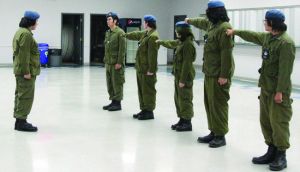
Fall time is a busy one for youth to embark on new opportunities to join sports, clubs or organizations to gain some valuable skills for when they get older. The 303 The Pas Royal Canadian Air Cadets held their registration last week to sign up and attract new air cadets to the squadron.
“On average, there about 30 air cadets in the 303 The Pas Royal Canadian Air Cadets,” said 303 RCAC’s Commanding Officer Captain Codie Baker. “We had a total of 16 attend registration night last week, with four new youths joining.
Palsson reminisces over his career in law

Valley resident Beggie Palsson has had an extensive career practicing law in northern Manitoba, between The Pas and Swan River. At first, Palsson didn’t set out to become a lawyer, but fate had opened several doors leading him to law school and taking the bar exam.
“I was working in The Pas as a probation and parole officer,” said Palsson. “My territory included Gilliam, Churchill, The Pas, Moose Lake and the surrounding area. Back then, when you worked in that field, the only way to succeed in that department was to have a degree in social work. People who work in the child and welfare, probations or parole fields were trying to get their Master of Social Work.
“I just had an Arts Degree at the time, so I applied to the University of Manitoba to study a sociology course. I applied for that and was going to take the summer off to go to summer school. Before I went, the probation officer from Flin Flon was going to Winnipeg and he stopped to talk to me. He told me he was going to pick up an application for law school and asked if I wanted him to get one for me too. I told him they would never accept me in law school and I was thinking of going into social work to advance in the job I had. He told me he would get me a form, so when he came back, I filled it out and sent it in.
“The day before I was supposed to leave my job and take a sociology course, I got the letter from the law school accepting me into the program,” said Palsson. “Going into law was kind of an accident, but believe it or not, one professor I had in law school who taught an introductory course, said he bet half of us were there by accident. So, lots of people went to law school without originally planning to. It was one of the best decisions I made.
“I loved law school and found everything I studied relevant, and much to my surprise, I did very well in it.”
After passing the bar, Palsson started his legal career by articling for a firm in Winnipeg. From there, he went on to work for Legal Aid and focused on the Child Welfare System. Palsson gained a lot of valuable experience from his time working at Legal Aid.
“After law school, I articled with a private firm in St. James,” said Palsson. “They had the Chapman Building just east of Portage and Ferry Road. They were Chapman, Chapman and Chapman. It was a father, two sons and two other lawyers who made up this law firm. I articled for one of the Chapman boys.
“Then once I got my call to the bar, I went to work in the Legal Aid Office in Winnipeg. They were looking for a child welfare specialist. I never wanted to do much court work and there I was going to court four to five days a week because there were so many cases of child welfare in the system. I was taking on Paul Walsh who had been a very good criminal lawyer and became counsel for the Children’s Aid Society, which in some cases was trying to take children away from their parents. I was up against him four or five days a week. It was a good experience for me.
“I recall one day, one of the judges asked me to come to her chambers when there was a break in court,” said Palsson. “She told me that between her and I, we taught Mr. Walsh a little humility today.”
Palsson recognized early in his law career that family and child welfare law was one of the toughest areas to practice. It was apparent to him that the Child Welfare System was overrun based on poverty and some racial profiling.
“It was a hard line of work to be in because I was watching families being broken apart,” said Palsson. “A lot of it was due to poverty and some racial aspects. Unfortunately, those were mainly the clients of the Children’s Aid Society. Even now, 90 percent of the children apprehended are from low-income and Indigenous families.
“I knew of a lawyer in the legal aid offices in Winnipeg, who was very sensitive. Over time this lawyer left practicing law because of the difficult nature of these case types and the stress.”
After gaining some experience in Winnipeg, Palsson returned to northern Manitoba and The Pas to continue working in Legal Aid.
“Back when I worked probations, there weren’t many supports or lawyers working in northern Manitoba,” said Palsson. “There weren’t very many at all. Thompson had a couple of firms, there was a lawyer in Churchill, and Evans Premachuk was working in The Pas. There were some that I knew of, but overall, there was a great shortage of lawyers in northern Manitoba.
“I ended up going back to The Pas to open a Legal Aid Office for the Province in 1975. I was up there for three years before I came to the Valley. We used to fly in for court and back then I could see the ridiculousness of it. The plane would land and the judge, the Crown Attorney, two other lawyers and a court reporter would get off. The local people were kind of laughing because they knew nothing was going to be solved in terms of justice when judges and lawyers were only there for a certain amount of time.
“One of the guys who came up with me, was just called to the bar,” said Palsson. “I had been practising law for a couple of years before coming back to The Pas to work, which was still not a lot. He was a very outspoken fellow and went on to become one of the top-notch criminal lawyers in Manitoba. His name was Norm Cuddy. He was fantastic and a natural criminal lawyer.
“Norm later went on to Winnipeg with a sole practitioner, where he learned a lot about criminal law. Then he joined one of the top firms and quickly became a partner. He did very well for himself, but then got cancer and passed away at a young age. He was a good guy to work with.”
Once again opportunity presented itself to Palsson and he had the opportunity to leave Legal Aid and get into private practice. This started a new chapter for Palsson and a move to the Valley.
“Once again, my move to Swan River was purely by chance,” said Palsson. “The Crown Attorney, Ed Sloane, from Thompson, who I met once or twice, stopped by my home in The Pas. He asked me if I was sick of Legal Aid yet. At that point, I felt I had done it all in Legal Aid and was repeating it over again, doing the same thing. Sloane told me he felt the same about prosecuting. He found a law practice for sale in Swan River that belonged to Florence Matthews. He had made an appointment to speak with the owner and asked me if I was interested in becoming a partner. It had me intrigued and I told him to check it out and let me know what he thought.
“He came back and told me he felt there was great potential in the firm and that there was a very good practice setup. He felt there was room for two people to work there, so we made her an offer and she accepted. Sloane had been an RCMP officer before he went to law school so he always worked with the criminal side of law, then he became a prosecutor, so he hadn’t done any private law. I had articled with a private law firm and had done quite a bit of law in that area. Sloane went earlier and worked under Florence for a bit, then I came down and we opened up our law firm on May 1, 1978.
“I knew at some point I would go into private practice, but it just came a little sooner and unexpectedly,” said Palsson. “I hardly knew Sloane and just a few weeks ago I thought about why Ed Sloane would have stopped in back then and asked me if I was interested in joining him in practice because he didn’t really know me. Then it hit me. The prosecutor in The Pas was from Clearwater and so was Ed. I’m sure he phoned and asked what I was like, and I know the prosecutor in The Pas would have given him a good report on me. This is likely why he asked me to form a practice with him.
“Working in a private practice is different than working in Legal Aid. You have clients coming in who want certain services that you weren’t doing as part of Legal Aid. Legal Aid is limited because the clients can’t afford legal representation. This can lead to a different type of law being practiced with different expectations. I got to do so much different work.”
Palsson was quick to integrate into the Valley community. He found himself joining some local community groups and volunteered to help make the Swan Valley a better place for everyone. Palsson spent a good portion of his time giving back to the community.
“I joined the Swan River Kinsmen shortly after I moved here,” said Palsson. “Then my banker was a Swan River Rotary Club member and coaxed me to join that group too. I aged out of Swan River Kinsmen when I turned 40 and stayed with the Rotary Club until it disbanded this summer. We have no Rotary Club in Swan River anymore, and that’s unfortunate.
“When I worked in The Pas for Legal Aid, they used to have community committees that were supposed to be advisors to the office to let them know what were things in town that needed to be looked at from the legal perspective. One of the committee members in The Pas was a Captain for the Salvation Army. He got me doing volunteer work for the Salvation Army. One year I collected donations from every business in The Pas by myself. Then when I came to Swan River I thought I was done, but the first call I got was from the Captain from Dauphin. He asked me if I would continue doing that in the Valley, so I wound up looking after the Salvation Army Kettle here on my own for a year or two, until the Swan River Rotary Club took it over. We raised a lot of money for the Salvation Army over the years.
“I was part of forming the Community Foundation of Swan Valley said Palsson. “I can’t say I was the head or idea of it, but I did some legal work incorporating it. That was a fun time and project to work on. I was invited to their Spring Granting Meeting earlier this year, and I believe the Community Foundation of Swan Valley has grown to almost $4 million now, with five percent going out to the community every year. It’s amazing to see how that project started and has grown to what it is today.
“When it came to volunteering in the Valley, I had a lot of help and support from good people.”
Palsson’s partner decided to move on from the Valley and this began to cause a shift in not only the law firm itself, but the type of law Palsson practiced.
“After about six and a half years, Sloane had moved on,” said Palsson. “We had an agreement back when we were in practice that he would take the criminal cases and I would handle the civil and family ones. After he left, I had to oversee them all, but eventually, I stopped going to court. I never enjoyed it and was too busy to be out of the office for a week. We’re still very close friends and he is a great guy.
“My first partner after Sloane left was Roger Gregoire. Roger had been my articling student in The Pas with Legal Aid. After he got his call to the bar, he was lured away by a firm in Flin Flon. He practiced with them until I phoned him a couple of years after Sloane left. I asked him if he wanted to move south and work with me. He moved down within a couple of days and worked here until the Province appointed him as a provincial court judge. He too was an excellent partner and that helped.
“After that, I had a couple of different lawyers work with me,” said Palsson. “I went on to do a lot of mortgages, wills, estates, corporations. After Sloane and I bought the practice and by the time I retired, it had grown to represent and establish over 200 corporations.”
Over the years, Palsson refined his law practice and no longer practiced family law. Family law had undergone too many changes and became so complicated over the years, that Palsson felt it was a field that a lawyer should strictly practice to be good at it and he had so many other clients to represent for different matters, that he wanted to focus on that instead.
“I got out of practicing family law because they had changed all the laws surrounding it and how one got to court,” said Palsson. “I just didn’t have the time to focus on that, and with family law, a lawyer needs to be dedicated to it 100 percent of the time, to be any good at it. Things seem to change so much and it has gotten to be a more stressful type of law to practice.
“I didn’t want to give up the other aspects of law that I was working on at that time, so I let go of family law and would refer people to another firm.”
It’s been over a decade since Palsson retired from practicing the law. He was fortunate to find someone to take over his practice in the Valley. The one aspect of practicing the law that Palsson misses the most and still to this day, is getting the opportunity to see his clients regularly.
“By the time I retired from law, I had been acting legal representation for grandchildren of the clients who first came to see me when I started in Swan River,” said Palsson. “It was grandchildren, not children, who were starting to farm and wanted to buy land. It was so much different. In the beginning, I was forced to do court work and that was never my intention to be in the courtroom that much. Law is made up of barristers and solicitors. Barristers go to court and solicitors do paperwork, and my goal was to be a solicitor.
“I retired from practicing law on April 1, 2014. It was hard for me at first, because I missed a lot of the clients. I had lots of really good clients. I was fortunate to turn over my practice to a very competent and good lawyer, Laurie Oakes. She worked with me for a year and then bought the practice.
“Once I retired, I spent time socializing with my coffee group,” said Palsson. “We go to the Legion every day now to have coffee and visit.
“The people were always nice to work with when it came to opening a business or purchasing land or homes. The clients were the most enjoyable part of my career in law. I met some really great people.”
Palsson and his wife Karen are in the process of saying goodbye to the Swan Valley as they are moving to Winnipeg. They will be greatly missed.
A Prestigious Honour

Sapotaweyak Cree Nation’s Chief Nelson Genaille was presented with the King Charles’ Coronation Medal at the 150th Commemoration of Treaty 4 in Fort Qu’Appelle, SK. Chief Genaile was one of five people presented this prestigious honour at the event...
2024 harvest well underway in the region

Dry conditions and unseasonably warm temperatures have resulted in strong progress when it comes to harvesting the 2024 crop, according to the latest Manitoba Crop Report.
Despite some recent localized rainfall and frost over most of the region, the latest Manitoba Crop Report shows that overall, harvest in the Northwest is 25 per cent complete.
Unsettled weather events did bring thunderstorms to parts of the region recently, including hail in the Swan Valley area, with varying degrees of damage to some crops.
Pipe Lake station received the most recorded precipitation at 16 millimetres, while the lowest recorded precipitation was at the Swan River station with just under one millimetre of rain. Some areas along the western portion of the region received a light frost, with temperatures close to 0C, but it was not a killing frost. The Swan Valley station had the lowest recorded overnight temperature at 0.5C. High day time temperatures helped crops to move along with The Pas station recording the highest recent temperature of 32.6C.
Yields continue to vary widely and are dependent on early season rains.
Some crops remain lodged from previous high winds and continue to be a challenge for harvest and may possibly affect quality with recent rains and heavy dew. Some post-harvest field operations are also being completed as time allows.
When it comes to early crops, the winter wheat and fall rye harvest is all but complete in the northwest region, and across the province, at 99 per cent.
Yield reports range from 40 bushels per acre to 110 bushels per acre for fall rye and winter wheat.
Reseeding of the two crops for 2025 has also begun in the area.
The spring wheat harvest in the region continues its strong progress, with most of the area around 40 per cent complete. Lodged fields have slowed progress for some producers
Yields have been widespread, averaging from 65 bushels per acre to 70 bushels per acre, while some fields have done even poorer at 40 bushels per acre to 50 bushels per acre and some better at up to 80 bushels per acre.
Initial reports of quality have been good, however, there have been some reports of lower protein.
Dauphin has connection to Olympic silver medalist

Dauphin is connected to the recent 2024 Paris Olympic games through Abby Dent, a great granddaughter of the late Ted and Alice Dent, who won a silver medal as a member of the Canadian Women’s Eight rowing team.
Dent was born in Kenora, Ont., to Leanne and Carlton Dent and completed her schooling in that community, attending Saint Thomas Aquinas High School, where she competed for the school’s rowing team. While studying there, she was named the junior women’s athlete of the year in 2017 and the senior women’s athlete of the year in 2018.
At the same time, Dent also competed with the Kenora Rowing Club and the Manitoba Rowing Club. In 2017, she competed for Team Manitoba in the 2017 Canada Summer Games, winning bronze in the women’s quad sculls. The next year, she won gold in both the junior women’s single scull and in the women’s U19 double sculls at the 2018 Royal Canadian Henley Regatta.
Following high school, Dent enrolled at the University of Michigan, where she majored in general studies through the College of Literature, Science, and the Arts.
While attending University of Michigan, Dent competed with the school’s rowing team, helping to secure fourth place at the National Collegiate Athletic Association (NCAA) Championships in her freshman year. In her junior year, she was a member of the crew named Big Ten Boat of the Week for the week of April 11. The following month, she won gold and helped the team win the Big Ten Championship. She also placed ninth overall that year at the NCAA Championships. In 2023, she was named Big Ten Athlete of the Year and was on the All-Big Ten first team.
Dent was also twice named an Academic All-Big Ten in 2022 and 2023.
During her time competing in the NCAA, Dent also enjoyed a successful international career, including competing for Canada at the 2019 World Rowing Junior Championships in Tokyo, Japan, where she finished sixth overall in the single sculls.
In 2021 and 2022, Dent was part of Team Canada’s U-23 World Championship roster for double sculls and the 8+. In 2021, she finished 12th in the double and seventh in the 8+.
At the 2023 U23 World Championships, she competed in the Women’s Four event, finishing 5th. She also rowed at the 2023 World Cup III regatta, finishing 10th in the Women’s Four.
Later that year, Dent was named to the Canadian Pan American Games Team in the Women’s Eight, Women’s Pair and Mixed Eight events. She placed fourth in the Mixed Eight, won a silver medal in the Women’s Pair, and was part of the first-ever Pan American Games champion crew in the Women’s Eight.
City rolling out radon action plan

Dauphin has a radon problem.
Participating in the latest 100 Radon Test Kit Challenge through Take Action on Radon and BC Lung, the community had confirmed what was widely known, radon levels in the city are well above Health Canada guidelines.
Targetting communities where radon testing has thus far been limited, but where there is a potential for homes to have elevated radon levels, the 100 Radon Test Kit Challenge program provides municipalities the means to provide up to 100 test kits to citizens for free.
In Dauphin 200 test kits were distributed to monitor radon levels for a period of 90 days. A community report following processing of the kits showed that 92 per cent of the homes tested were above the Health Canada guideline of 200 becquerels per cubic metre.
And while that number might not mean much to people, radon - a naturally occurring radioactive gas found in every building in Canada as a result of the breakdown of uranium in the ground - is a serious problem, said deputy city manager Lisa Gaudet.
“Dauphin has been identified as having one of the highest rates of radon in the soil in Canada, not just in Manitoba, but in Canada,” Gaudet said.
“It is critical that we get the messaging out there. I think that because radon is odourless and you can’t see it, people don’t want to really face the fact that it’s a risk to their health. And it is a serious risk. Radon is the leading cause of lung cancer in non-smokers. More than 3,000 people in Canada die each year from radon-related lung cancer.”
To address the problem Gaudet has prepared a proposal for Health Canada’s Radon Outreach Contribution Program for $45,000 to support the roll-out of a three-year Radon Action Plan for Dauphin.
As radon levels vary, even between neighbouring houses, the only way for homeowners to determine their home’s radon level is to test for it.
Given that, the main thrust of the proposal is for the City to spearhead an additional 100 Radon Test Kit Challenges annually over three years, each November, which is Radon Awareness Month, Gaudet said.
Find the full story in this week’s edition of the Dauphin Herald.
Amara’s Amigos continue to raise funds in her memory

Amara’s Amigos, which consists of family and friends of Amara Campbell continue to fundraise money for CancerCare MB Foundation in memory of Amara, who passed away from osteosarcoma on September 14, 2020, at the age of 15. The money is used by CancerCare Manitoba Foundation (CCMBF) to support youth with cancer, especially rare and hard to treat cancers for children and young adults.
Last year’s garage sale and cookie and lemonade sale brought in $5,400. The silver collection at the Minitonas Stocking Stuffer and Craft sale last December brought in $500. Then earlier this year, the Swan Valley Stampeders Hockey Fights Cancer brought in a whopping $19,050.50. Blair and Lee-Anne Campbell presented a cheque to Patti Smith from CCMBF this past March.
“We are humbled by the ongoing support from our families, close friends and Swan Valley community at large,” said Lee-Anne Campbell. “We have received incredible support since Amara’s cancer diagnosis in 2019.
“Our awareness and fundraising events for CCMBF continue to give us a place to direct our grief and remember Amara before and during her brave 19 months of living with cancer. CCMBF provides critical funding to support cancer research and treatment for all children, with a special focus on children and young people with rare and hard to treat cancers.
“The genetic testing program called PROFYLE (PRecision Oncology For Young peopLE) and all funds that we collect stay in Manitoba, directed to this program, which supported Amara during her cancer treatment,” said Campbell.
“The first fundraiser was led by Amara as the ambassador for the 2019 CCMBF Ride Inside, alongside Blake Wheeler, former Winnipeg Jets hockey captain, and his wife Sam. That was a very special time for Amara. She felt the love of Swan River Valley around her as her team contributed more than $19,000 from the Swan River Valley in her honour. There have been various Ride Inside events every year since, other than 2023. The thank you list is too long at this point but includes our families, close friends, strangers, school staff, arena staff, businesses, non-profit groups, Stampeders group, Star & Times.”
In total, $97,216.21 has been donated to CCMBF in memory of Amara.
The Amara’s Amigos shirts and hoodies were created and sold for cost. There was a huge response from the community and the Campbell family finds it heartwarming to randomly see people wearing them when around town.
“The Amara’s Amigos group and clothing logo were initially created in 2019 by a group of school friends, as a sign of support after her cancer diagnosis,” said Campbell. “The most recent version of the Amara’s Amigo’s logo was a collaboration with the Swan Valley Stampeders Junior A Hockey Team in February.
“We also incorporated a small blue heart with our son’s initials ‘JC’, in memory of our son, Amara’s brother, who also passed away in 2020. He was a gentle, kind support to his sister during her initial year of treatment. Also, his favourite sport was hockey with his hometown buddies.
“It has been heart-warming to see people wearing the purple shirts and hoodies at our events and also randomly in the schools, at the campground, at the arena, on the streets,” said Campbell. “The clothing helps to keep Amara’s memory alive as well as representing support for all kids and families who have suffered from childhood cancer.”
Amara’s Amigos are hosting their annual garage sale this weekend. Another event being planned for November is the CCMBF Ride Inside and then the Stampeders Hockey Fights Cancer Game which will be announced at a later date.
“Annual Amara’s Amigos Garage Sale & Cookie Sale started in 2021, as one step of the fundraising for CCMBF,” said Campbell. “Each year it has been held in September as it is Childhood Cancer Awareness Month, also in memory of Amara as she passed away Sept 14, 2020. Family and friends donate their baking skills, time and a variety of gently used items. So far we have not run out of treasures to sell.
“The event provides everyone with a special few days to visit, support each other, remember Amara and fulfill a personal purpose for Blair and me, to support other kids and families living with childhood cancer. Amara’s cousins, grandmas and aunts have taken on the cookie sales as their special project.
“This year’s garage sale and cookie sale is scheduled for Saturday, September 21, from 9 a.m. to 3 p.m. at 215 Parkview Drive Swan River,” said Campbell. “People can also drop off monetary donations to CCMBF that day, and all donations of $15.00 or greater will receive a charitable receipt mailed out from CCMBF.
“We thank every single person who has supported Amara’s Amigos since 2019. We are very thankful and blessed to live in this special community. Please wear a gold ribbon in September in honour of all children and young people who have missed out on precious years of life due to childhood cancer.”
Walk for Suicide Prevention

A group of people gathered together on Sept. 10 in downtown Swan River to walk in recognition of World Suicide Prevention Day, held every year at this time. World Suicide Prevention Day was first launched in 2003 by the International Association for Suicide Prevention as a way of focusing attention on the problems of suicide worldwide. The theme of this year’s walk is ‘Changing the Narrative on Suicide’ which aims to raise awareness about the importance of changing the narrative surrounding suicide and transforming how we perceive this complex issue.
75 years of service
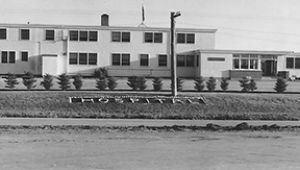
The Roblin & District Health Care Auxiliary is celebrating a major milestone in October.
The auxiliary is celebrating its 75th year of dedicated volunteer service to the community and is holding a fundraising luncheon Oct. 25.
Read all about it in this week’s Review.
Legislation aims to protect important waters

The Manitoba government is establishing nutrient targets to protect Manitoba’s lakes and rivers.
Through the Water Protection Act, the Nutrient Targets Regulation will include Lake Winnipeg and the Red, Winnipeg, Saskatchewan and Dauphin rivers.
It commits Manitoba to report regularly on progress towards implementing the targets and actions underway to reduce nutrient levels in waterbodies in Manitoba.
This provides a clear, measurable benchmark with the goal of effecting real change in the protection of Manitoba’s waterways.
In recent decades, nitrogen and phosphorous have increased in Lake Winnipeg and the Red, Winnipeg, Saskatchewan and Dauphin rivers, contributing to increased frequency and intensity of algal blooms. These potentially toxic algal blooms have serious economic, health and environmental implications and contaminate beaches, reduce water quality and are detrimental to the communities and industries that depend on the lake.