
Rangers coming off successful training camp as preseason set to begin
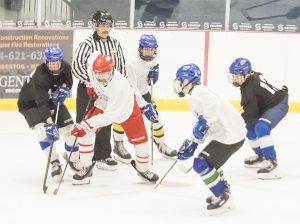
The Parkland Rangers U18 hockey team had a competitive camp this past weekend, with 27 players hoping to make the cut.
Head coach Landon Russell was disappointed with the number of players in camp, while recognizing some players were still attending junior camps.
“There was some good pace. Preseason will start this week, so we’ll get a better look at the guys. As far as I’m concerned, it was pretty successful,” he said.
“There’s some talent out here. It’s going to be tough when it comes down to making the final roster. There will be some tough decisions.”
Russell plans to begin working on team structure and strategies this week as they prepare for the first preseason game, Wednesday, against the Yorkton Maulers in Yorkton.
The Maulers will be in Dauphin for a rematch, Saturday, at 7 p.m.
Once the games against Yorkton are done, Russell plans to ramp up preparation for the final few games of the preseason, which will take place in Souris at the Southwest Cougars annual fall tournament.
Parkland will face the host Cougars, Sept. 18, before hitting the ice against Yellowhead at 9 a.m., Sept. 19, and Interlake at 6 p.m., later that day.
Russell hopes to see the players compete hard throughout the preseason.
“The work ethic is the big thing. We want to be a fast, tough team and we want to be hard to play against every night. Whether we’re battling in the corners or battling net front, we just want to be competing all over the ice,” he said.
Parkland’s season opener goes, Sept. 26, against the Eastman Selects at 7:30 p.m. It will be the first of nine straight games on home ice to start the season.
SVCC welcomes new general manager to the Valley

The Swan Valley Consumers’ Co-op (SVCC) has found the perfect candidate to fill the General Manager role, since former GM Colin Peters resigned after accepting another position. New GM Joshua Brecht grew up and spent most of his life living in the Prairies, thus making the Swan Valley a perfect fit for him and his family.
“I’m originally from central Saskatchewan and have spent most of my life across the Prairies, primarily in Saskatchewan and Alberta,” said Brecht. “I attended the University of Saskatchewan before moving to Calgary, where I spent about 10 years working in the building materials industry. From there, my family and I moved back to Saskatchewan, where I joined the co-op system and spent the last several years serving local co-ops and communities.
“Family is a huge part of my life. I have a wonderful and supportive wife, who is an Indigenous artist, and we have three children ranging in age from 19 to 11. They mean the world to me, and one of the things that drew us to Swan Valley was that it felt like a place where our family could put down roots and become part of the community.”
Brecht grew up around the co-op way of life. He is more than familiar with the cooperative system and how it works, which led him to become a part of it.
“In a way, co-op has always been part of my life; I grew up around it,” said Brecht. “From being a kid and running around many different co-ops that my aunt was a general manager in, to my dad working as both a bakery manager and later a lumber manager, to how my grandparents were long-time Co-op members, and going to the co-op was a daily staple. So even before I worked in the system myself, I understood that co-op was more than just a business.
“My first formal role with co-op was in 2021, when I joined Riverbend Co-op as a Home and Agro Location Manager. That role brought me back into the Co-op system and really confirmed for me that this was where I wanted to build the next stage of my career.
“While I was working at Riverbend Co-op, I had the opportunity to join Federated Co-operatives Limited (FCL) and saw a chance to serve the co-op system in a broader way,” said Brecht. “Moving to FCL allowed me to support multiple local co-ops across Western Canada, learn from different markets, and help teams work through operational, financial, and strategic challenges.
“I grew a lot during my time with FCL and I’m very grateful for that experience. At the same time, there is something special about living in the community you serve directly. That is a big part of why I’m so excited to join Swan Valley Co-op. I get to bring that broader CRS experience back into a local co-op setting, where the work is directly connected to members, employees, and the community every day.”
Brecht enjoys the connection between co-ops and the communities they serve. Co-ops not only provide goods and services to the community, but also build the community up in so many different ways.
“What I enjoy most is the community purpose behind the work,” said Brecht. “Before joining co-op, I worked in the independent building materials industry. I loved the business, the competition, and the people, but co-op changed how I thought about the work. In the co-op system, when the business does well, the benefit stays closer to home. It goes back to members, employees, local projects, community groups, recreation facilities, schools, and the places where families live their everyday lives.
“One moment that really stayed with me was taking my kids to the local pool in Outlook for the first time. As we walked in, there was a sign on the waterslide that said it had been supplied by Riverbend Co-op. My son looked at me and asked, ‘Is that your work, Dad?’ I told him, ‘Yeah, bud, we supplied the materials for that.’ Then my daughter yelled, ‘My dad builds waterslides!’ and ran straight for the pool. That moment has always stuck with me. It was a simple reminder that in co-op, the work we do shows up in real ways in the communities we serve. It is not just sales, operations, or financial results. It is helping build places where families live, gather, and make memories.
“That’s what I love about co-op,” said Brecht. “It is a business model that can compete, but it also has a purpose that is bigger than the business itself.”
Brecht is eager to be a part of the SVCC and loves the setting of the community as well. SVCC has built a reputation of being one of the flag stores in Manitoba, so this experience will be a very enriching one all around for Brecht.
“The opportunity itself was very exciting, but the Valley made a strong impression on us right away,” said Brecht. “The area is beautiful, with the forests, lakes, rivers, and the natural landscape. When I brought my family up while I was exploring the position, we really fell in love with the area.
“Beyond the scenery, there was a feeling here that mattered to us. The community felt welcoming, grounded, and real. It felt like a place where we could belong, not just a place where I would work. That was important to me and to my family.
“My first impression is that the team is incredible. I have only been in the role a few days, but every team member I have met has been warm, welcoming, and supportive. I already feel very fortunate to be joining this group.
The facilities across Swan Valley Co-op are also impressive,” said Brecht. “You can see the pride the team has in what has been built and how it has been maintained. It is also clear that this Co-op has invested deeply in the communities it serves.
“The community has been fantastic as well. I’ve already had people come up and introduce themselves, and I really appreciate that. I know I have a lot to learn about the Valley, the Co-op, the team, and the members, so every conversation helps me understand a little more.
“I officially started on Monday (Aug. 31),” said Brecht. “What I’m looking forward to most is getting back to living and participating directly in the community I serve. I’m excited to support the team, learn the business deeply, build relationships with members and community partners, and help Swan Valley Co-op continue creating value for the people and communities we serve.
“There is a lot to learn, and I’m coming in with a lot of respect for the team already here. My focus early on is to listen, learn, build trust, and understand the best way to support the organization moving forward.”
Led beside still waters

When the waters of the Swan River aren’t being treacherous to our lives and properties, it can provide quite the lovely scenery, as seen here during a later summer sunset in Swan River Legion Park.
Touch a truck and meet your first responders

The parking lot of Twin Valley Coop grocery store in Russell was definitely the place to be last Friday afternoon as Fire and EMS crews joined with the volunteer driven Community Emergency Response Team (CERT) with their unique vintage war time ambulance and the RCMP hosting kids and their families. Constable Colin Ho had a bunch of area kids in the back seat of this cruiser.
Deputy fire chief Curtis Boucher showed a number of excited kids the inner workings of the firetruck while Pat MacIsaac co leader of the CERT team showed kids the inside of the antique ambulance.
Slow down in school zones

Students and staff will be returning to school soon. This means that children will be out walking to and from school.
Please ensure that you are following all school speed zones as you never know when that ball may pop out with a child chasing after it.
Check out what’s keeping police busy in this week’s RCMP Report.
Emergency department returning to existing hospital
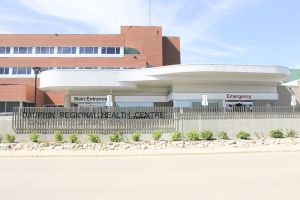
Emergency medical services in Dauphin will have a bit of familiarity to them as plans have been made to open a tempory emergency department in the existing hospital.
Health, Seniors and Long-Term Care Minister Uzoma Asagwara announced yesterday that the temporary emergency department will operate on the main floor of Dauphin Regional Health Centre, using temporary power, water and other infrastructure, while restoration work continues in other areas of the hospital.
When it opens, Sept. 7, the temporary emergency department will provide emergency services 24-7. A mobile CT unit will also be up and running within several weeks.
“We promised the people of Dauphin we would work as quickly as possible to bring emergency care back home, and we are on track to deliver,” Asagwara said.
“A tremendous amount of work has happened in a short period of time to make this possible. I want to thank the health-care workers, tradespeople and everyone who has been working around the clock to get emergency care back up and running safely in Dauphin.”
Physicians, nurses and other health-care workers have been directly involved in planning the temporary emergency department. Staff orientation and walkthroughs will take place before the department opens.
Other health services will continue to be provided in nearby sites ,while restoration work progresses. Dialysis patients are currently receiving care in Brandon, Russell, Swan River and Ashern, chemotherapy is being provided in Brandon, and labour and delivery services are available in Neepawa and Brandon. Transportation supports remain available for patients who need to travel for dialysis and chemotherapy.
“Bringing emergency care back to Dauphin is a major step forward for patients, families and health care workers who have been dealing with the impacts of this flood,” said Agriculture Minister and Dauphin MLA Ron Kostyshyn.
“We know people want their hospital back, and so do we. There is more work ahead, but we will keep moving as quickly and safely as possible to restore services and bring more care back home.”
The Community Health Services building attached to Dauphin Regional Health Centre will continue to provide outpatient community care including IV therapy.
Walk-in diagnostic services temporarily being provided at the provincial building in Dauphin will also be moved back to the Dauphin Regional Health Centre.
“The reopening of our emergency department is an important milestone for Dauphin and the surrounding region,” said Treena Slate, CEO, Prairie Mountain Health.
“While work to fully restore the hospital continues, reopening emergency services in their original space means people can once again access urgent care closer to home. This would not have been possible without the extraordinary dedication of our facilities teams, contractors, clinical leaders, physicians and staff. I want to sincerely thank everyone who worked tirelessly to bring this essential service back to our community.”
Restoration work is continuing throughout the health centre as teams work to safely return additional services to Dauphin including surgery and endoscopy.
Further updates will be provided as additional services are restored.
Twenty-six more weapons charges for former MP

The legal troubles of a former Dauphin mayor and member of Parliament got a little bit worse as police levelled 26 additional charges as part of a months long investigation in firearms trafficking.
Inky Mark was rearrested, Aug. 12, and charged with weapons trafficking, three counts of possession of a weapon when knowing possession was unauthorized, nine counts of possession of a restricted or prohibited weapon with ammunition without a license or registration, nine counts of possession of a firearm when knowing possession was unauthorized, possession of a firearm with a tampered serial number, two counts of failing to report a lost firearm and possession of more than six kilograms of explosives.
The charges are in addition to the 12 weapons-related offences charged at the time of Mark’s initial arrest in July following the execution of a search warrant at his Dauphin home.
During that search police located and seized hundreds of firearms, an antique cannon, ammunition and more than $300,000 in cash, which resulted in firearm trafficking, possessing a firearm with a tampered serial number and possession of property obtained by crime charges.
Since that time the investigation has continued, led by the RCMP West District General Investigation Section and supported by officers from the National Weapons Enforcement Support Team.
As part of that process, investigators were contacted by a member of the public on July 13, the same day that Mark’s arrest was announced, and told of an incident involving the suspect that occurred sometime between December 2024 and February 2025.
Officers learned the suspect responded to a social media post from a friend complaining about a coyote on their property by going to the person’s home unprompted and handing them a firearm with ammunition.
The individual did not use the weapon, which has been recovered by RCMP.
The investigation has also resulted in completion of work to process the evidence seized from Mark’s home in July.
Mark possessed 445 firearms at the residence, up six from the number reported at the time of his arrest. Of those 445 firearms, RCMP have determined that:
• 295 firearms were unsafely stored;
• 10 were prohibited; and
• 11 were restricted or prohibited firearms that were not registered to the suspect.
Additionally, 26.5 kilograms of explosives were recovered, which is more than four times higher than what licensed individuals are allowed to possess.
As well, a number of restricted or prohibited firearms were stored with readily available ammunition and two firearms registered to Mark were not located.
Mark was released from custody on an undertaking.
Pack leads Mavericks to road win
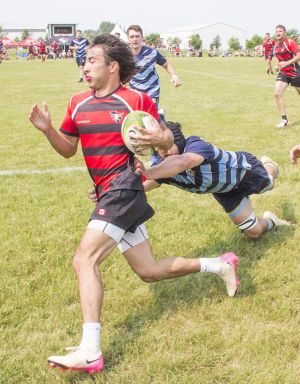
The Parkland Mavericks improved to 8-2 on the season with a convincing 56-19 win over the Winnipeg Wasps, Saturday, in Winnipeg.
Julien Lopez and Ronin Mouck had two tries each, while Owen Tyschinski, Garrett Fletcher, Nate Yury, Riley Keith and Colten Miner had one each.
Mouck also added four converts and a penalty kick.
Fletcher was named Man of the Match for his efforts.
“He stuck some huge tackles out there. Even though a lot of players scored, he got Man of the Match for how he led on the field,” said Mavericks captain Jordan Campbell.
Campbell said the team’s pack was a major factor in the win.
“Our pack won us the game. They played perfect. They didn’t pick up any penalties. They played as a unit. We blew them out in the scrums. Physically, they had way bigger players than us, but we were just hitting with everything we had,” he said, adding a lot of the backs did the scoring, but it was all off of the play of the pack.
A game like this will give the Mavericks added confidence as playoffs draw near.
“It gives us a better taste of their Div. 2 team. All season we’ve been playing a mixture of Div. 1 and Div. 2 guys, so we’re really anticipating anything,” Campbell said.
“We’re ready for the best of the best to come play. To be honest, we’re dialed in right now. We’re playing as a unit and we’re practicing that way, as well. Even practices I’ve noticed the intensity is picked up.”
The game against the Wasps was the best team play Campbell has ever seen from the Mavericks.
“We really lifted each other up and held each other accountable out there,” he said.
The Mavericks are 3-0 in Division 2 play and will end the regular season, Sept. 12 in Winnipeg against the Wombats.
Campbell said they want to get as many players into that game as possible, so they can rest some of their starters.
Campbell expects to host a playoff game, Sept. 19 or 26.
Youthful Kings begin working towards season opener

This year’s Dauphin Kings will be younger than what fans are used to seeing.
The local junior A hockey team held its training camp at Credit Union Place this weekend, with 37 players hoping to make the team.
Kings head coach and general manager Bryan Kromm liked what he saw throughout the weekend.
“I think, for the most part, it was very competitive. I think we got what we needed out of this camp and now moving forward, it’s the real test against some other teams in the league to see how some of these kids fare,” he said.
The plan is to carry 27 players into the preseason schedule, which began last night when the Kings hosted the Northern Manitoba Blizzard.
“There will be probably between 10 to 15 kids that will be moving on after Monday,” Kromm said.
Camp, Kromm said, resembled summer hockey style of play and he will begin to introduce some structure to the team’s play as they enter the preseason.
“Some five-on-five stuff that we’re looking for and see which guys can pick that stuff up once we get into some real hockey,” he said.
The Kings will begin to work on special teams the following week before opening the season, Sept. 18, in Selkirk against the Steelers.
A number of local players were in camp, including returning players Quentin Fisk, Luke Myhre and Sam Swanton along with prospects Landyn Garton, Jake Myhre and Benjamin Gardner.
For Kromm, having local players on the team is important for several reasons.
Fans, he said, like to see hometown players on the local team.
“Those kids have some really important ties to the community, as well. So they’re helpful in that aspect with kids that are not from here,” he said.
“So there’s a lot of benefit to having local guy in the mix. And I think a lot of kids grow up wanting to be Dauphin Kings. So to give some kid the opportunity to play for the Dauphin Kings that’s from here, that’s special, as well, to me.”
There are three players attending Western Hockey League camps that may return to Dauphin.
Noah Smigelsky is in Everett with the Silvertips, while Forrest Karlson is with the Red Deer Rebels. Veteran defenceman Brody Wytinck is with the Kamloops Blazers.
“We might see those kids come back into the fold maybe early next week. So we’re waiting on those kids, plus a few others that we have on our radar,” Kromm said.
Landyn Garton scored twice and Soren Hayden had three assists to lead Team Myles Fee to a 7-3 win over Team Barry Trotz in the annual JoFo Cup, Saturday.
Cooper Johannsen, Kale Pratte, Jake Griffiths, Kurtis Kinoshita and Liam Spencer also scored, while Ander Reyes, Landon McGregor and Luke Ratzlaff shared goaltending duties.
Gavin Smith with two and Max George replied for Team Barry Trotz. Benjamin Gardner, Bryson Yaschyshyn and Piet Mierau each played one period in goal.
On Monday, George had a goal and two assists to lead the Kings to a 5-2 win over the Blizzard.
Collin Freidrich, Ashton Shields, Jake Myhre and Nic Collins had Dauphin’s other goals, while Reyes stopped 11 of 12 shots he faced and Mierau made 10 saves on 11 shots.
The Kings will play a home-and-home with the Waywayseecappo Wolverines, Friday in Dauphin at 7 p.m. and Saturday in Waywayseecappo at 7:30 p.m.
Rally for the Valley

The much-hyped Plan B replacement for the NorthWest Round-up and Exhibition dubbed Rally for the Valley was held on Saturday (Aug. 29), with fundraising food booths open Friday evening as well as most of the day Saturday. Pictured, the delayed Canada Day fireworks went off with a bang, dazzling those in attendance with a spectacular show. See more on A7, A10 & A11.